Strategy and Safety on Mount Everest
Strategic Route Selection
The Two Faces of Everest
For a climber with the requisite experience, standing on the summit of Mount Everest is the ultimate goal. But getting there involves a critical decision long before setting foot on the mountain: which side to climb? The two standard commercial routes, the South Col from Nepal and the Northeast Ridge from Tibet, offer starkly different experiences. The choice isn't just about scenery; it's a strategic calculation of risk, technical difficulty, logistics, and what you're willing to endure at the edge of the atmosphere.
The South Col Route
The classic route, first climbed by Tenzing Norgay and Edmund Hillary, begins in Nepal. The journey starts with a multi-day trek through the beautiful Khumbu Valley to Base Camp, an essential part of acclimatization. From there, the first and most notorious obstacle looms: the an unavoidable, chaotic river of ice.
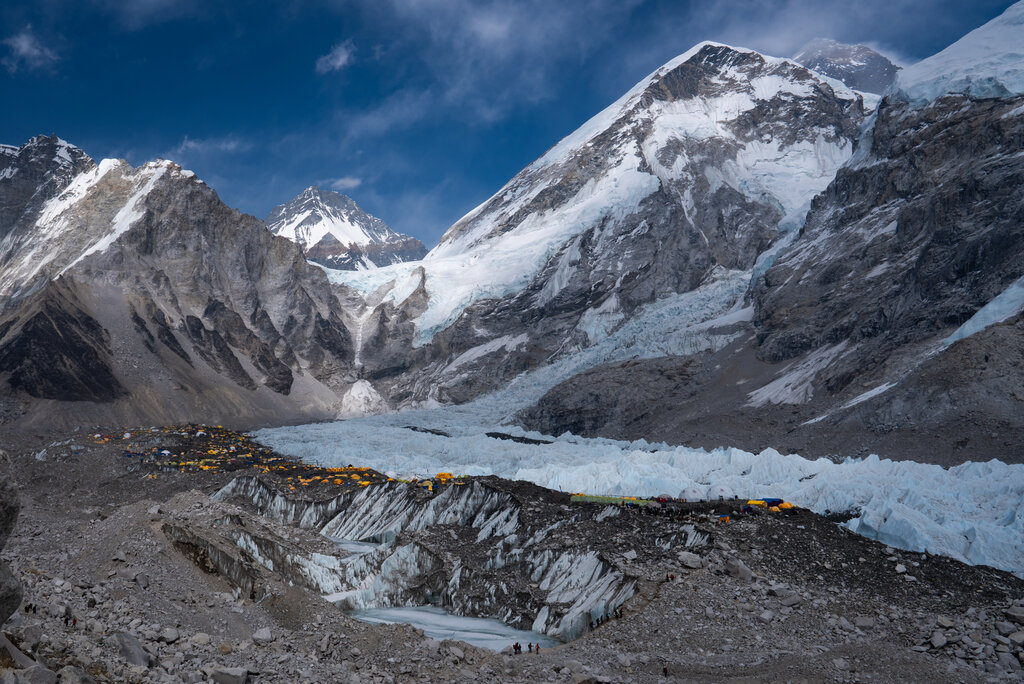
Once through the icefall, climbers enter the Western Cwm, a relatively flat glacial valley, before ascending the steep Lhotse Face to Camp III and IV. The final push to the summit begins from the South Col at nearly 8,000 meters. While the summit day is brutally long and exposed, the technical climbing is generally straightforward snow and ice, with the historic once forming the final rock crux just below the top.
The Northeast Ridge
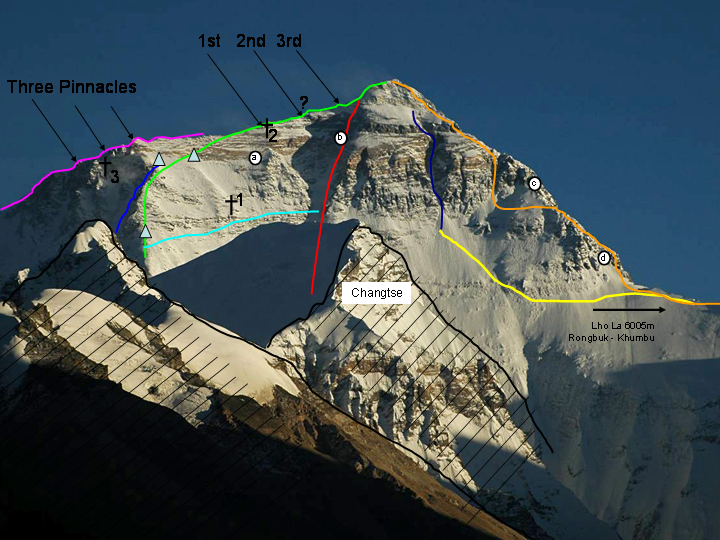
The approach from Tibet offers a different logistical start. Climbers can drive all the way to the Chinese Base Camp, then trek to Advanced Base Camp (ABC) at the foot of the mountain. This route avoids the objective danger of the Khumbu Icefall entirely. Instead, the challenge is technical and occurs much higher on the mountain.
The route ascends the Rongbuk glacier to the North Col, then follows the Northeast Ridge. The summit day is longer, colder, and more exposed to wind. The primary difficulties are a series of rock sections known as the which must be navigated above 8,500 meters.
Logistics and Rescue
Beyond the terrain, the choice of route has major implications for safety and logistics. Nepal's permit fees are significantly higher, but the infrastructure is more developed. On the south side, helicopter rescues are possible up to Camp II, a life-saving option for climbers with altitude sickness or injuries. On the Tibetan side, rescues are far more limited. Helicopters cannot operate at such high altitudes, and any evacuation must be carried out by foot to a much lower elevation.
| Feature | South Col (Nepal) | Northeast Ridge (Tibet) |
|---|---|---|
| Primary Hazard | Khumbu Icefall (Objective) | The Three Steps (Technical) |
| Base Camp Access | Multi-day trek | Drivable access to BC |
| Rescue | Helicopter to Camp II (~6,400m) | Ground evacuation only |
| Summit Day | Shorter, less technical ridge | Longer, more exposed, rock steps |
| Permit | Higher cost, more available | Lower cost, politically controlled |
Ultimately, the decision comes down to a climber's risk tolerance and strengths. Do you prefer to face an objective, uncontrollable hazard like the icefall early on? Or would you rather tackle technical rock climbing in the death zone, far from any hope of rapid evacuation? Both paths lead to the same point, but they demand very different things from those who attempt them.
What is the primary objective hazard on the South Col route from Nepal that is completely avoided on the Northeast Ridge route from Tibet?
A key logistical difference between the two routes is the availability of high-altitude rescue. Which statement accurately describes this difference?