Strategic Tax Reduction
Tax Basics
The Three Layers of Tax
In the United States, taxes are collected at three main levels: federal, state, and local. Think of it as a layered cake, where each layer has a different purpose.
Federal taxes are collected by the U.S. government and fund national programs. This includes things like the military, Social Security, Medicare, and national parks. Everyone in the U.S. who earns income above a certain amount pays federal income tax.
State taxes vary widely from one state to another. Some states have no income tax at all, while others do. These taxes pay for state-level services like highways, state universities, and state police.
Local taxes are set by counties, cities, or school districts. They typically fund local schools, police and fire departments, and community services. These can include property taxes, sales taxes, and sometimes local income taxes.
Understanding these three layers is the first step. The money you pay is used to run the country, your state, and your local community.
Your Income and the IRS
The Internal Revenue Service, or IRS, is the federal agency responsible for collecting taxes. When you file your taxes, you're reporting your income to the IRS. But not all the money you earn is taxed. The government first wants to know your taxable income.
Getting to that number is a multi-step process. It starts with your gross income, which is all the money you receive during the year. This includes your salary, wages, tips, and any income from investments or a side business.
From there, you subtract certain adjustments to get your Adjusted Gross Income (AGI). These adjustments might include contributions to a retirement account or student loan interest. AGI is an important number because it's used to determine your eligibility for certain tax benefits.
Finally, you subtract deductions from your AGI to find your taxable income. This is the amount your tax is actually calculated on.
This final number, your taxable income, is what we'll use to figure out how much you owe.
How Tax Brackets Work
The U.S. uses a progressive tax system. This means that people with higher taxable incomes pay a higher percentage of their income in taxes. This system is organized into tax brackets.
A common mistake is thinking that if you're in the 22% tax bracket, all of your income is taxed at 22%. That's not how it works. Instead, different portions of your income are taxed at different rates.
Imagine your income filling up a series of buckets. The first bucket is taxed at the lowest rate. Once it's full, your income starts spilling into the next bucket, which is taxed at a slightly higher rate, and so on. You only pay the higher rate on the money that falls into that higher bucket.
| Tax Rate | Taxable Income (Single Filer) |
|---|---|
| 10% | $0 to $11,000 |
| 12% | $11,001 to $44,725 |
| 22% | $44,726 to $95,375 |
| 24% | $95,376 to $182,100 |
Let’s walk through an example. Say you're a single filer with a taxable income of $50,000. Here's how you'd calculate your tax:
- The first $11,000 is taxed at 10%: .
- The next portion of your income, from $11,001 to $44,725, is taxed at 12%. That's a total of $33,725 in this bracket (). The tax is: .
- The remaining amount of your income falls into the 22% bracket. You have $5,275 left (). The tax is: .
Your total federal income tax would be the sum of these amounts: . Your overall tax rate, known as your effective tax rate, is about 12.6% (), not 22%.
The Filing Process
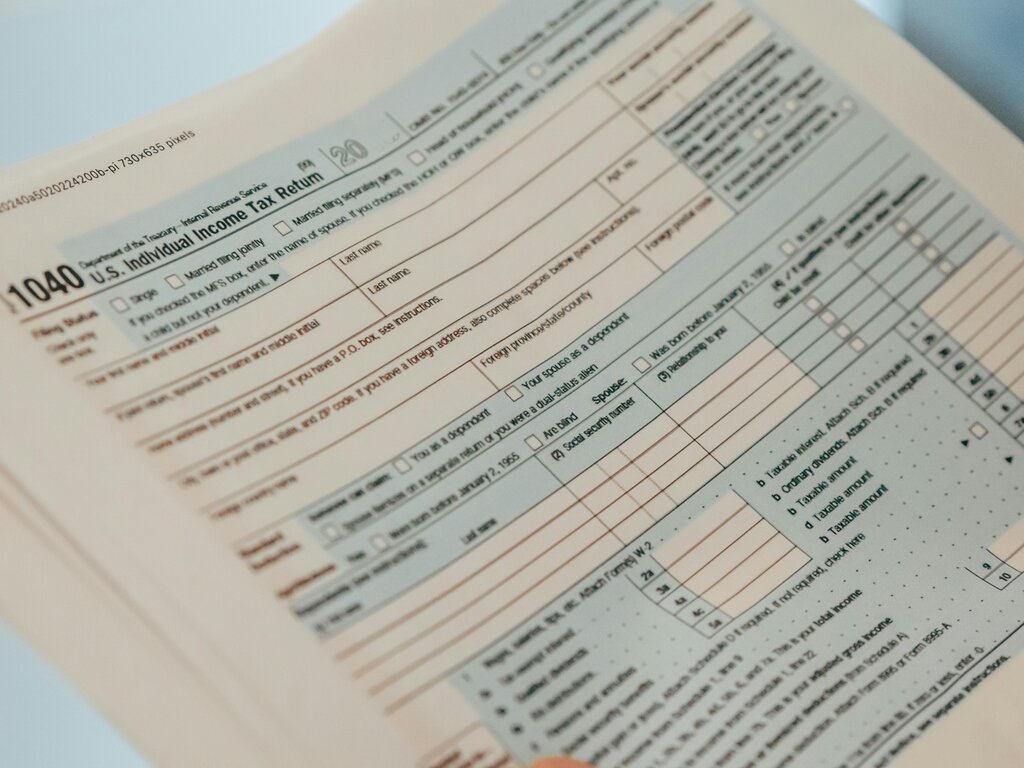
Each year, you report your income and calculate your tax liability by filing a tax return. The most common form for this is Form 1040. You'll use it to list your income, adjustments, and deductions to arrive at your taxable income and determine how much tax you owe.
Throughout the year, your employer likely withheld money from your paychecks for taxes. When you file your return, you compare the amount you've already paid through withholding to the amount you actually owe. If you paid too much, you get a refund. If you paid too little, you'll need to pay the difference.
The deadline to file your federal tax return is typically April 15th each year. You can file your return yourself using tax software, or you can hire a tax professional to help you. The IRS's role is to process these returns, issue refunds, and ensure everyone pays their fair share according to the law.
Which level of government collects taxes to fund national programs like the military and Social Security?
What is the correct sequence for calculating your taxable income?
Understanding these basics—the structure of taxes, key income terms, and how brackets work—is the foundation for managing your finances effectively.