Strategic Tax Reduction
Understanding Tax Basics
The Lay of the Land
The U.S. tax system operates on a “pay-as-you-go” basis. This means you pay taxes on your income as you earn it throughout the year, rather than all at once. For most people, this happens automatically through tax withholding from their paychecks. If you're self-employed, you handle this by making estimated tax payments.
Taxes are a pay-as-you-go arrangement in the United States.
Taxes are collected at three main levels: federal, state, and local. The federal government, through the Internal Revenue Service (IRS), collects taxes to fund national programs like defense, Social Security, and Medicare. State and local taxes, which vary widely, pay for things like schools, roads, and public safety. This article will focus primarily on the federal system.
A Family of Taxes
When people talk about taxes, they're usually referring to income tax, but it's just one piece of the puzzle. The federal government levies several different types of taxes.
Income Tax: This is the primary tax for most individuals and corporations. It's a tax on your total income, which includes wages, salaries, tips, and earnings from investments.
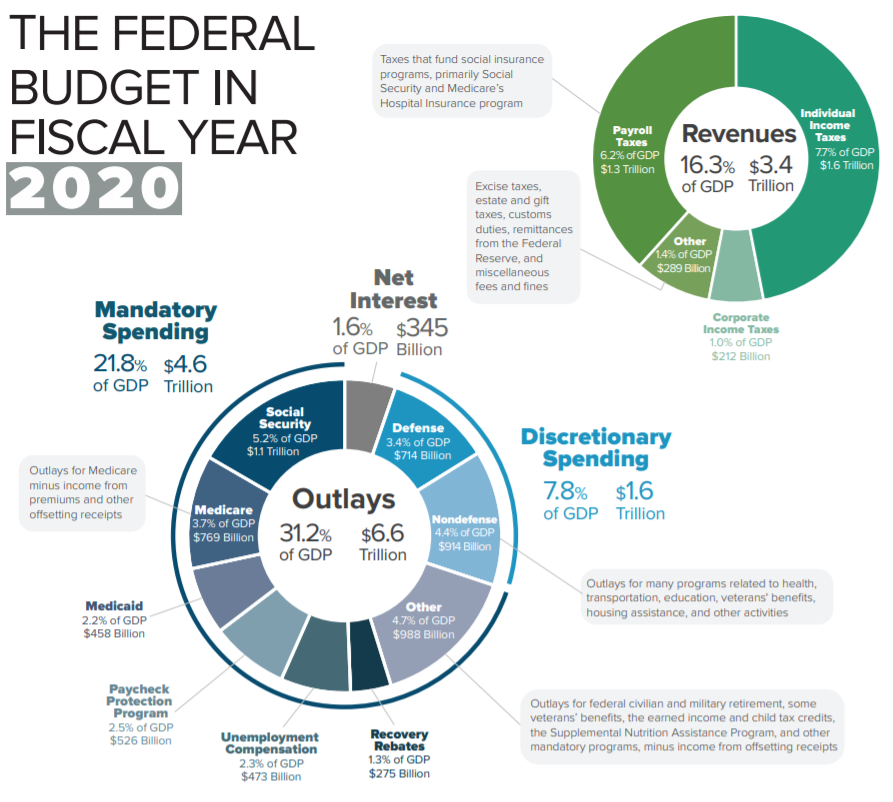
Payroll Taxes: These are taxes that both you and your employer pay to fund two specific programs: Social Security and Medicare. They are sometimes referred to as FICA taxes, which stands for the Federal Insurance Contributions Act.
Capital Gains Tax: This is a tax on the profit you make from selling an asset, like stocks, bonds, or real estate. The rate you pay depends on how long you held the asset. If you held it for more than a year, it's considered a long-term capital gain and is usually taxed at a lower rate than your regular income. If you held it for a year or less, it's a short-term gain and is taxed at your ordinary income tax rate.
How Tax Rates Work
The U.S. uses a progressive tax system for federal income tax. This means that people with higher taxable incomes pay a higher percentage of their income in taxes. This system is structured using tax brackets.
Tax Bracket
noun
A range of income amounts that are taxed at a particular rate.
A common misconception is that if you move into a higher tax bracket, all of your income is taxed at that new, higher rate. That's not how it works. You only pay the higher rate on the portion of your income that falls within that specific bracket.
For example, let's say there are two tax brackets: 10% on income up to $10,000, and 20% on income over $10,000. If you earn $15,000, you don't pay 20% on the whole amount. Instead, you pay:
- 10% on the first $10,000 (which is $1,000)
- 20% on the next $5,000 (which is another $1,000)
Your total tax would be $2,000. This is how marginal tax rates function: each new dollar is taxed at the rate of the bracket it falls into.
Lowering Your Tax Bill
Once you know your potential tax, the goal is to legally reduce it. The two primary tools for this are tax deductions and tax credits.
Tax credits and deductions both aim to reduce your tax liability, but they do so in different ways:
Tax Deductions reduce your taxable income. Think of them as expenses that the government allows you to subtract from your gross income. By lowering your taxable income, you may also drop into a lower tax bracket. Common examples include the standard deduction, contributions to an IRA, or student loan interest.
Tax Credits are more powerful. They subtract directly from the amount of tax you owe, dollar for dollar. A $1,000 tax credit saves you $1,000 in taxes. A $1,000 deduction, on the other hand, might only save you $120 or $220, depending on your tax bracket. Examples include the Child Tax Credit or credits for education expenses.
| Feature | Tax Deduction | Tax Credit |
|---|---|---|
| What it does | Lowers your taxable income | Lowers your tax bill directly |
| Value | Depends on your tax bracket | Dollar-for-dollar reduction |
| Example | $1,000 deduction | $1,000 credit |
| Tax Savings (22% bracket) | $220 | $1,000 |
Tax credits also come in two flavors: refundable and non-refundable.
A non-refundable tax credit can reduce your tax liability to zero, but you don't get any money back if the credit is larger than your tax bill. For example, if you owe 💲500 in taxes and have an 💲800 non-refundable credit, your tax bill becomes 💲0, but you don't receive the extra 💲300.
A refundable tax credit is more generous. If the credit is larger than what you owe, you get the difference back as a refund. Using the same example, if your 💲800 credit was refundable and you owed 💲500, your tax bill would be 💲0, and the IRS would send you a check for the remaining 💲300.
Time to see what you've learned.
The U.S. federal income tax system is described as "progressive." What does this mean?
Imagine a tax system with two brackets: 10% on income up to 20,000. If you earn $30,000, how much federal income tax would you owe?
Understanding these core concepts—from the types of taxes to the function of brackets, deductions, and credits—is the first step in managing your finances effectively.