Strategic Tax Reduction
Understanding Tax Basics
How Taxes Work
The U.S. federal income tax system is how the government funds its operations, from building roads to running national parks. It's a "pay-as-you-go" system, which means you pay tax on your income as you earn it throughout the year, usually through withholdings from your paycheck.
Your taxable income is the portion of your income subject to federal tax, and it’s important for several reasons.
At the end of the year, you file a tax return to settle up. This process involves a few key steps to figure out your final tax bill. You start with all the money you earned (gross income), subtract certain adjustments to get your adjusted gross income (AGI), and then subtract deductions to find your taxable income. This is the number that's actually used to calculate your tax.
Let's break down what each of these terms means.
What Income Gets Taxed?
Not all the money you receive is considered taxable income. The government draws a line between what it counts and what it doesn't.
Taxable income is what you'd typically think of as earnings. It includes wages, salaries, tips, bonuses, and income from a freelance business or the gig economy. It also includes investment returns, like interest from a savings account, dividends from stocks, or profits from selling an asset.
Non-taxable income, on the other hand, is money you can receive without owing tax on it. Common examples include gifts, inheritances, child support payments, and payouts from a life insurance policy. Certain scholarships or fellowship grants may also be tax-free.
| Taxable Income | Non-Taxable Income |
|---|---|
| Wages and salaries | Gifts and inheritances |
| Freelance earnings | Life insurance payouts |
| Investment profits | Child support payments |
| Bonuses and tips | Most scholarships |
Knowing the difference is the first step in understanding what you might owe.
The Progressive Tax System
The U.S. uses a progressive tax system. This means that people with higher taxable incomes are subject to higher tax rates, while people with lower incomes pay a smaller percentage of their income in taxes. This system is structured using tax brackets.
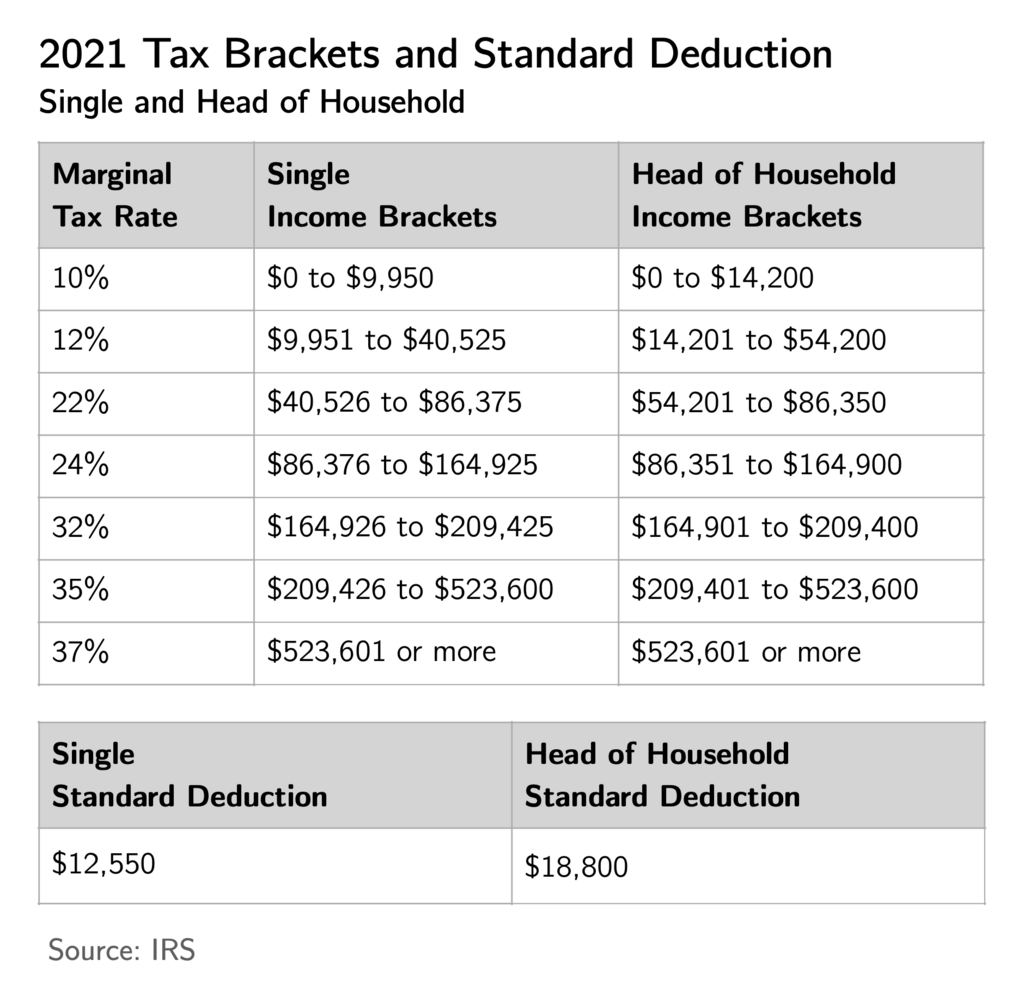
A common mistake is thinking your entire income is taxed at a single rate. That's not how it works. Instead, your income is divided into portions, or brackets, and each portion is taxed at its corresponding rate.
Imagine your income is filling up a set of buckets. The first bucket is small and has the lowest tax rate. Once it's full, your income starts spilling into the next bucket, which has a slightly higher rate, and so on. You only pay the higher rate on the money that falls into that higher bucket.
For example, if you're a single filer with 💲50,000 in taxable income, you don't pay 22% on the whole amount. Only the portion of your income in the 22% bracket gets taxed at that rate. The rest is taxed at lower rates (10% and 12%).
Deductions vs. Credits
Tax deductions and tax credits both reduce your tax burden, but they do it in very different ways. Understanding this difference is key to smart tax planning.
Deduction
noun
An amount that you can subtract from your adjusted gross income (AGI) to lower your taxable income.
A tax deduction reduces the amount of your income that is subject to tax. By lowering your taxable income, deductions can potentially move you into a lower tax bracket. They are subtracted before your tax liability is calculated.
For example, if your taxable income is $55,000 and you have a $5,000 deduction, your new taxable income becomes $50,000. Your tax is then calculated on this lower amount.
Credit
noun
An amount that directly reduces the amount of tax you owe, dollar for dollar.
A tax credit is a dollar-for-dollar reduction of your actual tax bill. It's subtracted after your tax liability has been calculated. This makes credits more powerful than deductions.
A $1,000 deduction might save you $120 or $220, depending on your tax bracket. But a $1,000 tax credit saves you $1,000, no matter what your income is.
As you can see, the tax credit results in a much lower final tax bill, even though the dollar amount of the credit and deduction were the same. While both tools are helpful, credits provide a more direct and powerful benefit.
Which of the following provides a dollar-for-dollar reduction of your final tax bill?
In the U.S. progressive tax system, your entire income is taxed at the single rate of your highest tax bracket.
These are the building blocks of the U.S. tax system. With this foundation, you can begin to make more informed decisions about your finances.