Strategic Marketing Implementation
Strategic Planning Frameworks
Beyond the Basics: Building a Strategic Blueprint
Most marketing efforts fail not because of bad ideas, but because of a lack of structure. A brilliant campaign without a clear plan is just a shot in the dark. To move from simply 'doing marketing' to driving real business growth, you need a blueprint. Strategic frameworks provide this structure, turning your marketing vision into a measurable, step-by-step plan for success.
Think of these frameworks as the architectural plans for your marketing house. They ensure you build on a solid foundation before you start picking out the furniture.
Frameworks for Structure
Two of the most effective and widely used planning frameworks are SOSTAC® and RACE. They serve different but complementary purposes. SOSTAC® is your overall strategic planning model, while RACE is a more focused framework perfect for structuring your digital marketing activities within that larger plan.
Let's start with the big picture. The planning model, created by PR Smith in the 1990s, provides a logical sequence for creating and implementing any plan. It's popular because its structure is simple, logical, and comprehensive.
| Step | Name | Question It Answers |
|---|---|---|
| S | Situation Analysis | Where are we now? |
| O | Objectives | Where do we want to be? |
| S | Strategy | How will we get there? (The big picture) |
| T | Tactics | How exactly will we get there? (The details) |
| A | Action | What is our plan? (Implementation) |
| C | Control | How will we know we've arrived? (Measurement) |
Each step logically flows from the last. You can't set realistic objectives without understanding your current situation, and you can't choose the right tactics without a clear strategy.
Deep Dive: Situation Analysis
The 'Situation Analysis' is the foundation of your entire plan. While a basic SWOT analysis (Strengths, Weaknesses, Opportunities, Threats) is a good starting point for your internal environment, a professional strategy requires a deeper look at the external forces shaping your world. This is where PESTEL and Porter's Five Forces come in.
PESTEL Analysis scans the macro-environment, the broad factors that affect everyone in the market.
Next, you need to understand your specific industry. is a framework for analysing the competitive intensity and therefore attractiveness of an industry. It helps you understand where power lies in your market.
| Force | What It Means |
|---|---|
| Rivalry Among Competitors | How intense is the competition in your market? |
| Threat of New Entrants | How easy is it for new companies to enter your market? |
| Threat of Substitutes | How likely are customers to switch to a different solution? |
| Bargaining Power of Buyers | How much power do your customers have to drive down prices? |
| Bargaining Power of Suppliers | How much power do your suppliers have to increase their prices? |
By combining SWOT, PESTEL, and Porter's Five Forces, you get a comprehensive, 360-degree view of your business environment. This robust analysis ensures your objectives are grounded in reality, not guesswork.
Setting Direction and Taking Aim
With a solid understanding of your situation, you can define your Objectives. Vague goals like "increase brand awareness" are useless. Instead, we use the SMART framework to create goals that are actionable and measurable.
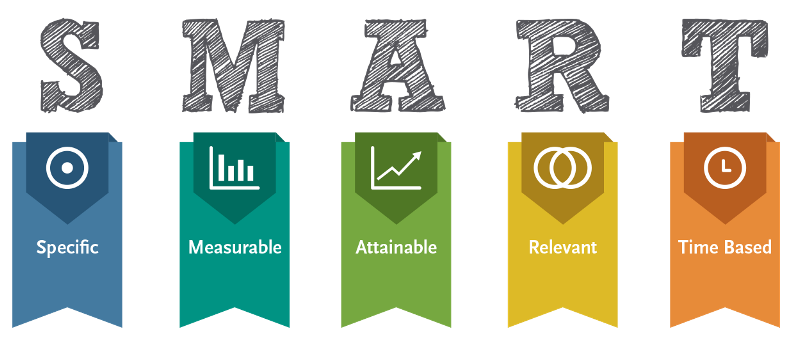
Your marketing objectives must directly support the broader business strategy. If the company's goal is to expand into a new region, a marketing objective could be: "Generate 500 qualified leads from target region X within the next six months (Q3-Q4) with a budget of $20,000."
This goal is Specific (500 leads, region X), Measurable (500), Achievable (assuming resources), Relevant (supports expansion), and Time-bound (six months).
The SMART framework was designed to streamline goal setting and provide guidance in achieving the goal.
Once you know your objectives, your Strategy defines how you will achieve them. A key part of strategy is refreshing your Segmentation, Targeting, and Positioning (STP). Your situation analysis might reveal new customer segments or show that your current positioning is weak against a competitor. The strategy phase is where you decide which customer segments to prioritise and how you want your brand to be perceived by them.
Planning for Digital Action
While SOSTAC® is the overarching plan, the RACE framework provides a practical structure for your digital marketing tactics. It breaks down the customer journey into four key stages.
| Stage | Goal | Example Tactics |
|---|---|---|
| Reach | Build awareness and drive traffic to your digital properties. | SEO, PPC advertising, social media marketing. |
| Act | Encourage interaction and lead generation on your site. | Gated content (e.g., ebooks), newsletter sign-ups. |
| Convert | Turn leads into paying customers. | E-commerce checkout optimisation, retargeting ads. |
| Engage | Build long-term customer loyalty and advocacy. | Email marketing, community building, customer service. |
You can map your specific tactics directly to this framework. For instance, under 'Reach', you'd detail your SEO keyword strategy. Under 'Convert', you'd outline your abandoned cart email sequence. RACE helps ensure you have a balanced plan that addresses every stage of the customer lifecycle online.
With these frameworks, you move from disjointed activities to a cohesive, strategic plan. You have a clear understanding of your market, specific goals to aim for, and a structured way to plan and measure your actions. This is the foundation of effective marketing implementation.
What is the primary difference in purpose between the SOSTAC® and RACE frameworks as described in the text?
Which of the following analytical tools is specifically used to understand the competitive intensity and power dynamics of an industry?