Strategic Leadership for Design Managers
Strategy and Vision
From Pixels to Strategy
Moving into a leadership role means shifting your focus. Instead of concentrating on the details of a single screen or feature, you start thinking about the bigger picture. Your new job is to shape the strategy that drives the entire product, the team, and the business itself. This begins with crafting a North Star UX vision.
A North Star vision is a simple, powerful statement that describes the ideal future user experience. It's the 'why' behind all your team's design decisions, acting as a constant guide for every project.
This vision shouldn't exist in a vacuum. It must be directly connected to the company's overall objectives. If the company aims to be the industry leader in customer support, your UX vision might be: "Our product provides answers so intuitively that users never need to contact a support agent." Every design choice can then be measured against this goal. Does this new feature make information more accessible? Does it simplify a complex process? If not, it might not align with the vision.
Aligning with the Business
To ensure your vision serves the business, you need to understand the business's needs. This requires a different kind of research: . Just as you'd interview users to understand their pain points and goals, you must interview executives, department heads, and other key decision-makers. Your goal is to uncover their priorities, concerns, and definitions of success.
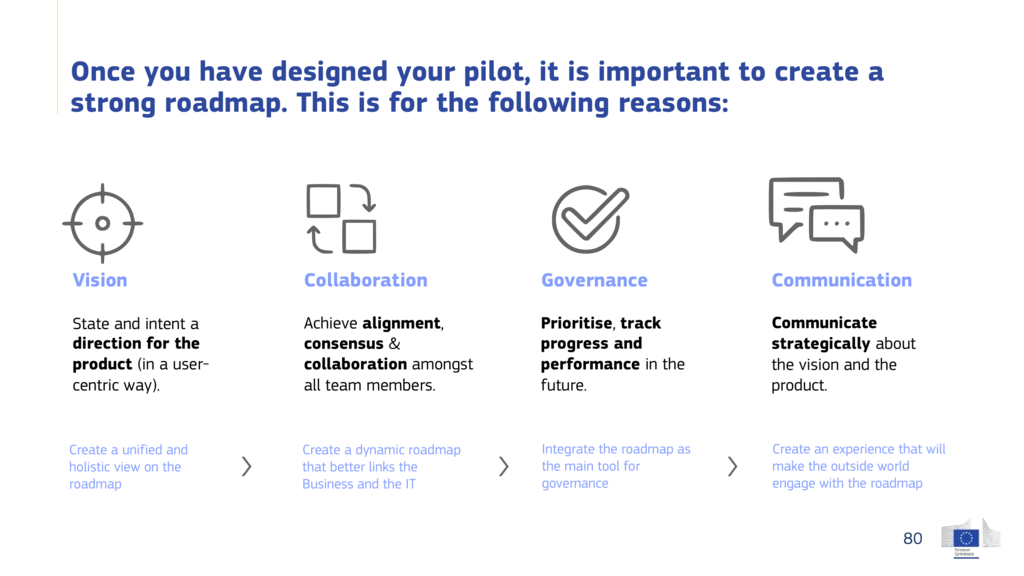
The output of your vision and research is a strategic UX roadmap. This isn't a list of features to build. It's a high-level plan that outlines key user experience themes and initiatives over the next few quarters or even years. It connects the work your team will do directly to specific company objectives, showing how design will help drive growth, reduce costs, or increase customer loyalty.
Measuring Your Impact
Before you can improve an organisation's design culture, you need a clear picture of where it currently stands. This is known as assessing design maturity. Different companies integrate UX into their processes to varying degrees. Some see design as a purely aesthetic final touch, while others understand it as a core part of their strategy.
A common tool for this assessment is the . It outlines several stages, from non-existent UX to a fully user-centred organisation. Identifying your company's current stage is the first step in creating a plan to advance. You can't jump from stage one to stage six overnight. The goal is to identify the next logical step and focus your efforts on achieving it.
| Stage | Key Characteristic |
|---|---|
| 1. Absent | UX is ignored or non-existent. |
| 2. Limited | UX work is rare, sporadic, and unimportant. |
| 3. Emergent | The importance of UX is recognised, but it's not well-integrated. |
| 4. Structured | The organisation has a dedicated UX team and process. |
| 5. Integrated | UX is a well-integrated part of the entire product process. |
| 6. User-Driven | User-centred design is embedded in the company's culture and strategy. |
Alongside this formal assessment, it's crucial to identify the team's core values. Are you driven by accessibility? Simplicity? Innovation? Defining these values helps create a shared sense of purpose and provides another lens through which to evaluate potential projects. Your roadmap, maturity assessment, and team values together form the foundation of a powerful UX strategy.
When transitioning into a UX leadership role, what is the primary shift in focus?
What is the primary purpose of conducting 'stakeholder user research'?
By shifting your perspective to strategy and vision, you elevate the role of design from a service to a strategic partnership that drives real business results.