Strategic Human Capital Management
Strategic Human Capital Alignment
Aligning People with Purpose
Most companies can track their physical assets down to the last penny. They know the value of their buildings, equipment, and inventory. But what about the collective skill, knowledge, and experience of their workforce? This is a company's human capital, and in today's economy, it's often the most valuable asset of all. Strategic human capital alignment is the process of moving beyond simple personnel management and treating the workforce as a primary driver of competitive advantage.
It’s about answering a critical question: Do we have the right people with the right skills to achieve our biggest goals? This isn't just about hiring. It's about systematically building and organizing talent to execute a business strategy. Top-performing companies don’t see skill-building as a bonus; they integrate it into their core business model.
The consulting firm [{
}] developed the 'People + Performance' (P+P) framework to explain this. The framework shows how leading companies connect talent directly to value creation by identifying the specific roles and skills that have the biggest impact on business outcomes and then investing heavily in them.
Think of it like a championship sports team. The general manager doesn't just sign famous players. They map their strategy (e.g., a fast-paced offense) to specific capabilities (speed, accurate passing) and then acquire or develop players who excel in those exact areas. A business does the same by mapping its strategic objectives, like launching a new AI product, to the necessary workforce capabilities, such as machine learning expertise and data engineering skills.
Two Types of Talent
When mapping these capabilities, it's crucial to distinguish between two types of human capital: general and firm-specific.
| Type | Description | Example |
|---|---|---|
| General Human Capital | Skills that are portable and valuable to multiple companies. | A software developer's ability to code in Python; an accountant's knowledge of GAAP. |
| Firm-Specific Human Capital | Knowledge and skills valuable only within a particular company. | Understanding a company's unique internal software, navigating its political culture, or knowing a key client's undocumented preferences. |
A company can hire for general skills, but it must cultivate firm-specific skills internally. This unique, institutional knowledge is often what gives a business its edge. It can't be easily replicated by competitors, which makes the employees who possess it incredibly valuable. Losing an employee with deep firm-specific knowledge is far more damaging than losing one whose skills are easily found on the open market.
Valuing the Invisible
This leads to a fascinating accounting puzzle. If human capital is so valuable, why doesn't it appear on a balance sheet? Officially, it's considered an —something that has value but isn't a physical object. This is why a company's book value (the value of its physical assets) is often much lower than its market value (what the company is worth on the stock market). The gap between those two numbers is largely composed of intangible assets like brand reputation, intellectual property, and, most importantly, human capital.
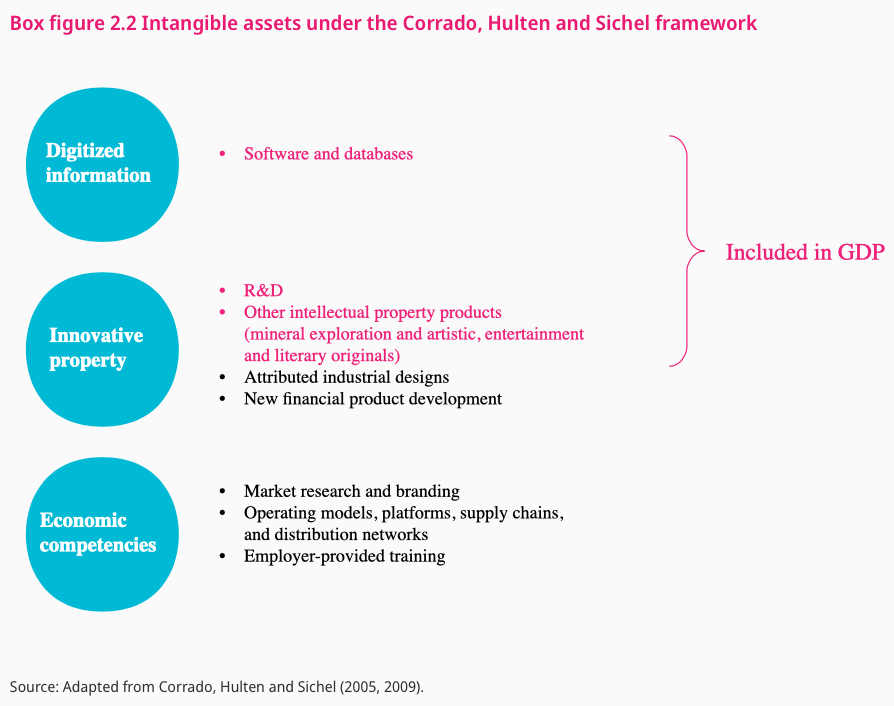
This concept is central to the (RBV) of the firm. RBV is a strategic framework that argues a company's competitive advantage comes from its unique bundle of internal resources and capabilities, rather than just its position in the market. According to RBV, for a resource to provide a sustained competitive advantage, it must be valuable, rare, difficult to imitate, and non-substitutable. Firm-specific human capital checks every one of those boxes.
By treating your workforce not as a cost center but as a portfolio of valuable, strategic assets, you can build an organization that is not just competitive, but truly difficult to copy.
Now, let's test your understanding of these strategic concepts.
What is the primary goal of strategic human capital alignment?
Why is losing an employee with deep firm-specific knowledge more damaging than losing one with only general skills?