Strategic Foresight Methods
Introduction to Strategic Foresight
Beyond the Crystal Ball
The future doesn't arrive on a single, predictable path. It unfolds from a tangle of possibilities. Traditional planning often tries to predict that one path, like forecasting next quarter's sales. But what happens when a new competitor appears, a technology shifts, or a global event changes everything? The forecast breaks.
strategic foresight
noun
A disciplined approach to exploring, understanding, and shaping the future by considering multiple plausible outcomes.
Strategic foresight isn't about having a crystal ball. It’s a way of thinking that helps organizations become more resilient and adaptive. Instead of betting on a single predicted future, you prepare for several. This allows you to spot opportunities others miss and navigate disruptions that might otherwise be catastrophic.
By integrating these Futures Thinking principles and practices into our strategic planning processes, we can get better at anticipating disruptive change, spotting untapped opportunities, and developing more creative and robust strategies.
Foresight vs. Forecasting
The key difference between foresight and forecasting lies in their approach to the future. Forecasting uses historical data to predict a specific, quantitative outcome. It answers questions like, "How much rainfall will we get next month?" or "What will our revenue be in Q3?" It assumes the future will be a continuation of the past.
Foresight, on the other hand, is qualitative and explores multiple futures. It asks, "What are the different ways our industry could evolve over the next decade?" It acknowledges that the world is complex and that new, unexpected forces can change the rules entirely. It’s less about being right and more about being prepared.
Here's a simple breakdown of the two:
| Feature | Forecasting | Strategic Foresight |
|---|---|---|
| Goal | Predict a single outcome | Explore multiple futures |
| Focus | Quantitative, specific | Qualitative, exploratory |
| Timeframe | Short to medium-term | Medium to long-term |
| Assumption | The past predicts the future | The future can be shaped |
| Output | A specific number or event | A set of plausible scenarios |
How Foresight Works
Strategic foresight isn't random guesswork. It's a structured process. A foundational part of this process is environmental scanning.
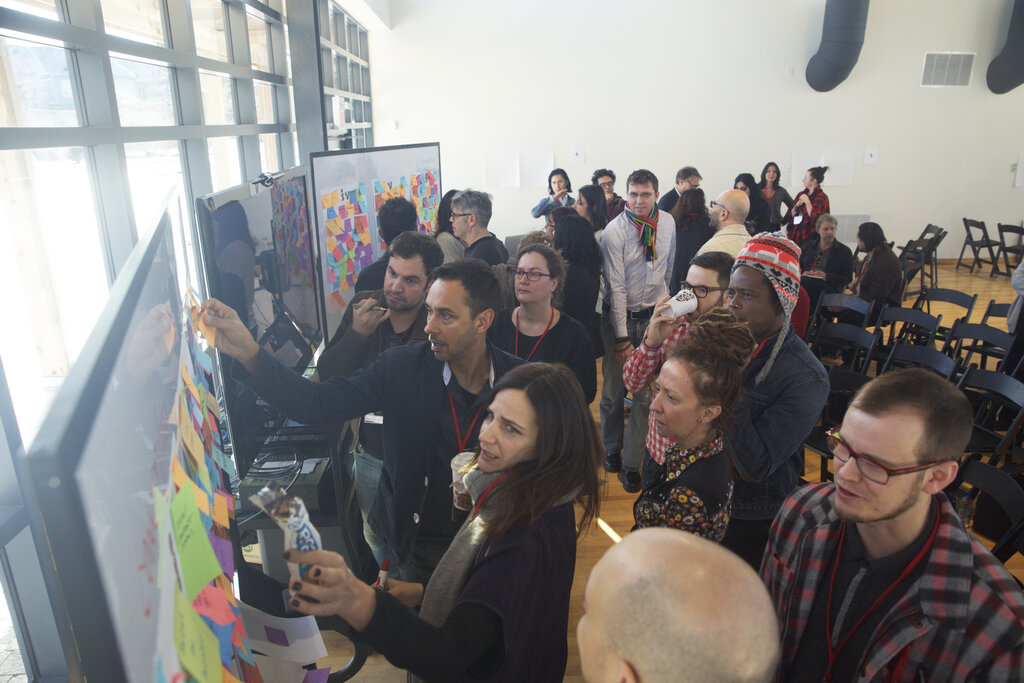
Environmental scanning is the systematic act of looking out at the world to identify signals of change. These can be small trends, emerging technologies, or shifts in social values.
Think of yourself as a detective. You're not just looking at your own industry; you're scanning everything. What's happening in technology, politics, economics, and culture? What weak signals today could become major forces tomorrow? This involves reading widely, talking to diverse groups of people, and staying curious.
Once you've gathered these signals, you begin trend analysis. This is where you connect the dots. You look for patterns and try to understand the forces driving change. A single new startup is a signal. A dozen startups using similar technology, backed by new investment and customer interest, is a trend.
Let's consider an example. In the early 2000s, the music industry was focused on CD sales. A foresight-driven organization might have scanned the environment and noted several signals: the rise of MP3 file sharing, increasing internet speeds, and the growing popularity of portable digital devices.
Forecasting would have predicted a gradual decline in CD sales. Foresight would have explored futures where physical music became obsolete, streaming services dominated, and artists connected directly with fans online. Companies that engaged in this kind of thinking, like Apple with iTunes, were prepared to lead the change. Those that didn't, struggled to adapt.
Ready to check your understanding?
What is the primary goal of strategic foresight?
A team is analyzing the rise of several small startups using a new AI technology, growing investor interest, and early customer adoption. According to the text, this process is best described as:
By moving beyond simple prediction, strategic foresight gives us a toolkit for navigating an uncertain world with confidence and creativity.