Strategic Excellence and Competitive Advantage
Modern Five Forces
The New Rules of Entry
In the past, starting a business that could compete globally required massive capital for factories, distribution networks, and marketing. Today, a startup can rent server space from Amazon Web Services, find customers on Instagram, and sell products through Shopify. The barriers to entry seem lower than ever.
But this is only half the story. This ease of entry has created what’s known as the an environment where it's easy to start, but nearly impossible to scale to challenge the giants. The very platforms that enable new businesses also create powerful moats for themselves. For every new e-commerce store, Shopify strengthens its ecosystem. For every app developer, Apple and Google solidify their control over mobile access.
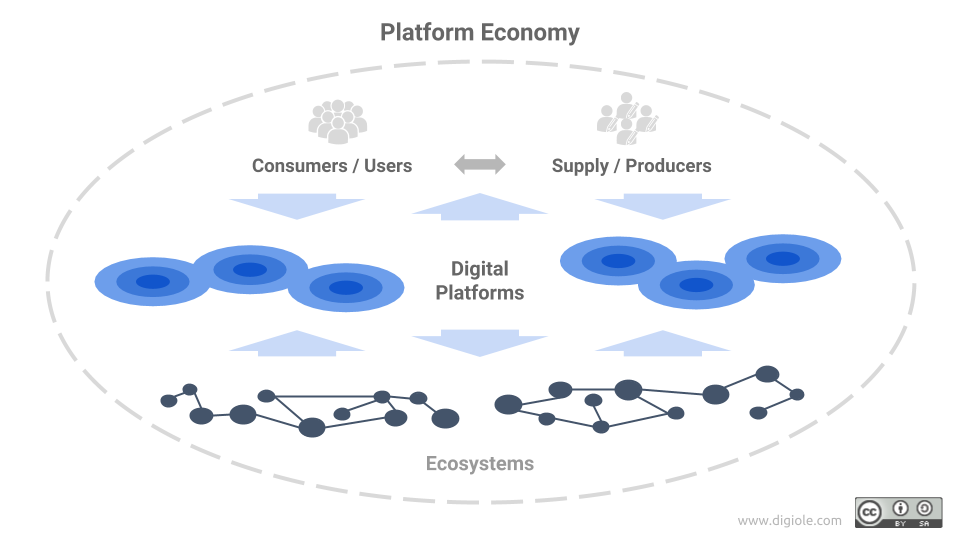
The competitive moat for these platforms isn't built from physical assets, but from data and network effects. Each new user on Facebook makes the platform more valuable for every other user and advertiser. Each transaction on Amazon provides data that sharpens its recommendation algorithms and logistics. New entrants aren't just competing against a product; they're competing against a decade of accumulated user data and behavior.
Shifting Power Dynamics
The internet has armed buyers with perfect, or near-perfect, information. Before buying a product, a customer can instantly compare prices across dozens of vendors, read hundreds of reviews, and even find discount codes. This transparency creates immense pressure on companies, effectively transferring bargaining power to the consumer. Brand loyalty is harder to maintain when a better deal is just a click away.
Simultaneously, the bargaining power of suppliers has become incredibly concentrated. While there are thousands of component manufacturers, a few digital gatekeepers hold immense power. Consider the cloud computing market. A company might avoid locking itself into one software vendor, but it almost certainly relies on Amazon Web Services, Microsoft Azure, or Google Cloud. These infrastructure giants are the new landlords of the digital world. Their pricing decisions, service changes, and outages can have a cascading effect on thousands of businesses.
Relying on a single cloud provider is a strategic trade-off. It offers efficiency and powerful tools, but it also means placing a critical part of your business operations in another company's hands.
Competition from Everywhere
Technology has blurred the lines between industries, intensifying the threat of substitutes. A bank's biggest competitor might not be another bank, but a tech company like Apple offering seamless payment services. Movie theaters aren't just competing with other theaters; they're competing with Netflix, TikTok, and video games for a share of our attention.
This dynamic changes the nature of rivalry itself. Companies that are fierce competitors in one area are often collaborators in another. This is called Apple and Google compete head-to-head in smartphone operating systems, but Google pays Apple billions each year to be the default search engine on the iPhone. Amazon competes with independent sellers on its marketplace, but it also provides the logistics and web services they need to operate.
Navigating this landscape requires looking beyond direct rivals. Strategic analysis must account for platform dependencies, the power of data networks, and competitors emerging from completely unrelated fields.
What is the 'Platform Paradox' as described in the text?
According to the text, the primary competitive moat for modern digital giants like Amazon and Facebook is built on:
Analyzing a market is no longer about static forces. It's about understanding the dynamic, interconnected systems that technology has created.