Strategic Digital Marketing and Growth Execution
Search Synergy
SEO & PPC: A Powerful Partnership
Most marketers treat Search Engine Optimisation (SEO) and Pay-Per-Click (PPC) advertising as separate channels, often competing for the same budget. This is a missed opportunity. When used together, they form a powerful feedback loop, where insights from one amplify the results of the other. Thinking of them as a team, not rivals, is the key to dominating the search engine results page (SERP).
Organic and paid search visibility serve different purposes but work best when used together.
Let PPC Guide Your SEO Strategy
One of the biggest challenges in SEO is the time it takes to see results. You can spend months optimizing for a keyword only to find it doesn't convert into actual business. This is where PPC becomes your crystal ball.
Paid search campaigns provide near-instant feedback on which keywords drive not just clicks, but conversions. You get real-world data on which search terms your customers are using when they're ready to buy. This intelligence is invaluable.
Instead of guessing which keywords to target for your long-term SEO efforts, you can use your PPC data to focus on terms that are already proven winners. This data-driven approach saves time and resources, ensuring your SEO work is targeted where it will have the most impact.
You can prioritize your SEO efforts on the proven, high-converting keywords you discovered through PPC, ensuring your long-term investment is focused on terms that actually drive business results.
This synergy works both ways. A strong organic presence builds trust and authority, which can significantly benefit your paid campaigns.
Boost Your Ads with Good SEO
Google doesn't just look at how much you're willing to bid for an ad. It also considers your Quality Score, a rating of the overall user experience your ad and landing page provide. A higher Quality Score can lead to lower costs per click (CPC) and better ad positions.
This is where your SEO efforts pay direct dividends to your PPC campaigns. A well-optimised landing page, a core component of good on-page SEO, contributes heavily to your Quality Score. Pages that are relevant, load quickly, and are easy to navigate are seen more favourably by Google. By improving your organic rankings for a keyword, you're signalling to Google that your page is a high-quality, relevant result for that search query. This authority can carry over, making your ads more effective and cheaper to run.
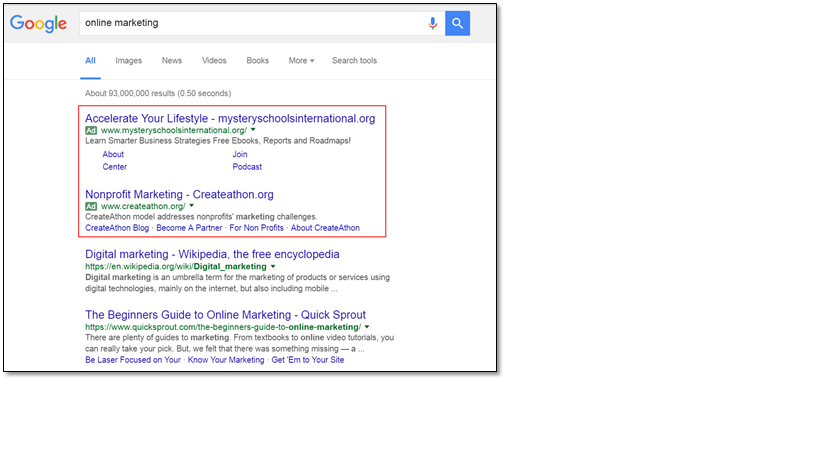
Dominate the SERP and Test Your Message
When you have both a top organic listing and a paid ad on the same results page, you're not just doubling your visibility, you're dominating the digital shelf space. This builds immense brand credibility and can push competitors further down the page.
Furthermore, PPC offers a perfect testing ground for your SEO strategy. Want to know which title tag or meta description will get more clicks? Instead of changing your organic listing and waiting weeks for data, run a small PPC campaign with different ad copy variations. You can A/B test headlines and descriptions in a matter of hours or days. Once you find the combination with the highest click-through rate (CTR), you can apply that winning message to your page's title and meta description for a long-term SEO boost.
Use PPC for speed and SEO for endurance. Test quickly with paid ads, then apply the learnings to your sustainable, long-term organic strategy.
Another critical use of this combined approach is brand defense. Competitors can, and often do, bid on your brand name to steal traffic. Running your own branded PPC campaign, even if you rank #1 organically for your name, is a defensive strategy. It allows you to control the messaging and ensures that when someone searches for you, they find you first, not a competitor.
Ready to test your knowledge on combining SEO and PPC for maximum impact?
According to the text, what is the primary benefit of using PPC data to inform SEO strategy?
How can strong SEO efforts directly benefit your PPC campaigns?
By integrating these two powerful channels, you move from simply being present in search results to strategically owning them. It's a holistic approach that leverages short-term data to build long-term authority.