Strategic Digital Marketing and Campaign Integration
Integrated Multi-Channel Strategy
Beyond the Silos
Most marketing teams operate in silos. The SEO team focuses on organic search, the paid media team buys ads, and the social media team posts updates. Each group has its own goals and metrics. While they might all be busy, they're not always working together. This is like having a band where the guitarist, drummer, and singer all play different songs at the same time. It's just noise.
An integrated strategy, however, turns that noise into music. It treats every channel as part of a single, unified ecosystem. Instead of optimizing for individual channels, the goal is to optimize the entire customer experience. Every touchpoint, from a blog post found on Google to a retargeting ad on Instagram, works in harmony to guide the customer.
Integrated digital marketing is vital for growth, unifying content, SEO, social, email, and paid ads for a cohesive brand experience and superior ROI.
This approach acknowledges that different channels play different roles. Some are great for building initial awareness, while others are designed to close a sale. The magic happens when you get them to support each other.
The Messy Customer Journey
The idea of a clean, linear path from awareness to purchase is a myth. The modern customer journey is messy and unpredictable. A potential B2B client might first hear about your company from a LinkedIn post, then search for a related problem on Google and read your blog. A week later, they might see a targeted ad, visit a review site, and then finally click an email link to request a demo.
This journey can involve dozens of touchpoints across a wide range of channels. Trying to understand it as a straight line will only lead to missed opportunities. The key is to map out these potential paths, understanding that customers will weave between channels on their own terms.
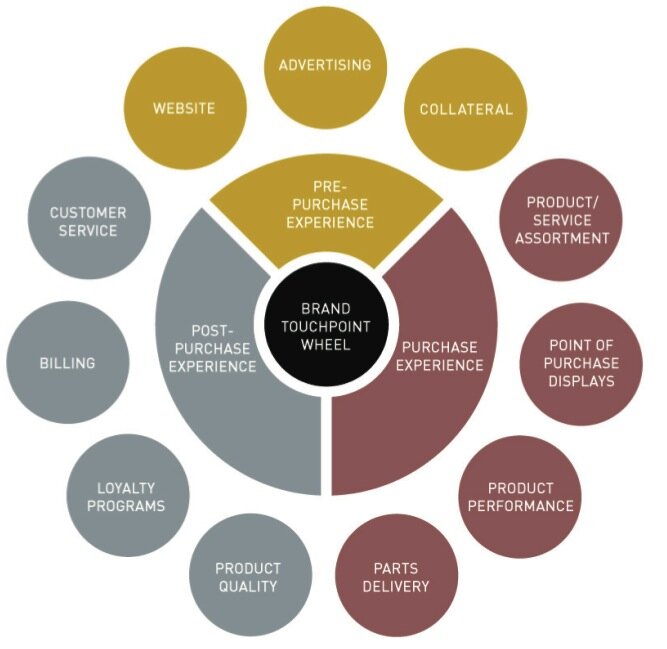
By mapping this journey, you can ensure your message is consistent and helpful at every step. You stop thinking about 'winning' on a specific channel and start thinking about building a relationship over time, wherever your customer happens to be.
The Full-Funnel Approach
A full-funnel strategy assigns a specific job to each channel based on where a customer is in their journey. Instead of having every channel try to do everything, you leverage their unique strengths. Think of it as putting together a specialist team rather than hiring a group of generalists.
The funnel is typically broken into stages:
- Awareness (Top of Funnel): The customer has a problem but may not know about your solution yet. The goal is to educate and inform, not to sell.
- Consideration (Middle of Funnel): The customer is aware of solutions and is now comparing options. The goal is to build trust and demonstrate value.
- Conversion (Bottom of Funnel): The customer is ready to make a decision. The goal is to make it easy for them to choose you.
This is where we define the strategic roles of different channels. For example, SEO is a long game. It's perfect for the awareness and consideration stages, building authority and capturing people who are researching solutions. Its goal is to establish long-term trust.
SEM, on the other hand, is built for immediate action. By targeting high-intent keywords like "buy accounting software," you can capture users at the exact moment they are ready to convert. Its goal is immediate conversion.
When SEO and SEM work together, they create a powerful synergy. The brand awareness built by SEO makes the SEM ads more credible and effective, leading to a higher return on investment than if each channel operated alone.
A full-funnel strategy doesn't mean you have to be on every single channel. It means choosing the right channels for your audience and making sure they all have a clear purpose. This unified approach moves you from running disconnected campaigns to building a predictable engine for growth.
What is the primary problem when marketing teams operate in silos?
According to the text, which statement best describes the modern customer journey?