Strategic Curriculum Roadmap and Resource Guide
Architectural Design Patterns
Choosing Your Blueprint
Architectural patterns are less about strict rules and more about strategic blueprints. You know what software components are, but how do you arrange them to build something that is resilient, scalable, and easy to maintain? The answer depends entirely on what you're building.
The classic starting point is the trade-off between a and a microservices approach. A monolith is a single, unified application. All its functions, from user authentication to payment processing, are contained within one large codebase and deployed as a single unit. It's like building a house where all the plumbing, electrical, and framing are part of one inseparable structure.
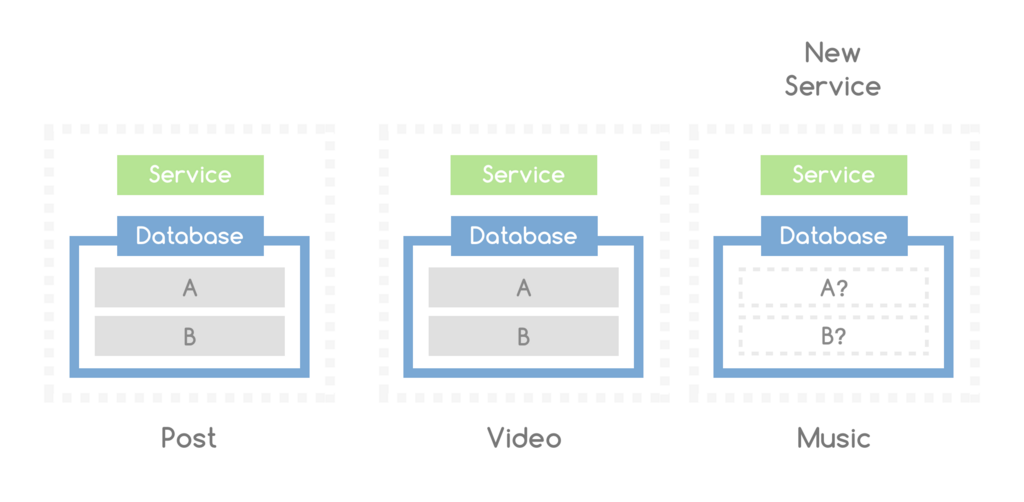
Microservices, on the other hand, break the application into a collection of small, independent services. Each service handles a specific business function and communicates with others over a network, typically via APIs. This is like building with LEGO bricks: each piece is self-contained, but they combine to create a complex model. The key advantage is independence. You can update, deploy, or scale the payment service without touching the user authentication service.
| Consideration | Monolithic | Microservices |
|---|---|---|
| Initial Development Speed | Faster. Everything is in one place. | Slower. Requires setting up inter-service communication. |
| Scalability | Difficult. Must scale the entire application at once. | Easier. Scale only the services that need it. |
| Deployment Complexity | Simpler. Deploy one unit. | More complex. Requires orchestration and coordination. |
| Fault Tolerance | Lower. A failure in one part can crash the whole app. | Higher. One service failing won't necessarily bring down others. |
| Team Organization | Can lead to large, slow-moving teams. | Enables small, autonomous teams focused on specific services. |
The choice isn't just technical; it's organizational. Your architecture should reflect your team structure and business goals.
Connecting the Pieces
Once you have multiple services, they need to talk to each other. This is where event-driven architectures shine. Instead of one service directly calling another (a synchronous request), services communicate asynchronously by producing and consuming events. A service publishes an event, like "OrderPlaced," to a message broker. Other services that care about this event, like the shipping or inventory services, subscribe to it and react accordingly.
This decoupling is powerful. The order service doesn't need to know or care who is listening. It just announces what happened. This improves resilience; if the shipping service is down, the event can wait in the message queue until it's back online. This pattern is fundamental to building scalable, reactive systems.
Managing Complexity at Scale
As a microservices ecosystem grows, two challenges emerge: how clients interact with the services, and how the services interact with each other. This is where specialized patterns like the API Gateway and Service Mesh come into play.
An acts as a single entry point for all client requests. Instead of a mobile app having to know the addresses of ten different services, it makes one call to the gateway. The gateway then routes the request to the appropriate internal services, gathers the responses, and returns a unified result. This simplifies the client, handles concerns like authentication and rate limiting in one place, and hides the internal service structure.
A related but distinct pattern is CQRS (Command Query Responsibility Segregation). It separates the models used for updating information (Commands) from the models used for reading information (Queries). This can drastically improve performance in read-heavy systems. You can optimize your database for fast writes on the command side and create separate, highly optimized read models for queries. This avoids complex joins and slow queries that can plague traditional data models.
CQRS is an advanced pattern. It adds complexity, so only apply it where performance gains justify the trade-off, not across your entire application by default.
Finally, in a high-traffic environment with dozens or hundreds of services, a becomes essential. It's an infrastructure layer that handles inter-service communication. Instead of each service's code containing logic for things like retries, load balancing, and security, this is all offloaded to the mesh. It provides visibility into how services are communicating, helps enforce policies, and makes the whole system more reliable and secure without cluttering the application code.
Time to check your understanding of these architectural blueprints.
What is a key advantage of a microservices architecture compared to a monolithic architecture?
An e-commerce platform needs to notify the inventory, shipping, and billing services after a new order is placed. The ordering service should not need to know if these other services are temporarily unavailable. Which pattern best achieves this decoupling?
Choosing an architectural pattern is about understanding the trade-offs. There is no single "best" answer, only the best fit for your specific problem, team, and scalability needs.