Strategic Cross Functional Coordination for Tech Leaders
Bridging Agile Architecture Gaps
The Agile Architect's Dilemma
In an agile environment, the push for rapid feature delivery often clashes with the need for a stable, scalable architecture. The product team wants to move fast, while the architecture team needs to ensure the foundation won't crack under future pressure. This isn't a conflict to be won, but a balance to be struck. The key is to integrate architectural thinking directly into the agile workflow, not as a separate, blocking step.
Your role is to shift the conversation from speed versus stability to sustainable speed through stability.
Building the Architectural Runway
The Scaled Agile Framework (SAFe) provides a useful concept for this: the Architectural Runway. Think of it as the existing code, components, and technical infrastructure needed to implement near-term features without excessive delay or redesign. It's the highway you build just ahead of the traffic of new features.
If the runway is too short, development teams have to build infrastructure while they're trying to deliver a feature. This leads to delays, rushed work, and technical debt. If the runway is long and well-maintained, teams can deliver features smoothly and quickly.
How do you build this runway? Through Architectural Enablers. These are specific, tangible work items that go into the team's backlog alongside user stories. They are not abstract goals; they are concrete tasks that enable future business functionality. Examples include:
- Setting up a new data pipeline in Snowflake to support a future analytics feature.
- Creating a generic authentication service that multiple new features can use.
- Refactoring a core module to handle higher traffic volumes expected next quarter.
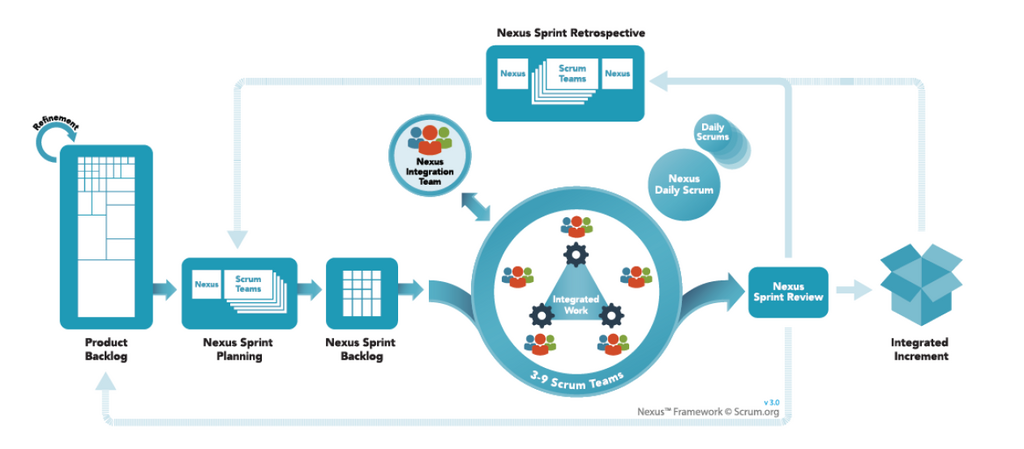
Enablers build the runway. The runway allows business features to be delivered faster. This direct link is what you must communicate to the Product Owner.
Intentional vs. Emergent Design
The balance between planning and agility is captured in the concepts of Intentional Architecture and Emergent Design.
Intentional Architecture is the set of purposeful, planned architectural strategies and initiatives. It's the big-picture thinking that ensures the system is scalable, secure, and resilient. This is where you, the architect, define the overall vision and guardrails.
Emergent Design refers to the design decisions that arise from the day-to-day implementation work of the development teams. As teams build features, they learn more about the problem space and make localized design choices. A healthy system allows for this bottom-up evolution.
The goal is not to choose one over the other. An over-emphasis on intentional architecture leads to a rigid, waterfall-like process. Relying purely on emergent design results in a chaotic system that's difficult to maintain or scale—the classic "big ball of mud."
The Architecture Roadmap lists individual increments of change and lays them out on a timeline to show progression from the Baseline Architecture to the Target Architecture.
The intentional architecture provides the framework, while emergent design provides the details. Think of building a new city. The intentional architecture is the city grid, the location of major utilities, and the zoning laws. The emergent design is the specific architecture of each individual building constructed within that grid. You need both for a coherent, functional city.
Speaking the Language of Business
The final piece of the puzzle is communication. Architects often talk about technical debt, but to a Product Owner focused on business value, this term can sound like an internal engineering problem. You must reframe the conversation.
Instead of saying, "We need to refactor the user service to pay down technical debt," try this:
"The current user service can handle 10,000 concurrent users. The business plan projects 50,000 by next quarter. If we don't increase its capacity now (the enabler), we risk system failure when the marketing campaign launches. This work will ensure the upcoming 'Feature X' can launch smoothly and perform under load."
This reframing achieves three things:
- It connects technical work to business outcomes (supporting a marketing campaign).
- It quantifies the risk in business terms (system failure, poor performance).
- It defines the architectural work as a prerequisite for future features (enabling 'Feature X').
By articulating technical needs as risks to future business velocity, you create a shared language with product leadership. You are no longer the 'Department of No,' but a strategic partner enabling the business to move faster, sustainably.
What is the primary purpose of an 'Architectural Runway' in an agile context like SAFe?
Which of the following best describes an 'Architectural Enabler'?
By building runways, balancing design approaches, and translating technical needs into business impact, you can effectively bridge the gap between agile delivery and robust, long-term architecture.