Strategic Audience Growth and Narrative Authority
Narrative Engine Architecture
Your Brand Isn't the Hero
Let's get one thing straight: your audience doesn't care about your brand's story. They care about their own. Effective social media scaling isn't about shouting your achievements; it's about weaving your brand into the narrative of your customer's life. This means moving away from self-promotional posts and adopting a structural narrative strategy.
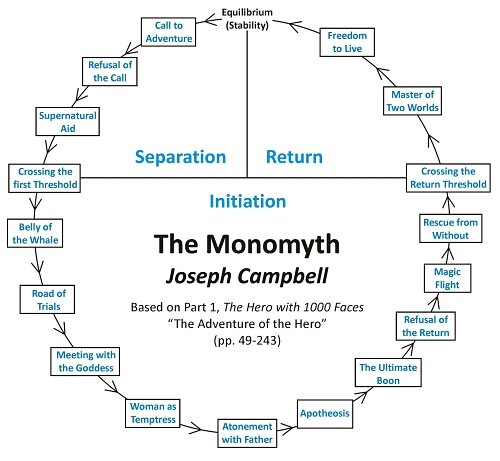
The most powerful framework for this is the Hero's Journey, a narrative pattern identified by mythologist . It’s a timeless structure found in myths, legends, and blockbuster films. More importantly, it provides a blueprint for creating content that builds deep, emotional connections with your audience, turning followers into advocates.
Casting the Right Roles
In this narrative, your brand is not the hero. The hero is, and always must be, your audience. They are the ones on a quest, facing challenges and seeking transformation. Trying to make your brand the star of the show is like a film where the wise old mentor suddenly starts acting like the main character. It's confusing and alienating.
Your brand's role is the Guide. Think Yoda, not Luke Skywalker. The Guide is the trusted expert who has been there before, understands the hero's struggle, and provides the tools, wisdom, or plan needed to succeed. The Guide equips the hero; they don't fight their battles for them. Every piece of content you create should reinforce this dynamic, offering help and insight rather than demanding attention.
The Hero’s Journey is a powerful brand storytelling technique that adapts the classic narrative structure to position the customer as the hero and the brand as their guide or mentor.
Every compelling story needs a conflict. In your brand's narrative, the 'Villain' isn't a person but a problem. It's the specific pain point, limiting belief, or frustrating obstacle your audience faces. Defining this villain clearly is crucial. It’s the thing that keeps your hero stuck in their 'Ordinary World.'
Villain
noun
In brand storytelling, the 'Villain' is the personification of the customer's core problem or frustration. It can be an external force (like time-consuming processes) or an internal one (like self-doubt or confusion).
Crafting the Journey
With the characters defined, the story begins. The first step is the . This is the hook in your content that grabs the hero's attention and signals that a change is possible. It’s the moment they recognize their problem (the Villain) and see a potential path forward, offered by you, the Guide.
A Call to Adventure isn't a sales pitch. It’s a spark of curiosity or an offer of help. It might be a question that challenges a common assumption, a post that shares a surprising statistic about their industry, or a tutorial that promises to solve a nagging, everyday problem. It acknowledges their struggle and invites them to take the first, small step toward transformation.
This leads to the core value proposition of this strategy: transformational learning. Instead of just consuming content, your audience should feel like they are achieving something. Each post should provide a small win, a moment of clarity, or a practical skill that helps them on their journey. This builds trust and positions you as an indispensable Guide.
Mapping these narrative stages to a content calendar gives your social media strategy a clear arc. You're no longer just posting; you're guiding a journey.
| Narrative Stage | Audience Mindset | Content Type |
|---|---|---|
| 1. Ordinary World | Unaware of the problem or feels stuck | Relatable content, memes, posts that highlight the 'Villain' (pain point) |
| 2. Challenges | Actively seeking solutions, facing obstacles | How-to guides, tutorials, case studies, Q&As, expert tips (Small Wins) |
| 3. Transformation | Achieved a goal, feeling empowered & successful | Customer success stories, testimonials, user-generated content, results |
By following this structure, your content builds on itself. Each post becomes a chapter in a larger story that your audience is the hero of. This is how you build emotional resonance and create the kind of long-term loyalty that goes far beyond a simple follow.
In the Hero's Journey framework for social media, what is the most effective role for your brand to play?
According to the narrative strategy, who is the 'Hero' in your brand's story?