Strategic AI Governance and Risk Management for Insurance Professionals
Skeptical AI Inquiry
The Skeptical Inquiry Framework
Large language models are powerful tools, but they are not oracles. They generate text based on patterns, not understanding. This means they can produce highly confident, well-written responses that are completely wrong. To use AI effectively in insurance, you must shift your mindset from accepting its output to actively challenging it. This is the core of the Skeptical Inquiry Framework.
Think of the AI as a new, incredibly fast junior analyst. It can draft summaries, find clauses, and organize information in seconds. But like any junior analyst, its work requires rigorous review by an expert—you. Your experience, intuition, and deep policy knowledge are the essential filters that turn the AI's raw output into reliable insight.
Your role is not to trust the AI's answer, but to verify it. The goal is to use the AI to accelerate your workflow, not replace your judgment.
Spotting 'Workslop'
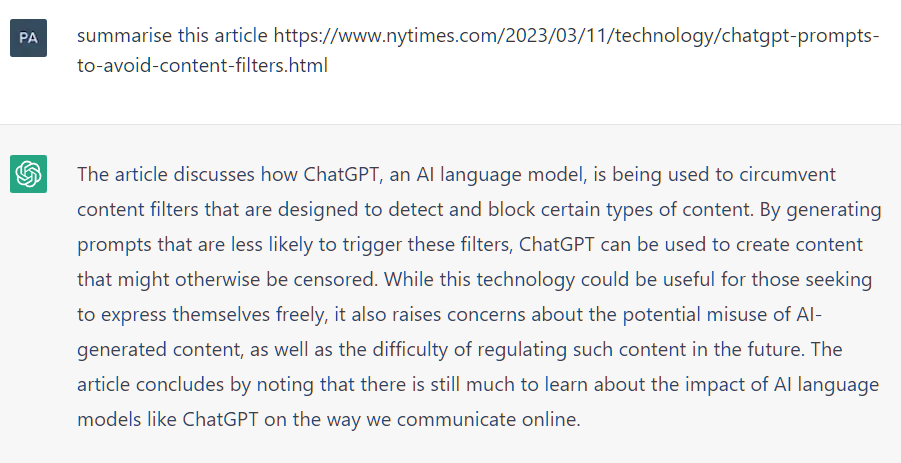
AI-generated inaccuracies often come disguised in a polished package. The grammar is perfect, the tone is professional, and the structure is logical. This deceptive combination of high polish and low accuracy is what we call 'workslop'.
Workslop
noun
AI-generated output that appears well-crafted and accurate on the surface but contains subtle yet significant errors, omissions, or misinterpretations.
Workslop is dangerous because it looks finished. For example, when reviewing a First Notice of Loss (FNOL) report for a water damage claim, an AI might generate a clean summary:
*"The insured reports a pipe burst in the upstairs bathroom, causing water damage to the ceiling of the family room below. The incident occurred on May 15th at approximately 3:00 PM."
This looks correct. But a skeptical professional would ask: What kind of pipe? Was it a sudden failure or a slow leak over time? The AI summary omits the nuance needed to check for policy exclusions related to long-term seepage or faulty maintenance. Relying on the workslop without digging deeper could lead to a critical coverage mistake.
Challenging the AI's Work
To find and fix workslop, you need to actively stress-test the AI's conclusions. Two effective techniques are adversarial prompting and role-based validation.
Adversarial prompting involves questioning the AI's output directly, asking it to find evidence that contradicts its own summary or to consider alternative interpretations.
Imagine you've asked an AI to summarize the key liability exclusions in a general liability policy. It gives you a standard list. Now, you apply adversarial prompting.
--- Initial Prompt ---
Summarize the key liability exclusions in the attached CGL policy.

--- Adversarial Follow-up ---
Are there any exceptions to the pollution exclusion you listed? Find the exact wording in the policy that supports this.

Now, argue the opposite. What language in the policy could be interpreted to mean this loss IS covered?

Based on the 'care, custody, or control' exclusion, create a scenario involving a subcontractor that would NOT be covered.
This approach forces the model to re-examine the source material from a different perspective, often uncovering details it missed in its initial, more general summary.
Role-based validation takes this a step further. You instruct the AI to adopt a persona with a specific, critical point of view.
--- Role-Based Validation Prompt ---
You are a skeptical senior claims adjuster with 20 years of experience. Review your previous summary of this FNOL. What information is missing? What three questions would you ask the insured immediately to test for potential coverage issues? What details seem vague or suspicious?
By framing the request this way, you guide the AI to apply a layer of critical analysis it wouldn't use by default. It moves from being a summarizer to a preliminary analysis partner, helping you spot the very workslop it may have just created.
Apply critical thinking to evaluate AI-generated insights
Ultimately, the distinction between an automated suggestion and expert judgment is crucial. The AI provides the former; you provide the latter. The Skeptical Inquiry Framework ensures you never confuse the two. Every AI-generated summary, claim, or data point is a starting point for your analysis, not the conclusion. Your expertise is what shapes these preliminary outputs into a final, defensible decision.
According to the Skeptical Inquiry Framework, what is the most effective way to view a large language model's role in insurance work?
What is 'workslop'?