Storytelling for Kids in Tamil
Introduction to Tamil Storytelling
A Living Tradition
In Tamil culture, a story isn't just entertainment. It's a thread connecting the past to the present. For thousands of years, storytelling has been the primary way of passing down history, values, and the rich texture of the Tamil language. This tradition is so ancient that some of the earliest Tamil literature was recorded on palm-leaf manuscripts.

These weren't just dry historical records. They contained epic poems, ethical treatises, and stories that captured the imagination. The act of sharing these stories orally ensured that cultural knowledge wasn't limited to those who could read. It was a living, breathing part of daily life, accessible to everyone. This oral tradition kept the culture vibrant and unified people through shared narratives.
More Than Just Words
The role of storytelling goes far beyond simple instruction. It’s a cornerstone of social life. Grandmothers gather children at dusk to tell fables, while village festivals might feature elaborate performances of epic tales. These are moments of connection, where lessons are absorbed not through lectures, but through emotion and drama.
In Tamil culture, a shared story is a shared experience. It builds community and strengthens bonds between generations.
This tradition takes many forms. One of the most dynamic is Therukoothu, or street theatre. Performers use music, dance, and dramatic costumes to bring ancient stories to life, captivating entire villages. The stories are often familiar, but the performance makes them feel new every time.
Whether it’s a quiet tale told at home or a booming street performance, storytelling serves to entertain, educate, and reinforce a collective identity. It’s how children learn about their roots and their place in the world.
The Magic of Children's Tales
What makes a Tamil story for children so engaging? It’s a blend of simple language, memorable characters, and a clear moral compass. These stories, or kadhaigal, are designed to be easily understood and remembered.
kadhai
noun
The Tamil word for story. A single story is a kadhai, and multiple stories are kadhaigal.
Characters are often archetypal: the wise king, the witty court jester, the greedy merchant, or talking animals who behave like humans. A clever crow might teach a lesson about ingenuity, while a mighty tiger learns humility from a small rabbit. These characters make complex ideas like justice, honesty, and kindness accessible to young minds.
The plots are usually straightforward, focusing on a problem that is solved through wit or virtue. The ending almost always carries a clear moral, reinforcing the idea that good actions lead to good outcomes. This structure provides a sense of order and predictability that children find comforting.
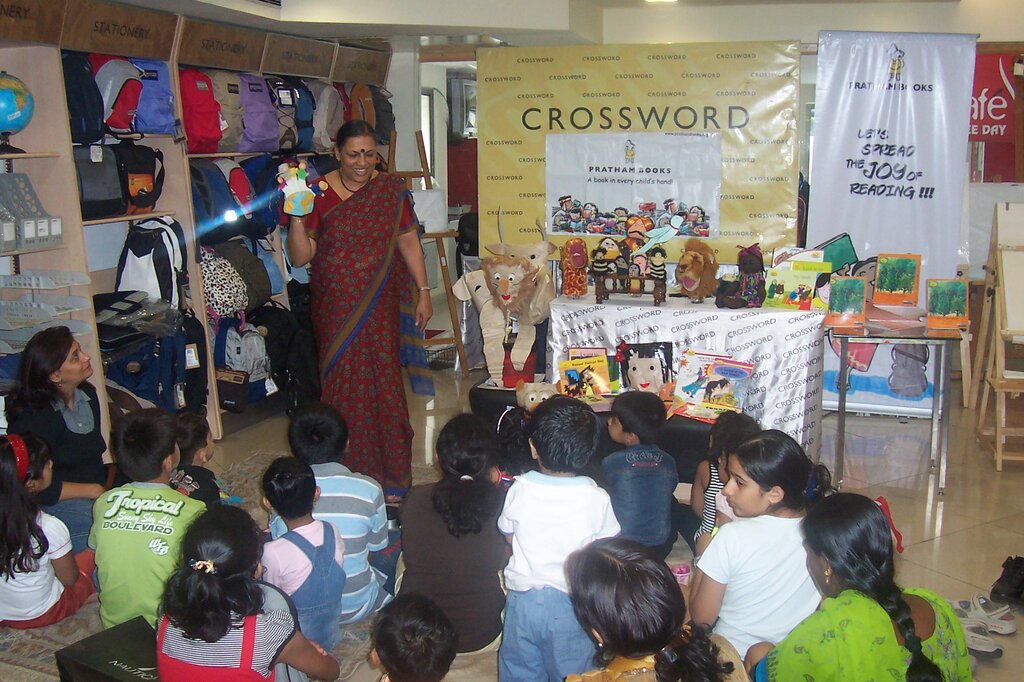
This combination of engaging characters and moral clarity is the heart of Tamil storytelling for children. It doesn't just entertain them; it provides a foundation for their ethical development, wrapped in a package of fun and imagination.
Ready to check your understanding?
What is the primary role of storytelling in Tamil culture, as described in the text?
On what material were some of the earliest Tamil literary works recorded?
Tamil storytelling is a rich and ancient art form that continues to play a vital role in culture, education, and community life.