Storing Large Language Models
Introduction to Large Language Models
What Are Large Language Models?
Large Language Models, or LLMs, are a type of artificial intelligence designed to understand and generate human language. They're called "large" because they are built with a huge number of parameters and are trained on vast quantities of text data. This scale allows them to recognize complex patterns, nuances, and relationships in language.
A large language model (LLM) is an AI model trained on massive amounts of text data that can understand and generate human-like text, recognize patterns in language, and perform a wide variety of language tasks without task-specific training.
Think of an LLM as an incredibly advanced autocomplete. But instead of just suggesting the next word, it can write entire essays, answer complex questions, translate languages, and even generate computer code. Its capabilities stem directly from the patterns it learned from the data it was trained on.
The Architecture Inside
Modern LLMs are typically built using a neural network architecture called the Transformer. Introduced in 2017, the Transformer was a breakthrough because it's exceptionally good at handling sequential data like text.
The key innovation within the Transformer is a mechanism called self-attention. This allows the model to weigh the importance of different words in the input text when processing and generating language. For example, when processing the sentence "The cat sat on the mat, and it was fluffy," the self-attention mechanism helps the model understand that "it" refers to the "cat" and not the "mat."
This ability to track relationships between words, even across long sentences and paragraphs, gives LLMs their remarkable coherence and contextual awareness.
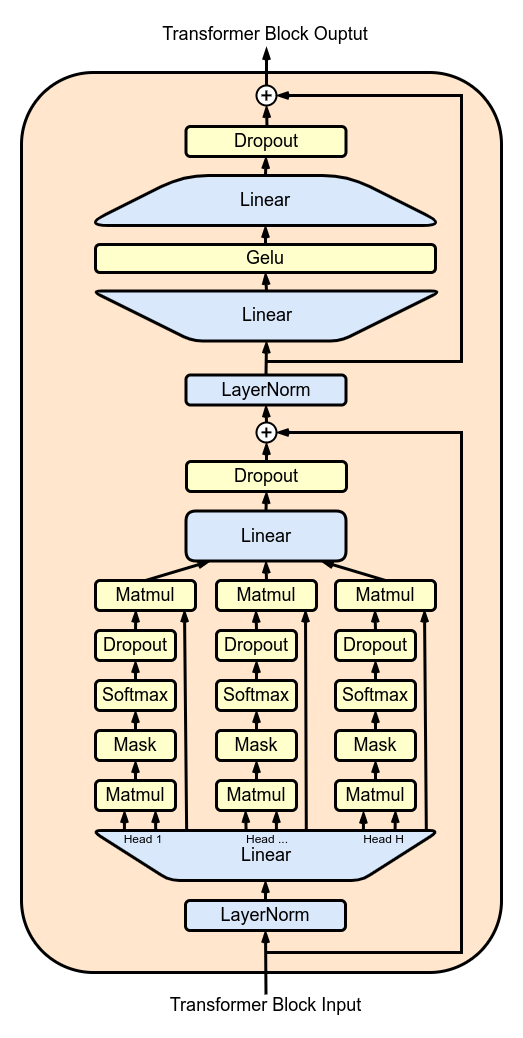
An LLM is composed of many of these Transformer blocks stacked on top of each other. Within these blocks are the model's parameters. Parameters are the internal variables that the model learns during training. They are essentially the knobs and dials that the model tunes to minimize its prediction errors.
The number of parameters in a model is a rough measure of its size and complexity. Early models had millions of parameters, but today's state-of-the-art LLMs can have hundreds of billions or even trillions. This enormous number of parameters is what enables them to store so much information about language and the world.
How LLMs Learn
The process of teaching an LLM is called training. It starts with a massive dataset, often scraped from the internet, containing a colossal amount of text—everything from books and articles to websites and conversations. This process is known as pre-training.
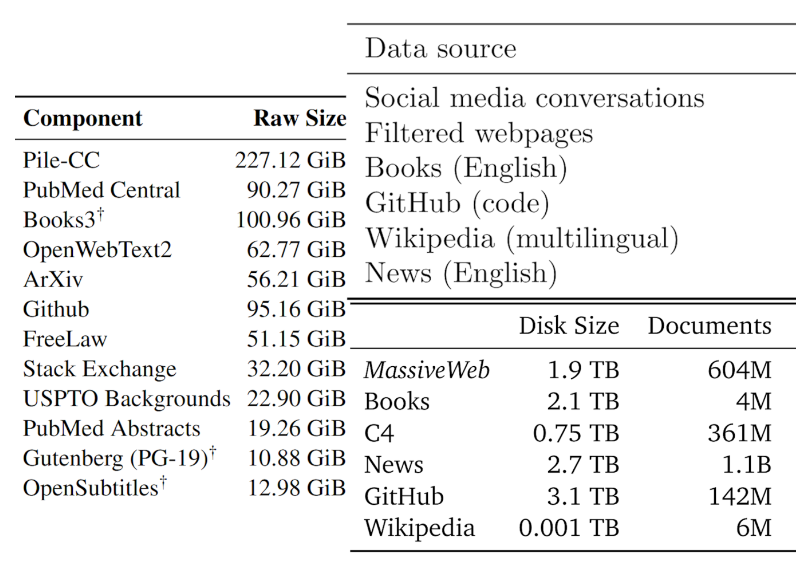
During pre-training, the model is given a simple but powerful objective: predict the next word in a sequence. It's shown a piece of text with one word missing and has to guess what that word is.
For example, it might see the sentence: "The quick brown fox jumps over the lazy ___."
The model makes a prediction. If it guesses "dog," it's rewarded. If it guesses "rock," it's penalized. When it makes a mistake, it adjusts its internal parameters slightly to improve its chances of getting it right the next time. This process is repeated billions upon billions of times, with text from every imaginable topic. Through this simple process, the model begins to learn grammar, facts, reasoning abilities, and even styles of writing.
The Challenges of Scale
The sheer size of LLMs creates significant challenges. Training a large model requires immense computational power. It involves thousands of specialized processors (like GPUs) running for weeks or months, consuming vast amounts of electricity. This makes training these models incredibly expensive, often costing millions of dollars.
Once trained, just running an LLM (a process called inference) is also computationally intensive. The model's huge number of parameters requires a lot of memory to store. This is why you can't simply run a model like GPT-4 on your laptop; it requires powerful hardware in a data center.
Furthermore, the complexity of these models makes them somewhat of a "black box." Even their creators don't fully understand why they make certain predictions or how they store specific information. This lack of interpretability is an active area of research, as it's crucial for ensuring the models are reliable, fair, and safe.
Let's check your understanding of these foundational concepts.
What is the primary characteristic that defines a language model as "large"?
The key innovation within the Transformer architecture that allows a model to weigh the importance of different words in a sentence is called __________.
Understanding the architecture, training, and challenges of LLMs is the first step. Now you're ready to learn about the clever ways we manage these massive models.