Stock Valuation Essentials
Introduction to Stock Valuation
What's a Stock Really Worth?
When you buy a stock, you're buying a small piece of a company. But how do you know if you're paying a fair price? A stock's price on the market can swing wildly from day to day based on news, trends, or even just random noise. Stock valuation is the process of figuring out what a company is actually worth, separate from its constantly changing market price.
The goal is to determine a company's intrinsic value—its true, underlying worth—to see if the market price is a bargain or a rip-off.
Intrinsic Value
noun
An estimate of an asset's true value based on a thorough analysis of its underlying financial health and future potential, independent of its current market price.
Think of it like shopping for a used car. The seller might have a sticker price of $15,000, but you do your own research. You check the car's history, its mileage, and what similar cars are selling for. You might decide the car's intrinsic value is only $12,000. Knowing this helps you make a smart decision. The same logic applies to stocks.
Money Today and Money Tomorrow
A core principle in valuation is the time value of money. It’s the simple idea that a dollar today is worth more than a dollar tomorrow. Why? Because you could invest today's dollar and earn interest, making it grow into more than a dollar in the future. Conversely, future earnings need to be adjusted to figure out what they're worth in today's money.
If a company is expected to make money in the future, we need to calculate the present value of those future earnings to understand the company's worth right now.
The basic formula for this involves a discount rate, which is like an interest rate in reverse. It helps us figure out how much to "discount" future money to find its value today. The higher the discount rate, the less that future money is worth to us now.
| Symbol | Meaning |
|---|---|
| The discount rate (interest rate) | |
| Number of time periods (e.g., years) |
Accounting for Risk
A company's future is never guaranteed. It might face new competitors, a changing economy, or internal problems. This uncertainty is called risk. When we value a company, we have to account for the risk that its future earnings won't meet expectations.
How do we do this? A common way is by adjusting the discount rate. A riskier company gets a higher discount rate. This means its projected future earnings are considered less valuable in today's terms, lowering its overall intrinsic value. A stable, predictable company would get a lower discount rate, making its future earnings more valuable today.
Market Price vs. Intrinsic Value
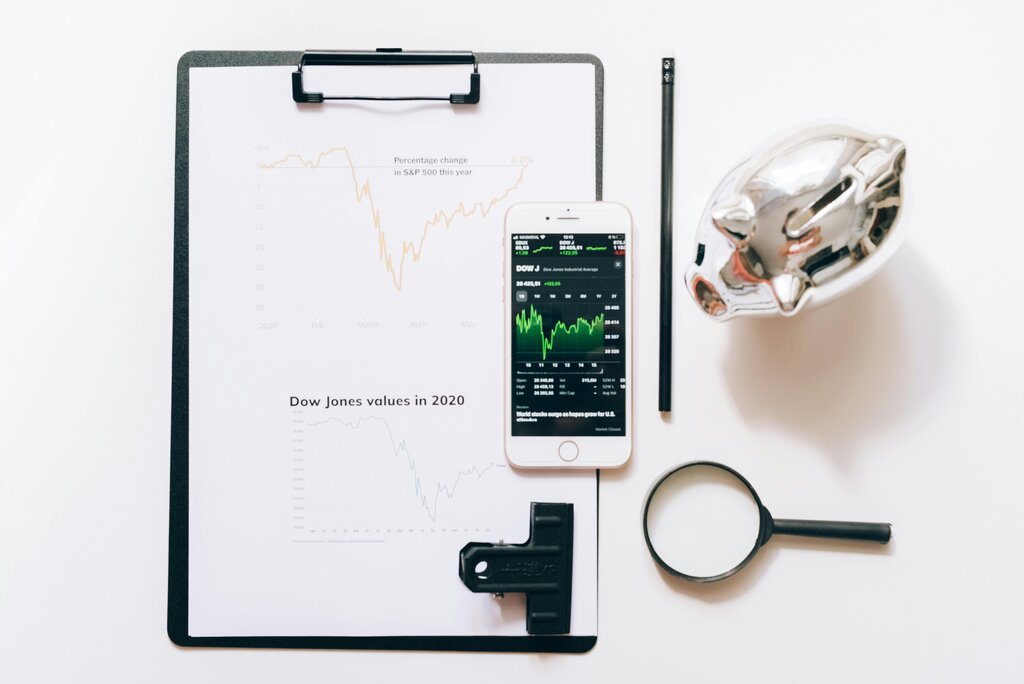
The stock market is a chaotic place. A stock's price can be influenced by investor emotions, breaking news, and broad market trends. This is the market price—what you can buy or sell a share for at any given moment.
Intrinsic value, on the other hand, is what you calculate the share to be worth based on your analysis of the business itself. The difference between these two numbers is where investors find opportunities.
If your analysis shows a stock's intrinsic value is $50, but it's trading on the market for $30, you've potentially found an undervalued stock—a bargain.
If the intrinsic value is $50 but the market price is $70, the stock may be overvalued. Buying it would be like knowingly paying too much for that used car.
This gap between price and value is the entire game. The art and science of valuation is all about getting a reliable estimate of intrinsic value so you can make smarter investment decisions.
The first key lesson for the would-be Value Investor is that the worth of a business is independent of the market price.
Now, let's review the key concepts we've covered.
Ready to test your knowledge?
What is the primary purpose of stock valuation?
According to the principle of the time value of money, a dollar received one year from now is worth less than a dollar received today.
Understanding these core ideas—intrinsic value, the time value of money, risk, and the difference between price and value—is the foundation for every valuation method you'll learn next.