Stock Trading Essentials
Introduction to Stock Markets
What Is a Stock Market?
A stock market is essentially a collection of exchanges where people buy and sell shares of publicly traded companies. Think of it like a massive, organized marketplace. But instead of buying apples or antiques, you're buying tiny pieces of ownership in companies like Apple or Ford.
When you buy a stock, you become a shareholder, which means you own a small part of that company.
This marketplace serves two main purposes. For companies, it's a way to raise money to grow their business, fund new projects, or hire more people. They do this by selling ownership stakes to the public. For individuals, it's an opportunity to invest their money, hoping that the companies they invest in will do well and increase in value over time, growing their wealth.
Where Trading Happens
These transactions don't just happen in the ether. They take place at specific venues called stock exchanges. These exchanges act as the central location for buying and selling. While trading is now almost entirely electronic, these exchanges are still major institutions.
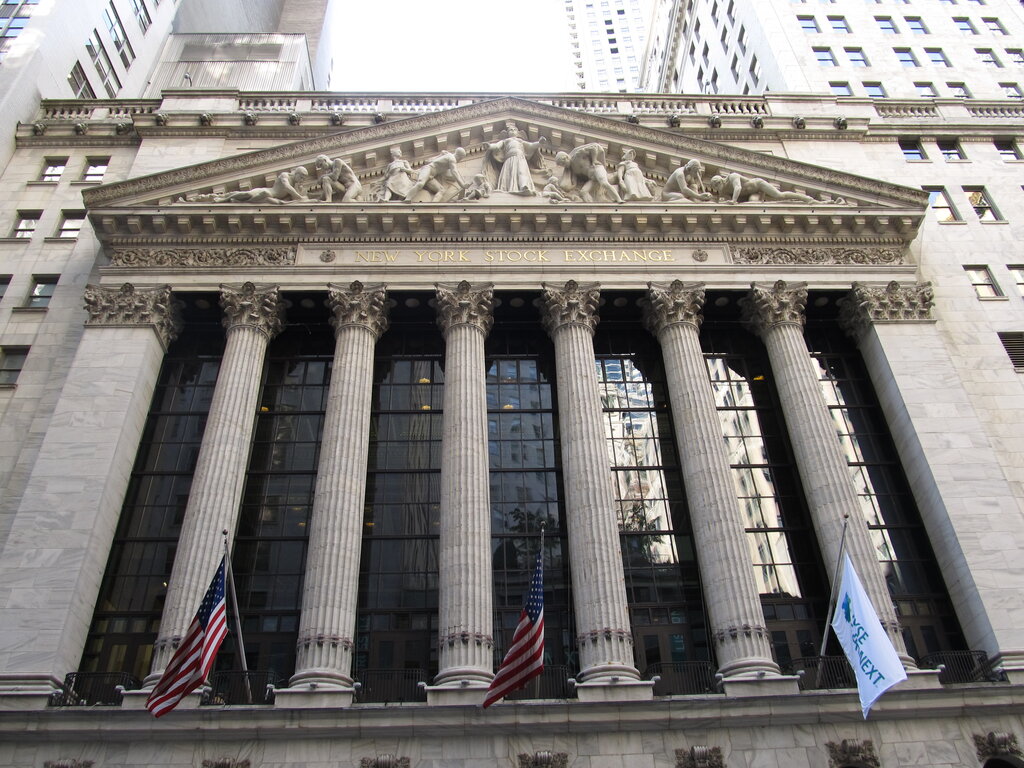
Two of the biggest and most well-known exchanges in the world are the New York Stock Exchange (NYSE) and the Nasdaq.
The NYSE, founded in 1792, traditionally operated as an auction market, with traders physically on a trading floor. The Nasdaq, which started in 1971, was the world's first electronic stock market. Today, both rely on high-speed computer networks to handle the immense volume of trades every day.
What You Can Trade
While we call it the "stock" market, other types of investments are traded there too. These are broadly known as securities. Here are the main types you'll encounter:
Stock
noun
A security that represents a share of ownership in a corporation. This entitles the owner to a proportion of the corporation's assets and profits equal to how much stock they own.
There are also bonds. A bond is essentially a loan you make to a company or a government. In return for your money, they promise to pay you back in full on a specific date, with regular interest payments along the way. They are generally considered less risky than stocks.
Finally, there are Exchange-Traded Funds (ETFs). An ETF is a bundle of different investments, like stocks and bonds, all packaged together. Buying one share of an ETF is like buying a small piece of many different companies at once, which helps spread out your risk.
Measuring the Market's Mood
With thousands of companies to follow, how can you tell if the market is generally having a good day or a bad day? That's where stock indices come in. An index tracks the performance of a group of stocks, giving a quick snapshot of the market's health.
| Index | What It Represents |
|---|---|
| S&P 500 | The performance of 500 of the largest U.S. companies. It's a broad measure of the overall market. |
| Dow Jones Industrial Average (DJIA) | The performance of 30 large, influential U.S. companies. It's older and more focused. |
| Nasdaq Composite | Tracks over 3,000 stocks listed on the Nasdaq exchange, with a heavy focus on technology companies. |
When you hear a news reporter say "the market was up today," they're usually referring to the performance of one of these major indices.
The People Involved
Several key players keep the stock market running. While their roles can sometimes overlap, it's helpful to understand their primary functions.
Investors typically buy securities with the goal of holding them for a long time, sometimes for years or even decades. They're focused on the company's long-term growth potential.
Traders, on the other hand, buy and sell much more frequently. They aim to profit from short-term price fluctuations, sometimes holding a stock for only a few minutes or hours.
Brokers are the intermediaries. They are firms or individuals licensed to buy and sell securities on behalf of investors and traders. In the past, you had to call a broker on the phone to place an order. Today, most people use online brokerage platforms to trade.
Now that you understand the basic landscape of the stock market, let's test your knowledge.
What is the primary reason for a company to offer shares on the stock market?
An individual who buys and sells securities very frequently, sometimes within the same day, to profit from short-term price changes is best described as a(n) __________.
Understanding these core concepts is the first step. They provide the foundation for making informed decisions as you learn more about the world of investing.