Stock Trading Essentials
Introduction to Stock Markets
What Is a Stock Market?
Think of a stock market as a massive, organized marketplace. But instead of selling fruits and vegetables, this market sells tiny pieces of companies. These pieces are called stocks, or shares. When you buy a stock, you're buying a small slice of ownership in a public company like Apple or Ford.
Why does this market exist? It serves two main purposes. For companies, it's a way to raise money to grow their business, fund new projects, or hire more people. They do this by selling off those small slices of ownership to the public. For individuals, it's a chance to invest their money, share in the potential success of those companies, and grow their wealth over time.
In its most basic form, the stock market is where regular people are investors – and they make money by buying and selling shares of companies.
Where Trading Happens
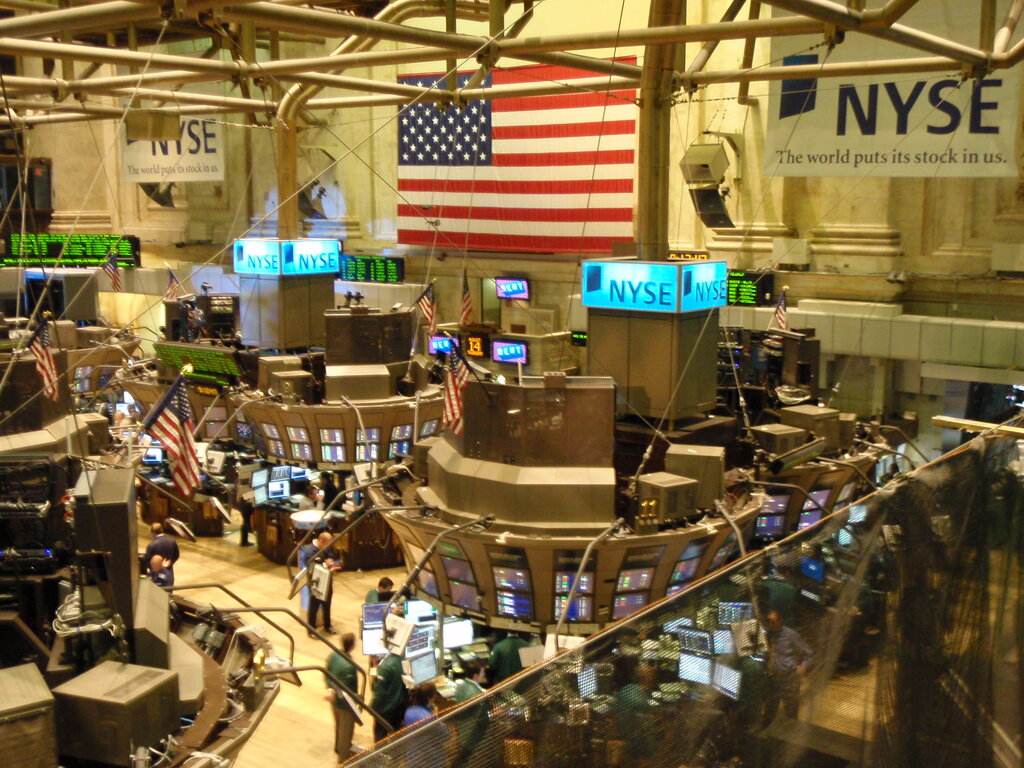
These transactions don't just happen on a street corner. They take place on stock exchanges, which are the formal platforms that facilitate the buying and selling of stocks. Two of the most famous exchanges in the world are the New York Stock Exchange (NYSE) and the Nasdaq.
The NYSE is one of the oldest and is often pictured with a physical trading floor where brokers once shouted orders. While most trading is electronic now, it still maintains that iconic space. The Nasdaq, on the other hand, was the world's first electronic stock market. It has no physical trading floor and is known for being home to many of the world's biggest technology companies.

The Two Main Arenas
It’s helpful to think of the market as having two distinct parts: the primary market and the secondary market.
The primary market is where new stocks are born. When a company decides to go public, it sells its shares to investors for the first time in what's called an Initial Public Offering (IPO). The money from this sale goes directly to the company.
After the IPO, things move to the secondary market. This is the stock market we hear about on the news every day. Here, investors buy and sell shares from each other, not from the company. The price of shares in the secondary market goes up and down based on supply and demand.
So when you buy a share of a company on an app or through a website, you are almost always participating in the secondary market.
The People Involved
Several key players make the stock market work.
Investors buy stocks with the goal of holding onto them for a longer period, hoping they grow in value.
Traders buy and sell stocks more frequently, trying to profit from short-term price movements.
Brokers are the intermediaries. They are licensed professionals or firms that execute buy and sell orders on behalf of investors and traders. In the past, you had to call a broker to make a trade. Today, most people use online brokerage platforms, which act as their digital broker.
Placing an Order
When you decide to buy or sell a stock, you place an order. There are several types, but two are the most common: the market order and the limit order.
A market order is an instruction to buy or sell a stock immediately at the best available current price. It's the fastest and most straightforward way to trade, but the price isn't guaranteed.
A limit order gives you more control. It's an instruction to buy or sell a stock at a specific price or better. For a buy limit order, your order will only go through if the stock's price is at or below your specified price. For a sell limit order, it will only execute if the price is at or above your limit.
So, which price do you get? This is where the bid-ask spread comes in.
Bid-ask spread
noun
The difference between the highest price a buyer is willing to pay for a stock (the bid) and the lowest price a seller is willing to accept (the ask).
The spread is essentially the transaction cost of trading. When you place a market order to buy, you'll typically pay the ask price. When you place a market order to sell, you'll get the bid price. The spread is a small profit for the market makers who facilitate the trades.
With these basics, you have a foundational map of how the stock market operates. You understand the purpose of the market, where it happens, what's being traded, and how a basic transaction works.