Stock Options Explained
Introduction to Stock Options
What Is a Stock Option?
Imagine you want to buy a popular new video game console, but it's currently sold out. A store offers you a special voucher. For a small fee, this voucher gives you the right to buy the console for $500 anytime in the next three months, no matter what the market price becomes. You don't have to buy it, but you have the choice. If the console's price shoots up to $700, your voucher is very valuable. If it drops to $400, your voucher is worthless, and you just lose the small fee you paid for it.
A stock option works in a very similar way. It's a contract that gives the buyer the right, but not the obligation, to buy or sell a stock at an agreed-upon price on or before a specific date.
An option is a choice. You can choose to exercise your right, or you can let it expire. The power is in your hands.
There are two fundamental types of options:
- A call option gives you the right to buy a stock at a certain price. You would buy a call if you believe the stock's price is going to rise.
- A put option gives you the right to sell a stock at a certain price. You would buy a put if you believe the stock's price is going to fall.
Why Use Options?
So, why not just buy the stock itself? Options offer unique advantages. The two main uses are speculation and hedging.
Speculation is betting on a stock's future price movement. Because options contracts control 100 shares of stock for a fraction of the cost, they can amplify potential gains (and losses). A small increase in the stock price can lead to a much larger percentage gain on the option's value.
Hedging is like buying insurance for your investments. If you own 100 shares of a company and worry the price might drop, you could buy a put option. If the stock price does fall, the value of your put option would increase, offsetting some of the losses from your stock holdings.
The Key Ingredients
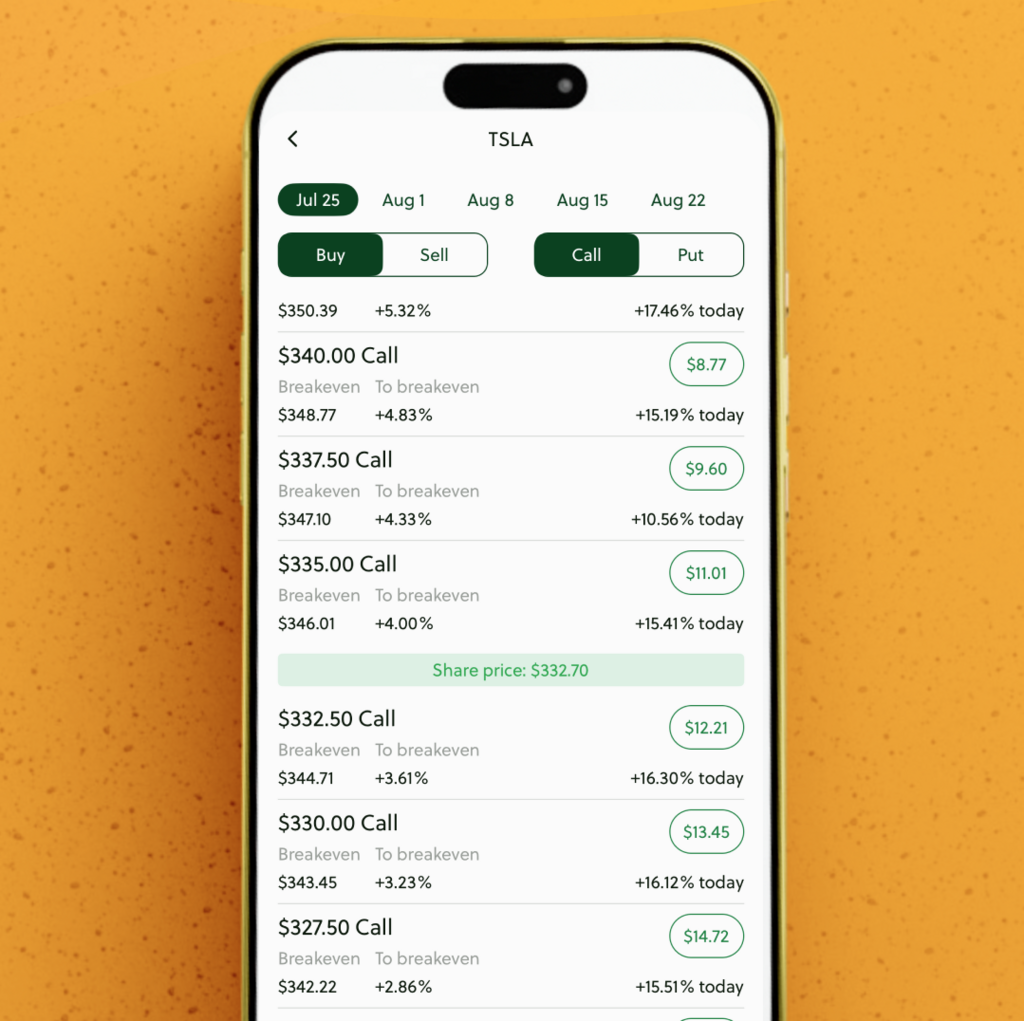
Every options contract has a few essential components that define the agreement. Think of them as the terms and conditions written on your voucher.
strike price
noun
The set price at which an option holder can buy or sell the underlying stock.
The strike price is the locked-in price. For a call option, it's what you pay for the stock if you exercise the option. For a put, it's the price you can sell it for.
expiration date
noun
The date on which an options contract becomes void and worthless.
This is the deadline. Your right to buy or sell at the strike price only exists until this date. Options can have expirations ranging from a few days to several years.
premium
noun
The current market price of an options contract, paid by the buyer to the seller.
This is the cost of the option itself. It's the fee you pay for the voucher. The premium is quoted on a per-share basis, and since a standard contract represents 100 shares, you multiply the premium by 100 to get the total cost of the contract. This is the maximum amount of money you can lose when buying an option.
| Term | Analogy | Description |
|---|---|---|
| Strike Price | The fixed $500 price for the console | The locked-in price to buy or sell the stock. |
| Expiration Date | The three-month window for your voucher | The deadline by which you must exercise or sell the option. |
| Premium | The small fee you paid for the voucher | The cost to purchase the options contract. |
Understanding these three elements is the first step to grasping how options work. They define the terms of your potential trade: what price, for how long, and at what cost.
Ready to check your understanding? Let's see what you've learned.
What is the fundamental right granted to the holder of a stock option?
An investor who believes the price of a stock is going to fall would most likely buy which type of option?
Options provide a flexible way to invest, but they come with their own risks and complexities. This foundation is just the beginning.