Stock Market Mastery and Strategic Investing
Trade Execution Mechanics
The Price Isn't Just One Number
When you look up a stock price, you're usually seeing the price of the last trade. But in the live market, there are always two prices that matter more: the bid and the ask. The interplay between them is how a stock's price is actually determined from moment to moment.
- The Bid is the highest price a buyer is currently willing to pay for a share.
- The Ask (or offer) is the lowest price a seller is currently willing to accept for a share.
The difference between these two numbers is called the bid-ask spread. Think of it as the negotiation table of the market. Buyers want the lowest price possible, and sellers want the highest. The spread is the gap they need to cross to make a deal.
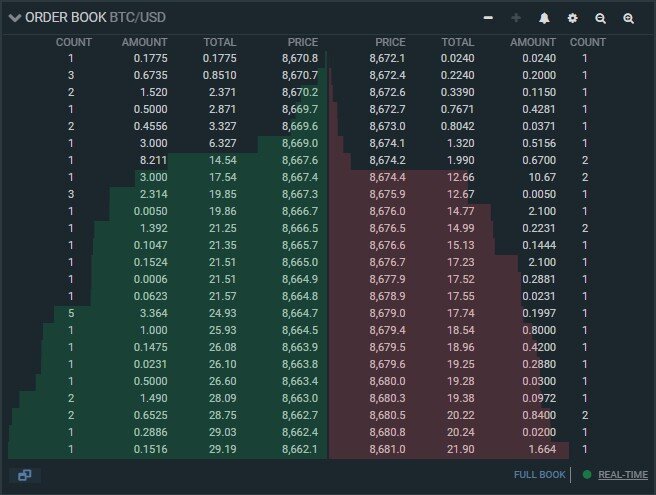
The size of this spread tells you a lot about a stock's liquidity. For a highly-traded stock like Apple, millions of shares are bought and sold constantly. This high volume means there are always buyers and sellers close in price, resulting in a very narrow, or "tight," spread—often just a penny. For a smaller, less-traded stock, the spread might be much wider because there are fewer participants.
This spread is also how —the financial firms that facilitate trading—make their profit. They simultaneously offer to buy at the bid price and sell at the ask price, profiting from the small difference on huge volumes of trades.
Placing Your Order
When you click "buy" or "sell," you're not just agreeing to a price; you're submitting an order with specific instructions on how it should be handled. The two most fundamental order types are market orders and limit orders.
A market order is an instruction to buy or sell a security immediately at the best available current price. It prioritizes speed of execution over the exact price.
If you place a market order to buy, you'll pay the current ask price. If you place one to sell, you'll receive the current bid price. The main advantage is that your trade is virtually guaranteed to execute. The downside is a phenomenon called —the difference between the price you expected and the price you actually got. In a fast-moving or low-liquidity market, the price can change in the milliseconds between when you submit the order and when it's filled.
A limit order is an instruction to buy or sell a security at a specific price or better. It prioritizes price control over speed of execution.
With a buy limit order, you set the maximum price you're willing to pay. The order will only execute if the stock's price is at or below your limit. With a sell limit order, you set the minimum price you're willing to accept. The trade will only go through if the price is at or above your limit.
The key trade-off is that your order isn't guaranteed to be filled. If the market price never reaches your limit price, your order will sit in the order book unfilled.
| Order Type | Primary Goal | Pro | Con |
|---|---|---|---|
| Market Order | Speed | Immediate, guaranteed execution | Price uncertainty (slippage) |
| Limit Order | Price | You control the execution price | Execution is not guaranteed |
Automating Your Risk Management
Beyond the basic orders, traders use more advanced types to automatically manage their positions and limit potential losses. The most common are stop-loss and stop-limit orders.
Stop-Loss Order
noun
An order placed to buy or sell a stock once it reaches a certain price, known as the stop price. When the stop price is reached, the stop order becomes a market order.
Imagine you buy a stock at $50, and you decide you're not willing to lose more than $5 per share. You can place a sell stop-loss order with a stop price of $45. If the stock price falls to $45, your stop order is triggered and immediately becomes a market order to sell. This helps protect you from further losses if the stock continues to fall.
However, because it becomes a market order, it's still subject to slippage. If the market is crashing, your sell order might execute at $44.80 or even lower.
To get more control, you can use a stop-limit order. This type has two price points: the stop price and the limit price.
- Stop Price: The price that triggers the order.
- Limit Price: The price that converts the order into a limit order.
Using the same example, you could set a stop price of $45 and a limit price of $44.90. If the stock drops to $45, your order becomes a limit order to sell at $44.90 or better. This protects you from significant slippage, but it also means that if the price gaps down past $44.90 instantly, your order might not execute at all, leaving you holding a falling stock.
In a stock quote, what does the 'ask' price represent?
A stock with a very wide bid-ask spread (e.g., $10.50 bid and $11.00 ask) most likely indicates which of the following?
Understanding these mechanics is crucial. Choosing the right order type for your goal—whether it's getting into a position quickly or ensuring you get a specific price—is a fundamental skill for navigating the markets effectively.