Stock Market Investing for Young Investors
Understanding Investment Basics
Why Start Now?
When you're juggling classes, exams, and a social life, investing is probably the last thing on your mind. But your biggest advantage as a college student isn't how much money you have—it's how much time you have.
The years between now and retirement give your money a long runway to grow. Starting to invest early, even with small amounts, can have a much bigger impact than investing larger sums later in life. It's about letting time do the heavy lifting for you.
Starting to invest as a teen or young adult can set you up for lifelong financial success.
The key to this long-term growth is a concept so powerful it's often called the eighth wonder of the world: compound interest.
Your Superpower: Compound Interest
Compound interest is the process of earning returns on your initial investment and on the returns you've already accumulated. It’s like a snowball rolling downhill—it starts small, but it picks up more snow and gets bigger and bigger, faster and faster.
Compound Interest
noun
Interest calculated on the initial principal, which also includes all of the accumulated interest from previous periods on a deposit or loan.
Let’s look at a simple example. Imagine you invest $1,000 and it earns a 7% return in the first year. You now have $1,070. The next year, you don’t just earn 7% on your original $1,000; you earn it on the full $1,070. This might not seem like much at first, but over decades, the effect is dramatic.
As you can see, the difference is small at first, but after a few decades, the compound interest curve shoots upward, leaving simple interest far behind. That curve is what you want your money to do, and it only happens when you give it enough time.
The Risk and Return Trade-off
Every investment involves a trade-off between risk and return. In simple terms:
- Return is the money you make on an investment.
- Risk is the chance that you could lose money.
Generally, investments with the potential for higher returns also come with higher risk. Think of it like a seesaw. If you want one side (return) to go up, the other side (risk) usually goes up too.
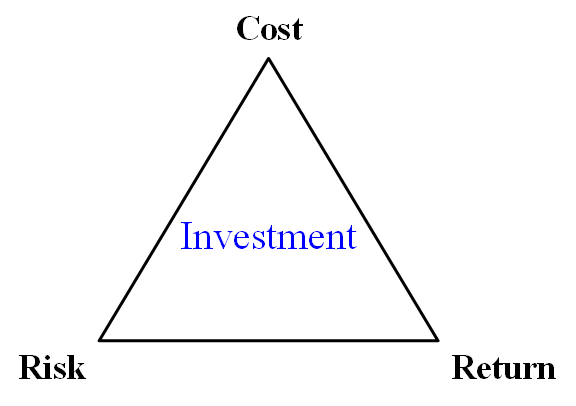
A savings account at a bank has very low risk—your money is insured and isn't going anywhere. But it also offers a very low return, often not even enough to keep up with inflation. On the other hand, investing in a brand new tech startup could potentially bring huge returns, but there's also a very real chance the company could fail and you could lose your entire investment.
Finding the right balance depends on your personal goals and how much uncertainty you're comfortable with. Since you're young, you have a long time horizon, which means you can typically afford to take on more risk for the chance of higher long-term growth.
Your Basic Investment Options
So, where can you put your money? There are many options, but most fall into a few main categories called asset classes. Let's look at three of the most common ones.
Stocks When you buy a stock, you're buying a small piece of ownership in a company. If the company does well, the value of your stock may go up. If it does poorly, the value may go down. Stocks are generally considered higher risk, but they also offer the potential for higher returns over the long term.
For example, buying a share of a company like Apple means you own a tiny fraction of the business.
Bonds A bond is essentially a loan you make to a government or a corporation. In return for your loan, they promise to pay you back the full amount on a specific date, plus periodic interest payments along the way. Bonds are generally safer than stocks but usually offer lower returns.
Bonds are often used to balance out the risk of stocks in an investment portfolio.
Mutual Funds A mutual fund pools money from many investors to buy a diversified collection of stocks, bonds, or other assets. When you buy a share of a mutual fund, you're instantly invested in dozens or even hundreds of different securities. This built-in diversification makes them a popular and relatively simple choice for new investors.
Think of it as buying a basket of investments instead of picking out individual ones yourself.
| Asset Class | What It Is | General Risk Level | General Return Potential |
|---|---|---|---|
| Stocks | A share of ownership in a company | High | High |
| Bonds | A loan to a government or company | Low | Low |
| Mutual Funds | A pool of many stocks and/or bonds | Varies (often Medium) | Varies (often Medium) |
This is just the starting point. Understanding these basic building blocks is the first step toward making informed decisions about your money and future.
What is the key principle that makes compound interest so powerful for long-term growth?
According to investment principles, what is the biggest advantage a young person has over an older person who has more money to invest?