Stock Market Investing Basics
Stock Market Basics
What Is the Stock Market?
The stock market is essentially a giant, organized marketplace. But instead of buying and selling fruits or antiques, people buy and sell tiny pieces of ownership in public companies. These pieces are called stocks or shares.
When you buy a stock, you become a part-owner of that company. You're not just betting on a ticker symbol; you're investing in the business itself.
Why does this marketplace exist? It serves two main purposes. For companies, it's a way to raise money to grow. By selling shares to the public, they get cash to fund new projects, hire more people, or expand their operations. For investors, it's an opportunity to put their money to work, hoping the value of their shares will increase over time as the company succeeds.
Where Trading Happens
This buying and selling happens on stock exchanges. Think of an exchange as the specific venue where the market operates. In the past, these were chaotic physical floors filled with traders shouting orders.
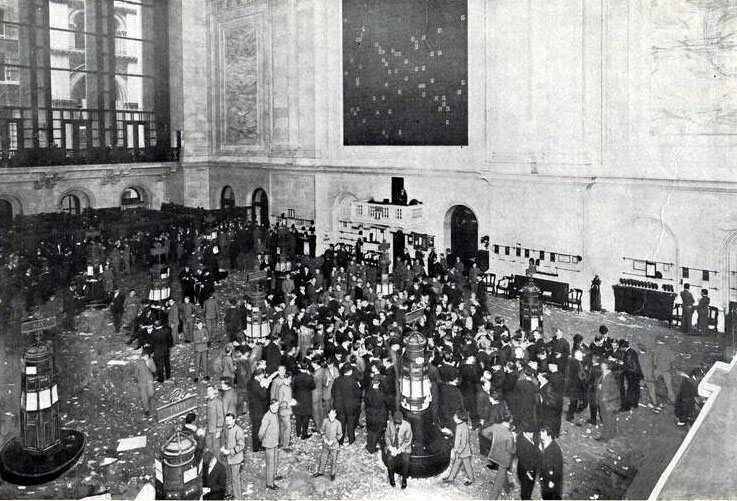
Today, most trading is done electronically. The two most famous exchanges in the U.S. are the New York Stock Exchange (NYSE) and the Nasdaq.
The NYSE, located on Wall Street, still has a physical trading floor, though it's combined with electronic trading. It's home to many older, well-established companies. The Nasdaq, on the other hand, has always been an electronic exchange and is known for listing many of the world's biggest technology firms.
| Feature | NYSE (New York Stock Exchange) | Nasdaq |
|---|---|---|
| Trading | Hybrid (physical and electronic) | Fully electronic |
| Reputation | Older, blue-chip companies | Tech-focused, growth companies |
| Examples | Coca-Cola (KO), Johnson & Johnson (JNJ) | Apple (AAPL), Amazon (AMZN) |
How Stock Prices Are Set
A stock's price isn't random. It’s determined by the simple, powerful forces of supply and demand. Supply is the number of shares available for sale, and demand is the number of shares people want to buy.
If more people want to buy a stock than sell it, the price goes up. There's high demand for a limited supply. Conversely, if more people want to sell a stock than buy it, the price goes down. There's a surplus of supply with not enough demand to match.
What drives this supply and demand? A huge range of factors, including:
- Company Performance: Strong profits or exciting new products can increase demand.
- Industry Trends: If a whole sector like electric vehicles is hot, stocks in that industry might see a surge in interest.
- Economic News: Reports on inflation, unemployment, or interest rates can affect the entire market.
- Investor Sentiment: Sometimes, prices move based on general optimism or fear in the market, not just hard data.
The Trading Process
As an individual investor, you can't just walk up to the Nasdaq and buy shares. You need a middleman, which is where brokers come in.
Broker
noun
A person or firm licensed to buy and sell stocks and other securities on behalf of investors.
In the past, you'd call your stockbroker on the phone. Now, most people use online brokerage firms. You open an account, deposit money, and can then place orders to buy or sell stocks through their website or app.
The basic process looks like this:
When you want to sell, the process simply works in reverse. You place a sell order with your broker, the exchange finds a buyer, and the cash from the sale is deposited into your brokerage account. This system allows millions of transactions to happen quickly and efficiently every single day.
What is the primary reason for a company to issue stock to the public?
A tech company announces quarterly profits that are much higher than expected. Based on the principles of supply and demand, what is the most likely immediate effect on its stock price?
That's the basic machinery of the stock market. It's a system that connects companies needing capital with people looking to invest, all managed through exchanges and brokers, with prices driven by supply and demand.