Stock Market Fundamentals for Smarter Investing
Stock Market Basics
The Market for Ownership
A stock market is essentially a giant, organized auction. But instead of art or rare collectibles, the items for sale are tiny slices of ownership in companies. These slices are called stocks or shares.
The U.S. stock market is a platform where investors buy and sell ownership stakes—called shares—in publicly listed companies.
When you buy a share of a company's stock, you become a part-owner, or a shareholder. This gives you a claim on the company's assets and a piece of its profits. The primary purpose of the stock market is to allow companies to raise money by selling these ownership stakes to the public, and to let investors buy and sell these stakes from each other.
Stock
noun
A type of security that signifies ownership in a corporation and represents a claim on part of the corporation's assets and earnings.
There are two main types of stock you'll encounter.
Common Stock: This is what most people mean when they talk about stocks. Owning common stock usually gives you the right to vote on company matters, like electing the board of directors. If the company does well, the value of your stock can increase significantly.
Preferred Stock: This type of stock typically doesn't come with voting rights. However, preferred shareholders have a higher claim on the company's assets and earnings. This means if the company pays dividends, preferred shareholders get paid before common shareholders. If the company goes bankrupt, they are also paid back before common shareholders.
Where Trading Happens
Stocks aren't traded in a random free-for-all. They are bought and sold on organized markets called stock exchanges. These exchanges provide a regulated environment where buyers and sellers can transact with confidence.
Two of the biggest and most well-known exchanges in the world are in the United States: the New York Stock Exchange (NYSE) and the Nasdaq.
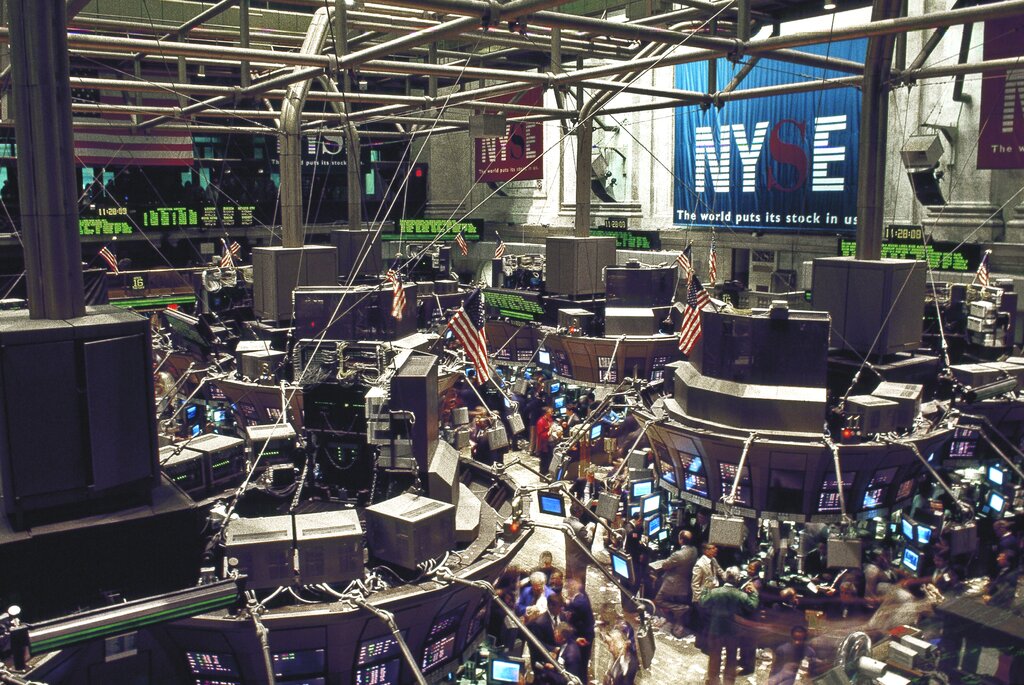
The NYSE, located on Wall Street in New York City, is one of the oldest stock exchanges. It has a physical trading floor where humans, known as floor brokers, used to execute most trades through an open outcry system. Today, most trading is electronic, but the floor still serves as a powerful symbol of the market.
The Nasdaq is a much younger exchange and was the world's first electronic stock market. It has no physical trading floor. All trades are done through a network of computers. It's known for being home to many of the world's largest technology companies.
The People in the Market
Several key players keep the stock market running smoothly.
| Participant | Role |
|---|---|
| Investors | Individuals or institutions that buy and sell stocks. Their goal is typically to grow their money over time. |
| Brokers | Firms that act as intermediaries, executing buy and sell orders on behalf of investors. |
| Market Makers | Firms that are always ready to buy or sell a particular stock. They provide liquidity, ensuring there's always someone to trade with. |
Investors range from individuals buying a few shares through a mobile app to huge institutions like pension funds managing billions of dollars. Brokers are the bridge connecting these investors to the exchanges. Market makers are crucial for keeping the market fluid; they quote both a buy price (bid) and a sell price (ask), profiting from the small difference between the two, known as the bid-ask spread.
Think of market makers as merchants who always have a price for a product, ensuring you can always buy or sell it instantly.
Prices and Performance
A stock's price is not set by a committee. It's determined by supply and demand. If more people want to buy a stock (demand) than sell it (supply), the price goes up. If more people want to sell than buy, the price goes down.
What drives this supply and demand? A mix of factors:
- Company Performance: Strong earnings, new products, and good management can increase demand.
- Industry Trends: Growth in a whole sector, like artificial intelligence, can lift all related stocks.
- Economic News: Interest rates, inflation, and employment figures affect investor confidence and company profits.
- Investor Sentiment: Sometimes, prices move based on public mood or hype, not just fundamentals.
With thousands of stocks trading every day, how do we know how the market is doing overall? We use stock indices.
An index is a collection of stocks that represents a portion of the market. Its performance is a weighted average of the stocks it contains, giving a quick snapshot of market health.
| Index | What It Represents |
|---|---|
| S&P 500 | Tracks the performance of 500 of the largest U.S. companies. It's widely considered the best gauge of large-cap U.S. stocks. |
| Dow Jones Industrial Average (DJIA) | Tracks 30 large, well-known U.S. companies. It's one of the oldest and most-followed indices in the world. |
| Nasdaq Composite | Tracks most of the stocks listed on the Nasdaq exchange. It is heavily weighted toward technology companies. |
When you hear a news anchor say "the market was up today," they are usually referring to the performance of one of these major indices.
Time to check your understanding of these core concepts.
What is the primary purpose of the stock market for companies?
An investor who wants the right to vote on company matters, such as electing the board of directors, should purchase ______ stock.
Understanding these building blocks is the first step. You now know what a stock is, where it's traded, who the key players are, and how the market's performance is measured.