Stock Market Fundamentals for Smarter Investing
Stock Market Basics
What Is the Stock Market?
Think of the stock market as a massive, global auction house. Instead of art or antiques, it's where pieces of companies are bought and sold. These pieces are called stocks, or shares. When you buy a stock, you're purchasing a small slice of ownership in a public company.
Stock
noun
A type of security that signifies ownership in a corporation and represents a claim on part of the corporation's assets and earnings.
Why does this market exist? It serves two main purposes. For companies, it's a way to raise money to grow. By selling shares, they get cash to fund new projects, hire more employees, or expand their operations. For individuals and institutions, it's an opportunity to invest money with the hope that the company does well, increasing the value of their shares over time.

The Key Players
Several key participants keep the market moving. You're probably familiar with the most important one: the investor.
Investors are individuals like you, or large institutions like pension funds or banks, who buy and sell stocks. They are the ones putting money into the market, hoping to earn a return.
But investors don't just walk onto the floor of an exchange and start trading. They need a broker. A broker is a person or firm that acts as a middleman, executing buy and sell orders on behalf of investors. In the past, you'd call your broker on the phone. Today, most people use online brokerage firms to place trades with a few clicks.
A less visible but crucial player is the market maker. These are firms that are always ready to buy or sell a particular stock. They ensure there's always a market for a stock, which means investors can almost always find a buyer when they want to sell, and a seller when they want to buy. This provides liquidity, making trading smooth and efficient.
Investors decide what to buy or sell, brokers make the trade happen, and market makers ensure there's always someone to trade with.
Where Trading Happens
The central marketplaces where stocks are traded are called stock exchanges. They are organized and regulated platforms that connect buyers and sellers. The most famous examples are the New York Stock Exchange (NYSE) and the Nasdaq.
The NYSE is a physical trading floor, though most trading is electronic now. Nasdaq, on the other hand, was the world's first electronic stock market and has no physical trading floor. Its trades are all done through a network of computers.
Exchanges provide a fair and orderly environment for trading. They establish rules, monitor activity, and make price information available to the public, so everyone has access to the same data at the same time.

Taking the Market's Temperature
How do we know if the stock market is generally doing well or poorly on any given day? We look at a stock index.
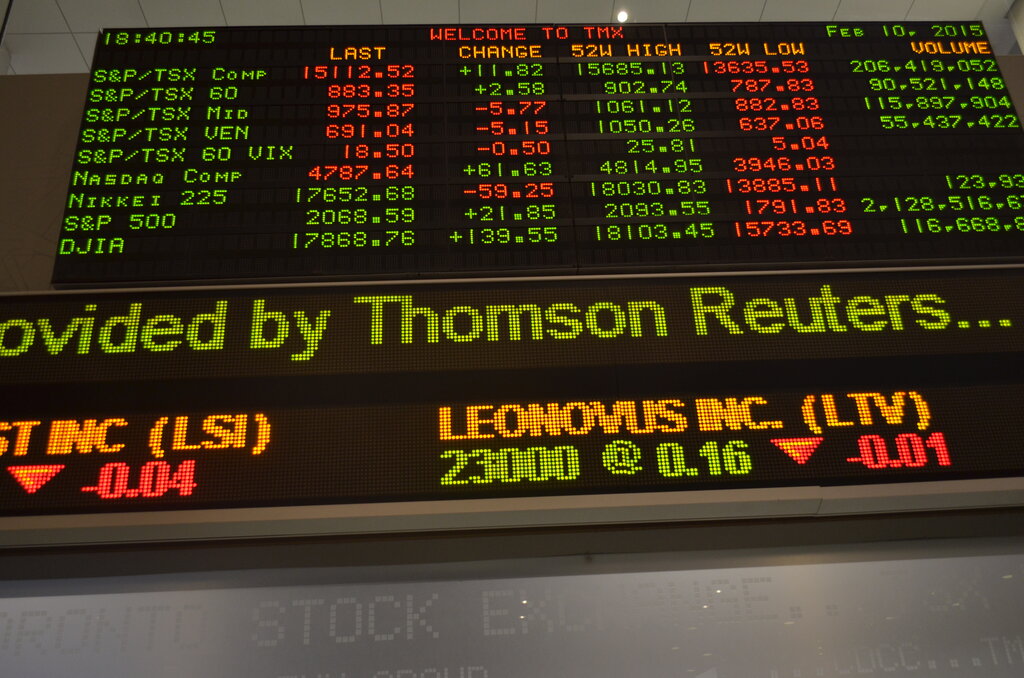
A stock index is a tool used to track the performance of a group of stocks. It acts as a snapshot of the market or a specific sector. When you hear news anchors say "the market is up today," they're usually referring to a major index.
Some of the most well-known indices include:
- The S&P 500: Tracks the performance of 500 of the largest U.S. companies.
- The Dow Jones Industrial Average (DJIA): Follows 30 large, well-established U.S. companies.
- The Nasdaq Composite: Tracks over 3,000 stocks listed on the Nasdaq exchange, with a heavy focus on technology companies.
By following an index, investors can quickly gauge the overall health and direction of the market.
Behind the scenes, regulatory bodies work to keep the market fair and transparent for everyone. In the United States, the primary regulator is the Securities and Exchange Commission (SEC). The SEC's mission is to protect investors, maintain fair, orderly, and efficient markets, and facilitate capital formation. It enforces laws against market manipulation and requires public companies to disclose meaningful financial and other information so investors can make informed decisions.
Ready to check your understanding of these market basics?
What is the primary reason for a company to sell stocks on the stock market?
In the stock market ecosystem, which participant's main role is to provide liquidity by always being ready to buy or sell a particular stock, ensuring trades can happen smoothly?
Understanding these core components—the purpose, the players, the places, and the protectors—is the first step to navigating the world of investing.