Stock Market Fundamentals for Fearless Investing
Stock Market Basics
What is the stock market?
The stock market isn't a single place. It's a vast network where shares of public companies are bought and sold. Think of it like a giant, organized auction house, but instead of art or antiques, people trade tiny pieces of ownership in businesses.
Stock
noun
A type of security that signifies ownership in a corporation and represents a claim on part of the corporation's assets and earnings.
When you buy a stock, you're buying a share of that company. If the company does well and grows, the value of your share might go up. If it struggles, the value might go down. The main function of the stock market is to help companies raise money to fund operations and expansion, while also allowing investors to share in their potential success.
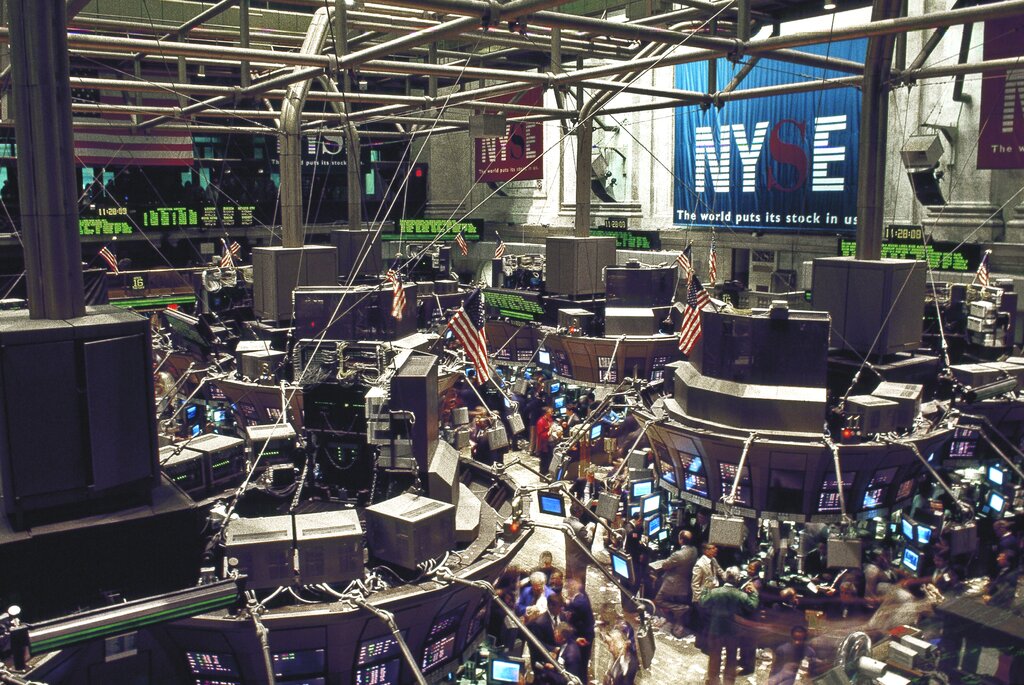
Where does trading happen?
Trading doesn't happen in a vacuum. It takes place on stock exchanges, which are the marketplaces that facilitate the buying and selling. While there are exchanges all over the world, two of the biggest are in the United States: the New York Stock Exchange (NYSE) and the Nasdaq.
The NYSE is one of the oldest, known for its physical trading floor (though most trading is now electronic). It's home to many large, well-established companies. The Nasdaq, on the other hand, is a completely electronic exchange. It's famous for listing many of the world's biggest technology companies, like Apple and Amazon.
But you can't just walk into the NYSE and buy a stock. You need a middleman. That's where brokers come in.
A broker is a person or firm licensed to buy and sell stocks on your behalf. Today, most people use online brokerage firms like Fidelity, Charles Schwab, or Robinhood. You open an account, deposit money, and use their platform to place your trades. For more personalized guidance, some people work with a financial advisor, who can help them create a broader financial plan that might include stock investments.
Start by learning the basics of how stocks work, open a brokerage account, practise with small investments or demo trading, and gradually build experience while managing risk.
What sets the price?
At its core, a stock's price is determined by supply and demand. If more people want to buy a stock (demand) than sell it (supply), the price goes up. If more people want to sell than buy, the price goes down.
What drives this supply and demand? Many factors:
- Company Performance: Are earnings growing? Are they launching new, successful products?
- Economic News: A strong economy often boosts the market, while a recession can hurt it.
- Investor Sentiment: Sometimes, hype or fear can move a stock's price, regardless of the company's actual performance.
The price you see for a stock is simply the price of the last trade that occurred.
Placing an order
When you're ready to buy or sell a stock, you place an order through your broker. But you have a few options for how you want that order to be handled. Understanding these order types is key to controlling your trades.
| Order Type | What It Does | Best For... |
|---|---|---|
| Market Order | Buys or sells immediately at the best available current price. | When you want to execute the trade quickly and are less concerned about the exact price. |
| Limit Order | Buys or sells only at a specific price or better. A buy limit order executes only at the limit price or lower. A sell limit order executes only at the limit price or higher. | When you want to control the price you pay or receive, but there's a risk your order may not be filled. |
| Stop-Loss Order | An order to sell a stock once it falls to a certain price (the "stop price"). It's designed to limit an investor's loss on a position. | Protecting gains or minimizing losses if a stock's price starts to drop. |
For example, if you place a market order to buy a stock, it will likely execute instantly at whatever the current asking price is. If you place a limit order to buy that same stock for $50, your order will only go through if the price drops to $50 or less. It gives you more control but doesn't guarantee the trade will happen.
Now, let's test your understanding of these core concepts.
What is the primary function of the stock market?
An investor wants to buy a stock, but only if its price drops to per share or lower. Which type of order should they place?
These are the fundamental mechanics of the stock market. By understanding the roles of exchanges and brokers, what drives prices, and how to place an order, you've built a solid foundation for navigating the world of investing.