Stock Market Fundamentals for Confident Investing
Stock Market Basics
Why Have a Stock Market?
Imagine a brilliant entrepreneur starts a new company, "Cosmic Coffee," that invents a machine to brew the perfect cup of coffee in ten seconds. The business is a hit, but to expand globally, she needs a lot of money—more than any bank will lend. So, she decides to sell small pieces of her company to the public. These pieces are called stocks, or shares.
Each share represents a tiny slice of ownership in Cosmic Coffee. By selling these shares, the company raises money, known as capital, to build new factories, hire more people, and invent even better coffee machines. The people who buy the shares are now part owners, or shareholders. If Cosmic Coffee does well and its profits grow, the value of their shares might increase. They might also receive a portion of the profits, called a dividend.
The stock market's primary purpose is to connect companies that need capital with people who want to invest their money and own a piece of those companies.
This process of a private company offering shares to the public for the first time is called an Initial Public Offering (IPO). After the IPO, those shares can be bought and sold among investors on the stock market.

Where Trading Happens
You can't just buy stocks on the street. These transactions happen in organized, regulated marketplaces called stock exchanges. Think of them as giant, sophisticated auction houses for company shares. The most famous exchanges include the New York Stock Exchange (NYSE) and the Nasdaq.
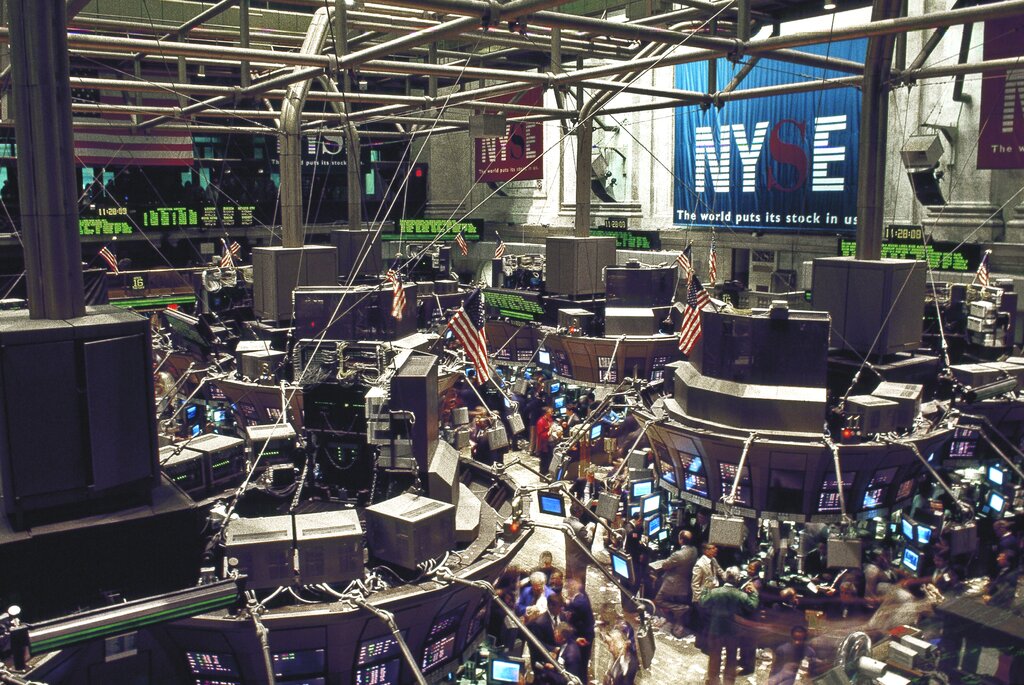
Years ago, trading floors were chaotic places with traders shouting orders. Today, most trading is electronic. Exchanges provide the infrastructure to ensure that buying and selling are fast, fair, and transparent. They list which companies' shares are available for trading and publish real-time price information.
stock
noun
A security that represents a fraction of ownership in a company.
Companies must meet strict requirements to be listed on a major exchange. This gives investors a level of confidence that the businesses are legitimate and transparent about their financial health. Exchanges also create stock market indexes, like the S&P 500 or the Dow Jones Industrial Average, which track the performance of a group of stocks to give a snapshot of the market's overall health.
The People Involved
The stock market isn't just companies and exchanges. Several key players make it all work.
| Participant | Role |
|---|---|
| Investors | Individuals or institutions (like pension funds) who buy and sell stocks. They aim to grow their money over time. |
| Brokers | Firms that act as intermediaries, executing buy and sell orders on behalf of investors. You need an account with a broker to trade. |
| Market Makers | Firms that are always ready to buy or sell a particular stock. They provide liquidity, making it easier for investors to complete trades quickly. |
| Regulators | Government agencies, like the Securities and Exchange Commission (SEC) in the U.S., that set and enforce the rules to protect investors and prevent fraud. |
How a Trade Works
So how does a share of Cosmic Coffee actually move from one person to another? It all comes down to supply and demand, facilitated by your broker and the exchange. The price of a stock is determined by what buyers are willing to pay and what sellers are willing to accept.
Let's walk through a simple trade. You want to buy 10 shares of Cosmic Coffee. You log into your brokerage account and see two prices listed: the bid price and the ask price.
The bid price is the highest price a buyer is currently willing to pay for a share. The ask price is the lowest price a seller is willing to accept.
Let's say for Cosmic Coffee:
- Bid: $50.00
- Ask: $50.05
The difference between these two prices ($0.05 in this case) is called the spread. This is how market makers, who facilitate these trades, often earn a profit.
If you want to buy immediately, you'll likely place a market order. This tells your broker to buy the 10 shares at the best available ask price, which is $50.05. Your broker sends this order to the exchange, which electronically matches you with a seller (or multiple sellers) willing to sell at that price. The transaction happens in a fraction of a second. The money is taken from your account, and the shares are added to your portfolio.
Now that you understand the core mechanics, test your knowledge.
What does owning a share of stock in a company like "Cosmic Coffee" represent?
What is the primary reason a company like "Cosmic Coffee" would decide to have an Initial Public Offering (IPO)?
Understanding these fundamentals—why markets exist, where they operate, who participates, and how trades happen—is the first step toward navigating the world of investing.