Stock Market Essentials
Introduction to Stock Markets
What Is a Stock Market?
At its heart, a stock market is a collection of markets where you can buy and sell ownership shares in a publicly-held company. Think of it like a massive, organized auction house. Companies go there to raise money for new projects, expansion, or research by selling small pieces of themselves, called shares. Investors buy these shares, hoping the company will do well and the value of their piece will grow.
When you buy a stock, you're not just buying a piece of paper or a digital entry. You are becoming a part-owner of a business.
This process helps the economy function. Companies get the capital they need to grow and innovate, which can lead to new jobs and better products. Meanwhile, investors have an opportunity to grow their savings over time by sharing in the successes of those companies.
What Gets Traded?
While we call it the “stock” market, other financial instruments are traded there as well. These are broadly known as securities. Here are the main types you'll encounter:
Stock
noun
A type of security that signifies a share of ownership in a corporation. Owning a stock makes you a shareholder.
If a company issues 1,000 shares of stock and you buy 10 of them, you own 1% of that company. Your share's value will rise and fall with the company's fortunes.
Bond
noun
A type of security where an investor lends money to an entity (typically a corporation or government) which borrows the funds for a defined period of time at a variable or fixed interest rate.
Unlike stocks, owning a bond doesn't make you an owner. It makes you a lender. You lend money to the organization, and it promises to pay you back with interest over a set period. They are generally considered less risky than stocks.
Think of it this way: buying a stock is like owning a piece of the house, while buying a bond is like being the bank that issued the mortgage for it.
You might also hear about derivatives. These are more complex securities whose value is derived from an underlying asset, like a stock or a bond. Options and futures contracts are common examples. For now, just know they exist as a more advanced way to invest.
Where Does Trading Happen?
Trading doesn't just happen randomly. It takes place in organized and regulated marketplaces called stock exchanges. These exchanges ensure that trading is fair, orderly, and transparent. Two of the most famous exchanges in the world are in New York City.
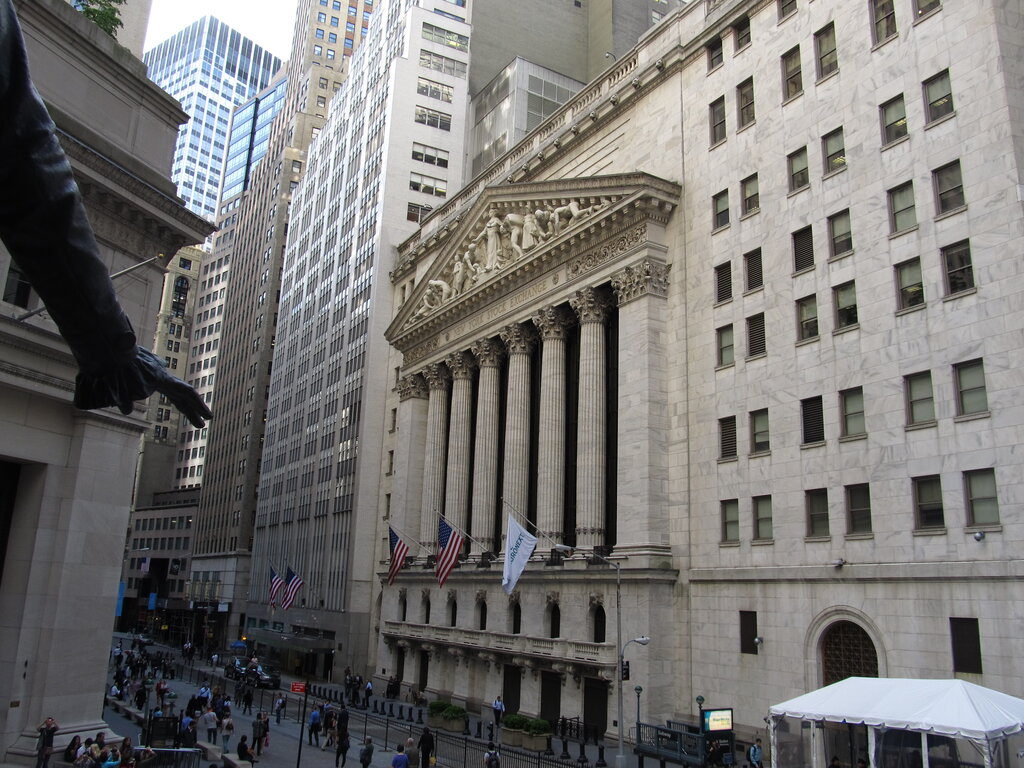
The New York Stock Exchange (NYSE) is one of the oldest, famous for its physical trading floor where brokers once shouted orders. While much trading is electronic now, it still maintains that iconic floor.
The NASDAQ is a newer, all-electronic exchange. It never had a physical trading floor. Many of the world's biggest technology companies, like Apple and Microsoft, are listed on the NASDAQ.
Within the world of exchanges, it's also important to understand the difference between the primary and secondary markets.
The primary market is where new securities are created. When a private company first decides to sell shares to the public, it does so through an Initial Public Offering (IPO). The money from this sale goes directly to the company.
The secondary market is what you typically think of as the stock market. It's where investors buy and sell shares from each other, not directly from the company. The vast majority of daily trading happens on the secondary market.
Ready to check your understanding?
What is the primary reason a company issues stock?
If you purchase a corporate bond, what is your role in relation to the company?
Understanding these basic building blocks—what a stock is, where it's traded, and why—is the first step toward understanding how this crucial part of our economy works.