Stock Market Essentials
Introduction to Stock Markets
What Is a Stock Market?
Think of a stock market as a huge, organized marketplace. But instead of buying and selling fruits or antiques, people buy and sell tiny pieces of ownership in companies. These little pieces are called stocks or shares.
When you buy a stock, you become a part-owner of that business. If the company does well and grows, the value of your piece might go up. If it does poorly, the value might go down.
For companies, this is a way to raise money to grow their business—to hire more people, build new factories, or invent new products. For investors, it's an opportunity to share in the success of those companies and potentially grow their own money over time.
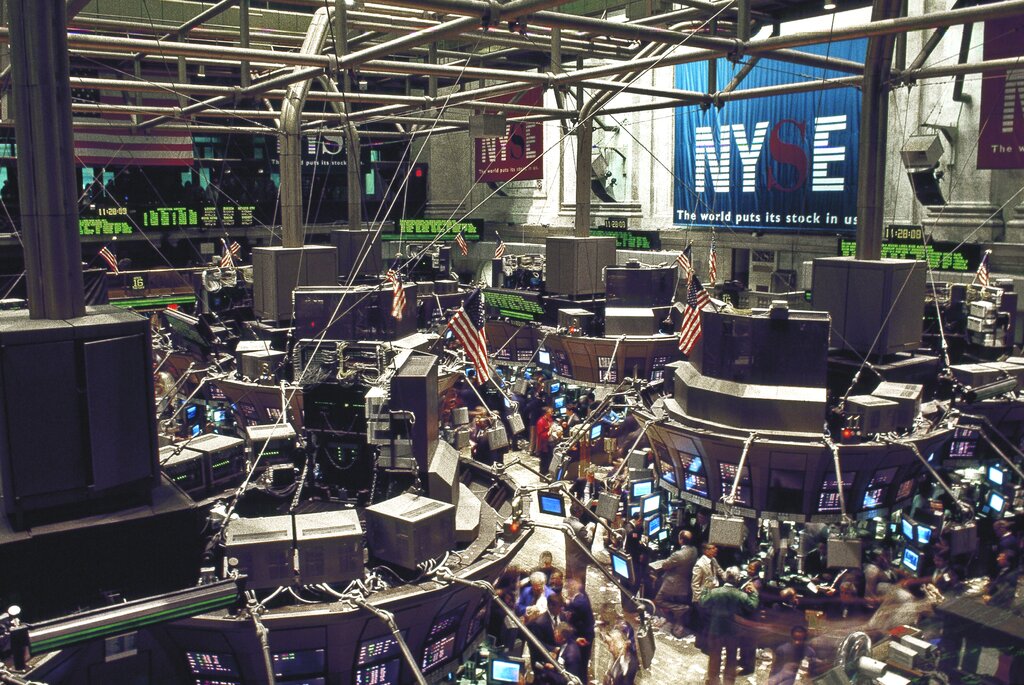
This buying and selling happens in specific places, both physical and digital, known as stock exchanges.
Where Trading Happens
The most famous stock exchanges are names you've probably heard before. In the United States, the two biggest are the New York Stock Exchange (NYSE) and the Nasdaq.
The NYSE, often pictured with its famous trading floor, is home to many of the world's oldest and largest companies. The Nasdaq, on the other hand, is a fully electronic exchange and is known for listing many of the world's top technology companies, like Apple and Microsoft. Every major country has its own stock exchange, creating a global network for investment.

The Key Players
While it seems like a simple process of buying and selling, a few key participants make it all work smoothly.
-
Investors: These are people like you and me, or large institutions like pension funds, who buy and sell stocks. They are the ultimate owners of the shares.
-
Brokers: You can't just walk onto the floor of the NYSE to buy a stock. You need a middleman. A stockbroker (or a modern brokerage firm like Fidelity or Robinhood) takes your order and executes it on the exchange for you.
-
Market Makers: These are special firms that are always ready to buy or sell a particular stock at a publicly quoted price. They ensure that there's always someone to trade with, which keeps the market flowing smoothly. They provide what's known as liquidity.
How We Measure the Market
It would be impossible to track every single stock. Instead, we use stock indices to get a quick snapshot of how the market is doing overall. An index is a curated collection of stocks that represents a portion of the market.
-
The S&P 500: This index tracks the performance of 500 of the largest U.S. companies. It's often used as a benchmark for the health of the entire U.S. stock market.
-
The Dow Jones Industrial Average (DJIA): Often just called "the Dow," this is one of the oldest and most famous indices. It tracks 30 large, well-known American companies. Because it has so few companies, it’s more of a symbol than a comprehensive measure.
When you hear a news reporter say "the market was up today," they are usually referring to one of these major indices.
An index is like a poll for the stock market. It doesn't ask every single person (or stock), but it asks enough of the right ones to give you a good idea of the overall sentiment.
The Mechanics of a Trade
When you decide to buy or sell a stock through your broker, you'll need to place an order. The two most common types are market orders and limit orders.
-
Market Order: This is the simplest type. It tells your broker to buy or sell the stock immediately at the best available price. It's fast, but you don't have control over the exact price you get.
-
Limit Order: This gives you more control. You set a specific price at which you are willing to buy or sell. Your order will only be executed if the stock's price reaches your limit price or better.
Another key concept is the bid-ask spread.
Bid-Ask Spread
noun
The difference between the highest price a buyer is willing to pay for a stock (the bid) and the lowest price a seller is willing to accept (the ask).
Imagine a stock has a bid price of $50.00 and an ask price of $50.05. The spread is 5 cents. If you place a market order to buy, you'll likely pay the ask price of $50.05. If you sell, you'll get the bid price of $50.00. This tiny difference is how market makers earn a profit for creating a ready market for the stock.
Understanding these basic building blocks is the first step toward navigating the world of investing.
What is the primary reason for an individual to buy a company's stock?
If you want to buy shares of a stock immediately at the best price currently available, what type of order should you place?