Stock Market Essentials and ETF Investing
Introduction to the Stock Market
A Marketplace for Companies
The stock market is essentially a giant, global marketplace. But instead of selling fruits or antiques, this market sells tiny pieces of ownership in companies. These pieces are called stocks or shares.
Stock
noun
A type of security that signifies ownership in a corporation and represents a claim on part of the corporation's assets and earnings.
When you buy a company's stock, you become a shareholder, which means you own a small slice of that business. Companies sell these slices to raise money. They might use the funds to build new factories, hire more employees, or develop new products.
For investors, buying stock is a way to potentially grow their money. If the company does well and becomes more valuable, the price of its stock may rise. The investor can then sell their shares for more than they paid.
Buying a stock isn't just a financial transaction; it's buying a piece of a business you believe in.
Where Trading Happens
Stocks are bought and sold on stock exchanges. Think of an exchange as an organized and regulated platform that connects buyers and sellers. It ensures that trading is fair and transparent. In the past, this meant a physical trading floor filled with people shouting orders. Today, most trading happens electronically.
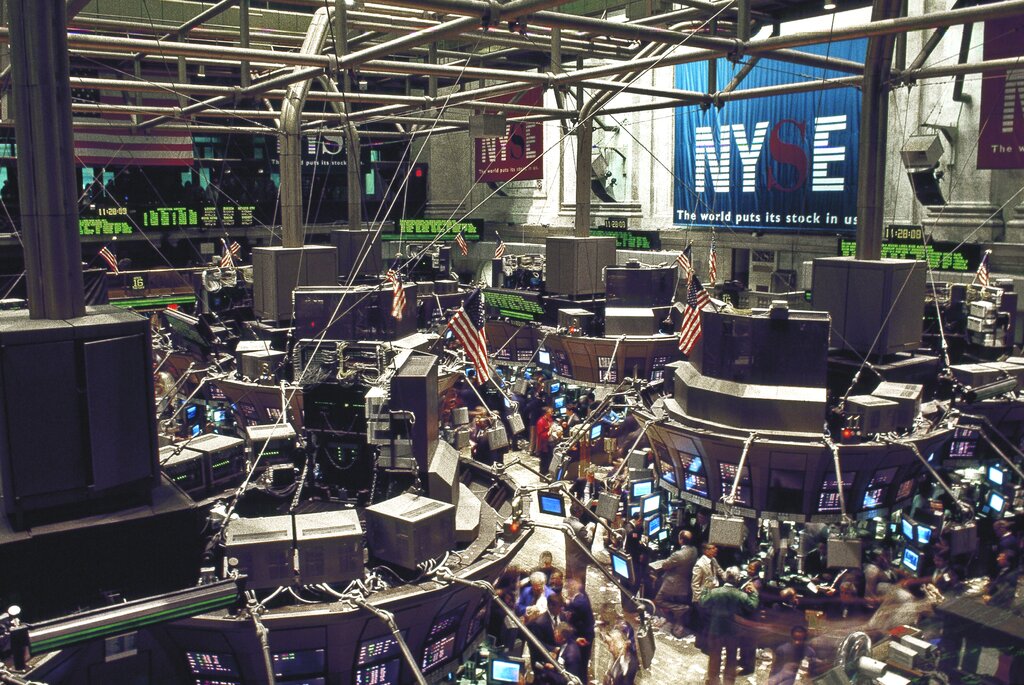
Two of the most well-known stock exchanges in the world are the New York Stock Exchange (NYSE) and the Nasdaq.
The NYSE, founded in 1792, is famous for its physical trading floor on Wall Street, though much of its trading is now electronic. It tends to list older, more established companies.
Nasdaq, on the other hand, was the world's first electronic stock market. It's known for being home to many of the world's largest technology companies, like Apple and Microsoft.
| Exchange | Location | Known For |
|---|---|---|
| NYSE | New York City | Older, established companies; iconic trading floor |
| Nasdaq | New York City | Tech-heavy; first all-electronic stock market |
Who Is Involved?
The main players in the stock market are investors. An investor can be anyone—an individual saving for retirement, a pension fund managing money for employees, or a large financial institution. They buy and sell stocks through a brokerage account, which acts as a gateway to the stock exchanges.
The price of a stock is determined by supply and demand. If more investors want to buy a stock than sell it, the price goes up. If more want to sell than buy, the price goes down. This constant tug-of-war is what makes stock prices fluctuate throughout the day.
The collective decisions of millions of investors shape the direction of the market and reflect the broader health of the economy. When businesses are thriving and investors are optimistic, the market tends to rise. When the economy is struggling, the market often follows suit.
Ready to check your understanding of these core concepts?
What does owning a stock fundamentally represent?
What is the primary reason a company would sell shares of its stock to the public?
Understanding these fundamentals provides a solid base for learning more about the world of investing.