Stock Market Essentials
Stock Market Basics
What Is the Stock Market?
The stock market is essentially a giant, global marketplace where people buy and sell ownership stakes in public companies. When you buy a company's stock, you're buying a small piece of that company. You become a shareholder.
Why does this exist? Companies sell shares to raise money. They use this capital to fund new projects, expand their operations, or hire more people. For investors, buying stock is a way to potentially grow their money by sharing in the company's future successes.

Stock
noun
A type of security that signifies ownership in a corporation and represents a claim on part of the corporation's assets and earnings.
Where Stocks Are Born and Traded
The market is split into two main parts: the primary market and the secondary market. You can think of it like buying a car. You can either buy a brand new car directly from the manufacturer's dealership or a used one from another person.
The primary market is where new stocks are created and sold for the first time. This happens through an Initial Public Offering (IPO). An IPO is a major event where a private company "goes public" by offering its shares to outside investors. The money from this initial sale goes directly to the company itself.

The secondary market is what most people are talking about when they mention the stock market. This is where investors buy and sell existing shares from each other. The company isn't directly involved in these day-to-day transactions. Famous marketplaces like the New York Stock Exchange (NYSE) or Nasdaq are secondary markets.
The primary market is for creating new shares. The secondary market is for trading those shares between investors.
Sizing Up Companies
How do investors gauge the overall size of a public company? One of the most common metrics is market capitalization, or "market cap."
Market cap is the total dollar value of all of a company's outstanding shares. The calculation is straightforward:
For example, if a company has 10 million shares trading at $50 per share, its market cap is $500 million. This number gives investors a quick sense of the company's size relative to others in the market. Companies are often grouped into categories based on their market cap:
| Category | Market Cap Range |
|---|---|
| Large-Cap | Over $10 billion |
| Mid-Cap | $2 billion to $10 billion |
| Small-Cap | $300 million to $2 billion |
Market cap is important because it can indicate a company's stability and growth potential. Large-cap companies are typically more established and less volatile, while small-cap companies often carry higher risk but also a greater potential for growth.
Market Mood Swings
The stock market as a whole doesn't just move in one direction. It experiences broad, sustained trends that reflect the overall sentiment of investors. These trends are famously known as bull and bear markets.
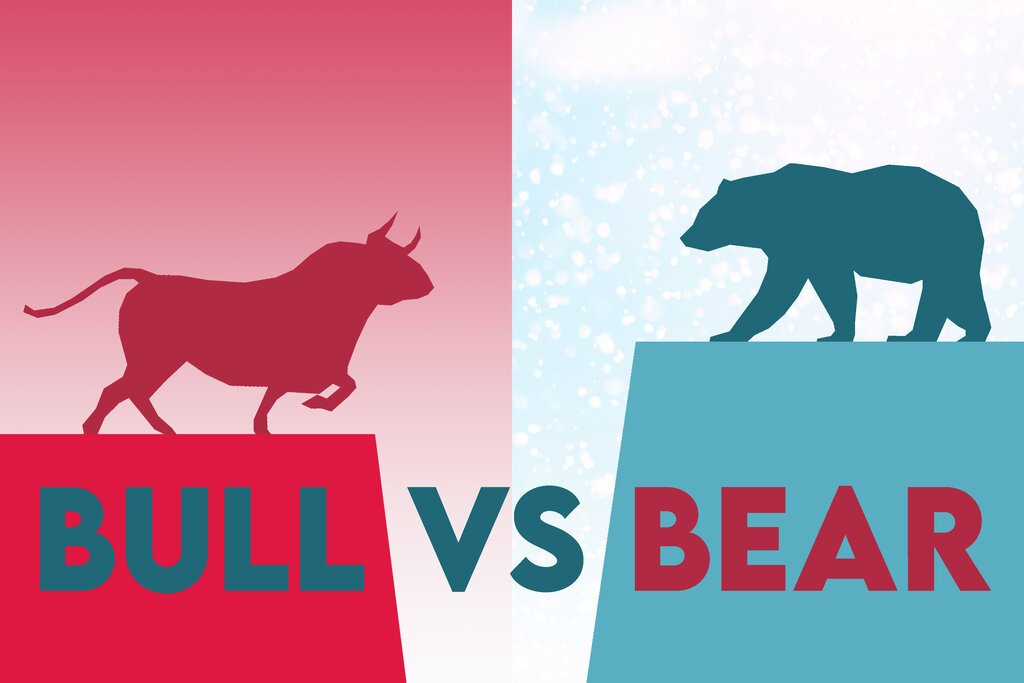
A bull market is characterized by rising stock prices and general optimism. During a bull run, the economy is typically strong, unemployment is low, and investors are confident about the future. The term is thought to come from the way a bull attacks, thrusting its horns upward.
A bear market is the opposite. It's a period of falling stock prices and widespread pessimism. Bear markets often coincide with economic recessions, when investors are fearful and selling stocks is more common than buying. This name comes from how a bear attacks, swiping its paws downward.
These cycles are a natural part of the market. Understanding them helps investors put short-term movements into a broader context.
What is the primary reason a company sells shares of its stock to the public for the first time?
When an investor buys shares of an established public company from another investor on the New York Stock Exchange (NYSE), in which market is the transaction taking place?
These core concepts provide the foundation for understanding how the market works. They explain how companies raise money and how investors participate in their journey.