Stock Investing Fundamentals for Beginners
Introduction to Stock Markets
What Is a Stock Market?
Think of a stock market as a massive, organized marketplace. But instead of selling fruits and vegetables, this market deals in tiny pieces of ownership in companies. These pieces are called stocks or shares.
When you buy a share of a company, you become a part-owner, or shareholder. The primary purpose of the stock market is twofold. For companies, it's a way to raise money to grow their business, fund new projects, or hire more people. They do this by selling ownership stakes to the public in an event called an Initial Public Offering (IPO).
For investors, it's an opportunity to invest in a company's future success. If the company performs well, its value might increase, and so could the price of its shares. The vast majority of trading happens in what's called the secondary market, which is where investors buy and sell shares from one another, not directly from the company.
Stock markets are platforms where investors can buy and sell shares of publicly traded companies.
Where Trading Happens
This buying and selling doesn't happen just anywhere. It takes place on official platforms known as stock exchanges. These are the specific venues that facilitate the trading of stocks. You've likely heard of some of the big ones, like the New York Stock Exchange (NYSE) or Nasdaq in the United States, the London Stock Exchange (LSE) in the UK, and the Tokyo Stock Exchange (TSE) in Japan.
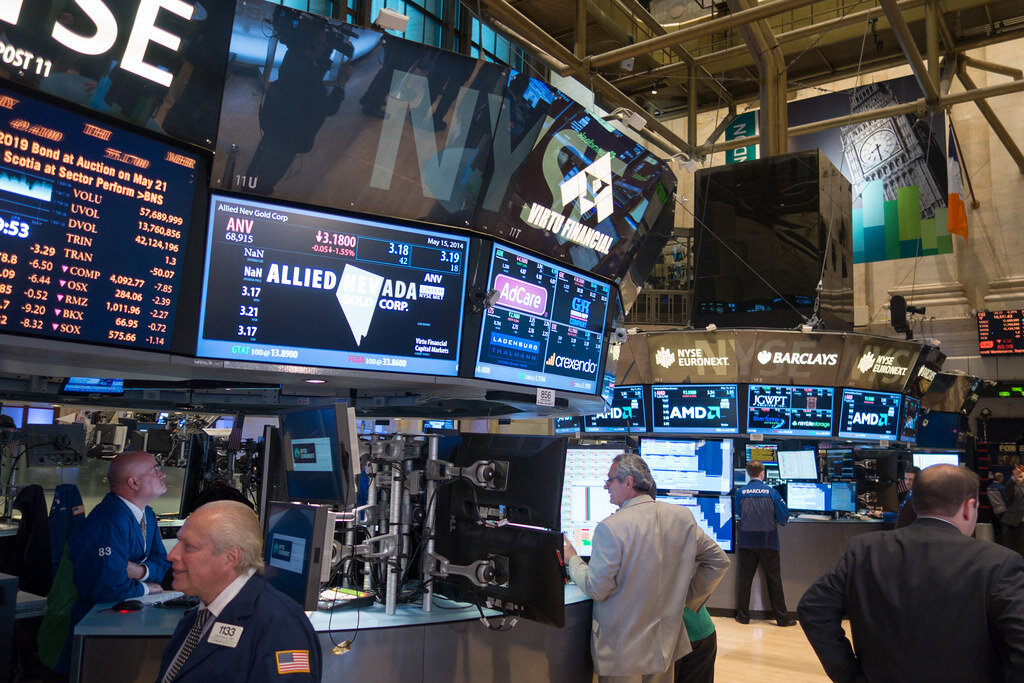
Historically, these were physical places where traders would shout orders on a chaotic floor. While some of that still exists, today, most trading is done electronically through vast computer networks. Exchanges are crucial because they provide a regulated, transparent, and fair environment for trading. They have strict rules for the companies listed on them and for the people and firms that participate in trading.
The Key Players
Several key participants keep the stock market running smoothly. Understanding their roles helps clarify how the whole system works.
First, there are investors. These are individuals or institutions (like pension funds or mutual funds) who buy and sell stocks. They are the ultimate buyers and sellers in the market.
Then, there are brokers. An investor can't just walk onto the floor of the NYSE to buy a stock. They need a licensed intermediary to execute trades on their behalf. That intermediary is a stockbroker. Today, many investors use online brokerage firms to place their trades.
Finally, there are market makers. These are firms that stand ready to buy or sell a particular stock at any time. They provide liquidity to the market, meaning they make it easier for investors to find a buyer when they want to sell, or a seller when they want to buy. Market makers profit from the small difference between their buying price (the bid) and their selling price (the ask), known as the bid-ask spread.
Tracking the Market's Mood
With thousands of companies listed on stock exchanges, how can anyone tell how the market is doing overall? This is where stock indices come in.
A stock index is a curated collection of stocks that represents a portion of the market. It's a statistical measure of the changes in a portfolio of stocks. By tracking the performance of an index, we can get a quick snapshot of the market's general direction or 'mood'.
For example, if news reporters say "the market was up today," they are usually referring to a major index like the S&P 500 rising in value.
Some of the most widely watched indices include:
- The S&P 500: Tracks the performance of 500 of the largest U.S. companies. It's often considered the best representation of the overall U.S. stock market.
- The Dow Jones Industrial Average (DJIA): Often just called "the Dow," this index tracks 30 large, well-known U.S. companies.
- The Nasdaq Composite: This index includes most of the stocks listed on the Nasdaq exchange, which has a heavy concentration of technology companies.
- The FTSE 100: Tracks the 100 largest companies on the London Stock Exchange.
Indices are important not just as barometers, but also as benchmarks against which investors can measure the performance of their own investments.
Now that you understand the basic components of the stock market, let's test your knowledge.
What does owning a share of a company's stock represent?
The vast majority of stock trading, where investors buy and sell shares from one another, happens in the _______ market.
Understanding these foundations—what a market is, where it operates, who participates, and how it's measured—is the first step in making sense of the world of stocks.