Stirner and Perullo: Egoism vs. Relationality
Introduction to Max Stirner's Philosophy
The World According to You
Max Stirner was a 19th-century German philosopher with a radical idea. He believed that the single most important thing in the world is the individual—not humanity, not God, not the state, but you. His major work, The Ego and Its Own, published in 1844, challenges nearly every assumption we make about society, morality, and our place in the world.
Stirner's philosophy is a deep dive into individual autonomy. He argued that we live our lives beholden to abstract concepts that we've been taught to revere. These concepts, he claimed, hold us back from being truly free. His work was largely ignored during his lifetime but later became a major influence on anarchist and existentialist thought.
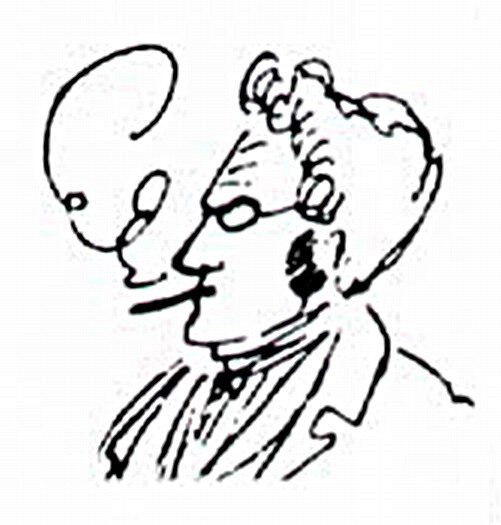
The Unique Ego
At the heart of Stirner's philosophy is the concept of the 'Unique' or the 'ego'. This isn't about being egotistical in the modern sense. Instead, the Unique is the tangible, living, breathing individual that you are. It's a self that cannot be fully described or contained by any label, category, or concept.
You are not just a 'student', a 'citizen', or a 'human'. According to Stirner, these are just words. Your actual self is a creative, unpredictable force. The moment you try to define it with a concept, you limit it. The Unique is always more than any idea about it.
For Stirner, the idea of the rational, utility maximising bourgeois individual is a constraint upon the much more radical possibilities of ego: here the ego should not be confused with the selfinterested homo economicus of liberalism – this in itself is an abstraction of humanist and liberal discourses – but rather should be seen as a kernel of nothingness out of which different expressions of the ‘self’ can arise.
The goal isn't to serve some higher purpose or abstract ideal. The goal is to be fully and completely yourself, to own your world and act according to your own will. This is what Stirner calls 'ownness'.
Haunted by Spooks
Stirner argued that our minds are haunted by what he called 'spooks' or 'fixed ideas'. These are abstract concepts that we treat as sacred, real entities that have power over us. We are taught to sacrifice our own interests and desires for the sake of these spooks.
Think of concepts like Morality, God, the State, Humanity, Justice, or Duty. Stirner saw these as mental ghosts that we allow to dictate our actions.
Even ideas that seem positive, like 'human rights' or 'freedom', are considered spooks if they are treated as external authorities that grant us permission to live. For Stirner, your right to anything comes from your power to take it, not from an abstract concept.
| Spook | How It Constrains the Ego |
|---|---|
| The State | Demands obedience to laws over individual will. |
| God | Imposes divine commands and moral absolutes. |
| Morality | A set of rules that tells you what you 'should' do. |
| Humanity | Asks you to sacrifice yourself for the 'greater good'. |
Stirner's critique extended to all forms of authority that weren't the individual's own. He believed that true freedom means dissolving these fixed ideas and seeing them for what they are: products of the mind, not masters of the self.
A Challenge to Everything
Stirner's work is a direct attack on the institutions built upon these spooks. He saw the state as an enemy of the individual, a machine that exists only by suppressing the Unique.
Stirner argues that the state is an apparatus that denies the individual the right of self realization, the expression of his value: “The State does not let me come to my value, and continues to exist only through my valuelessness.”
His critique didn't stop there. He challenged liberalism for promoting a limited, rational 'man' instead of the untamed Unique. He even criticized humanism and some forms of anarchism for simply replacing one spook (God) with another (Humanity). This uncompromising focus on the individual makes his philosophy a cornerstone of individualist anarchism.
His ideas also laid groundwork for existentialism. The existentialist focus on individual freedom, responsibility, and the creation of one's own values echoes Stirner's call to move beyond fixed ideas and live authentically as the Unique.
So, what can we take from Stirner? His philosophy is a powerful invitation to question the ideas you take for granted. It asks you to look at the world and ask: 'What does this have to do with me? How can I make it my own?'
According to Max Stirner, what is the single most important thing in the world?
What did Max Stirner mean by the term 'spooks' (Gespenster) or 'fixed ideas'?