Stationary Waves in Stretched Springs
Wave Motion Basics
What is a Wave?
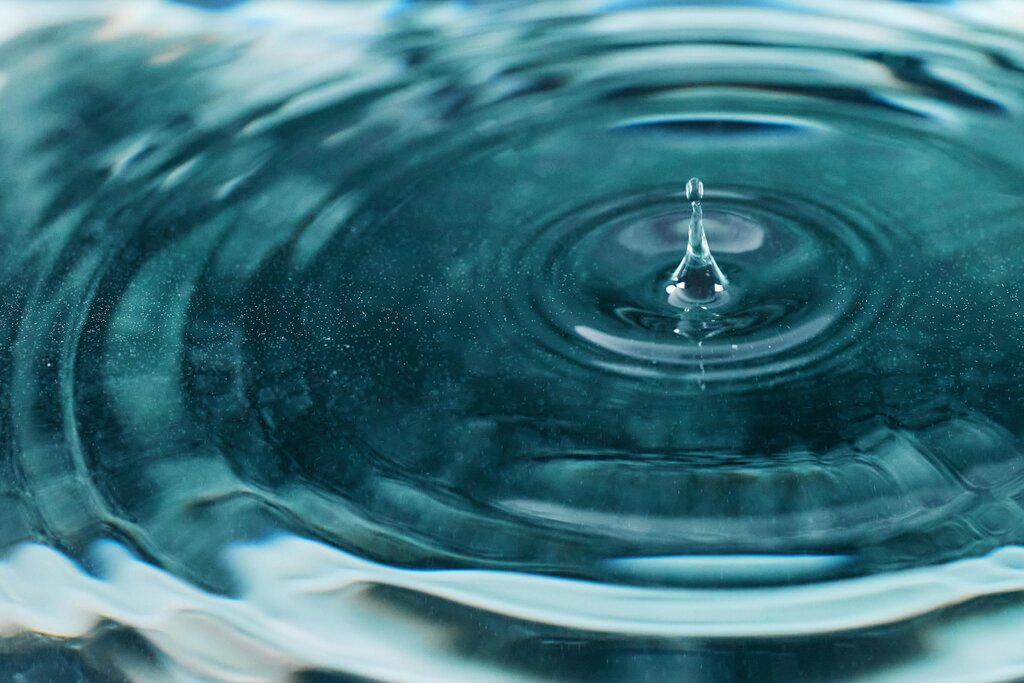
Think about tossing a small stone into a calm pond. Ripples spread out from where the stone landed. Or picture a crowd at a sports game doing 'the wave'. People stand up and sit down, but they don't run around the stadium. The wave moves, but the people stay in their seats. These are both examples of waves.
A wave is a disturbance that transfers energy from one place to another without transferring matter.
The water in the pond and the people in the stadium are what we call a medium—the substance or material the wave travels through. The energy from the stone hitting the water travels through the pond, but the water itself mostly just moves up and down. Each water molecule bumps the one next to it, passing the energy along, but it ends up roughly where it started.
A Wave on a String
Let's make this more concrete. Imagine holding one end of a long rope or a Slinky, with the other end tied to a doorknob. When the rope is still, it's in its —its natural resting state. Now, if you flick your wrist up and down once, you create a single bump, or pulse, that travels down the rope.
Watch the rope closely. The pulse moves from your hand to the doorknob. But the individual bits of the rope only move up and down. This movement away from the resting state is called displacement. Since the displacement (up and down) is at a right angle to the direction the energy is travelling (along the rope), we call this a transverse wave.
How the Pulse Travels
How does the pulse move down the rope? It's a chain reaction. When you flick your wrist, you pull the first segment of the rope up. Because the rope is connected, that first segment pulls the second segment up. The first segment then moves back down, and the second segment pulls the third one up. This process repeats all the way down the line. This is called propagation—the process of the wave moving through the medium.
A wave is simply a continuous series of these pulses. Instead of one flick of the wrist, if you move your hand up and down rhythmically, you'll send a full wave down the rope, with crests (the high points) and troughs (the low points). The key thing to remember is that the rope itself isn't flying across the room; only the energy is.
What is a wave primarily a transfer of?
In the example of ripples in a pond, what is the medium?
This simple idea of transferring energy through a medium is the foundation for understanding everything from sound to light to earthquakes.