State of the Art Video Editing AI
Introduction to Video Editing AI
Editing on Autopilot
For decades, video editing was a manual, painstaking process. Editors would spend hours sifting through footage, making precise cuts, adjusting colors, and mixing audio. Today, artificial intelligence is revolutionizing this workflow, turning tedious tasks into automated processes and opening up new creative possibilities.
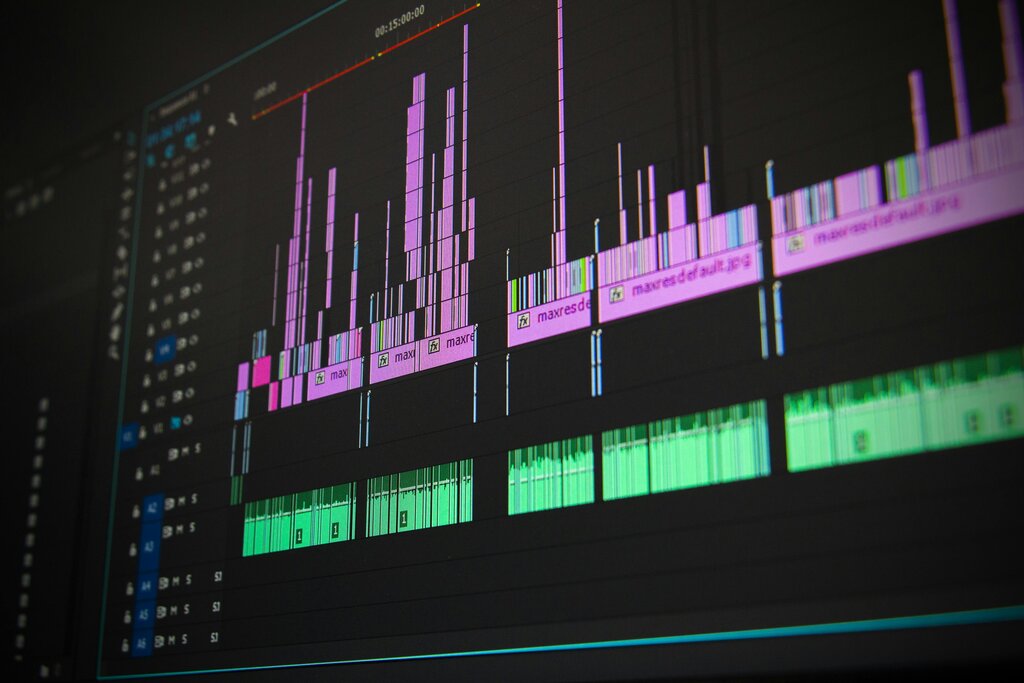
Instead of just being a set of tools, editing software is becoming a creative partner. It can analyze your footage, understand its content, and suggest or even perform edits for you. This shift is powered by a few core technologies that allow computers to learn, see, and create in ways that were once purely the domain of human intelligence.
The Brains of the Operation
The magic behind AI in video editing isn't really magic at all. It's rooted in machine learning, a field of computer science where systems learn from data rather than being explicitly programmed for a task. Imagine teaching a computer to identify a cat. You wouldn't write code describing whiskers, pointy ears, and a tail. Instead, you'd show it thousands of pictures labeled 'cat.' Eventually, it learns to recognize a cat on its own.
Machine Learning
noun
A type of artificial intelligence that allows software applications to become more accurate at predicting outcomes without being explicitly programmed to do so. It involves algorithms that learn from data to find patterns.
For video, the computer needs to 'see' what's in the footage. This is where computer vision comes in. It’s a field of AI that trains computers to interpret and understand the visual world. Using machine learning models, computer vision can identify people, places, and objects in digital images and videos. It’s how your phone's camera knows where to focus on a face.
Essentially, machine learning provides the ability to learn, and computer vision provides the ability to see.
Then there are generative models. These AI systems don't just analyze existing content—they create entirely new content. They learn the underlying patterns of data and can then generate new, similar data. This could mean creating realistic images from a text description, writing a script, or even generating a short video clip that never existed before.
Putting AI to Work
So how do these technologies help an editor? Let's look at some fundamental tasks. One of the most time-consuming parts of editing is simply organizing the footage. An AI can perform scene recognition, automatically scanning hours of video and identifying distinct scenes. It can distinguish an indoor conversation from an outdoor car chase, logging and tagging each one without human intervention.
Another common task is object tracking. Imagine you need to blur a person's face or a car's license plate as it moves across the screen. Manually, this would require adjusting the blur effect on every single frame. With computer vision, the AI can lock onto the object and follow it automatically, applying the effect perfectly throughout the clip.
These foundational tasks are just the beginning. By understanding the content of a video, AI can automate color correction, stabilize shaky footage, and even remove unwanted background noise from audio. It handles the repetitive work, freeing up human editors to focus on what they do best: storytelling.
Which field of AI is primarily responsible for training computers to interpret and understand visual information from images and videos?
An editor needs to blur a specific company's logo that appears on a moving vehicle throughout a 30-second clip. Which AI-powered feature would be most efficient for this task?
With these basics in mind, you can start to see how AI is not just a feature, but a fundamental shift in how visual stories are made.