Startup Venture Capital Fundraising Explained
Introduction to Venture Capital
What Is Venture Capital?
Venture capital (VC) is a form of private equity financing that is provided by venture capital firms or funds to startups, early-stage, and emerging companies that have been deemed to have high growth potential or which have demonstrated high growth. Think of it as fuel for a rocket ship. A company might have a brilliant idea and a great team, but it needs a significant amount of money to build, market, and scale its product.
Venture capital refers to financing given by well-off investors or investment banks to startups and small businesses that the investors believe have big growth potential.
VCs provide this capital in exchange for an equity stake, meaning they become part-owners of the company. Their goal is to help the company grow rapidly so that they can sell their ownership stake for a large profit in the future, typically when the company is acquired by a larger firm or goes public through an Initial Public Offering (IPO).
The Key Players
The world of venture capital involves a few key types of investors, each playing a different role.

Angel Investors These are typically wealthy individuals who provide capital for a business startup, usually in exchange for convertible debt or ownership equity. Angels often invest their own money and are frequently among the first to fund a new company. They might be successful entrepreneurs themselves, offering valuable advice alongside their cash.
Venture Capitalists (VCs) VCs are professional investors. They work for venture capital firms that pool money from various sources into a large fund. They then invest this fund's money into a portfolio of promising startups. A VC's involvement is often hands-on. They might take a seat on the company's board of directors and provide strategic guidance and access to their network.
Institutional Investors These are the organizations that provide the money for VC funds. They include pension funds, insurance companies, university endowments, and foundations. They invest in venture capital as an asset class, hoping for higher returns than they might get from more traditional investments like stocks and bonds. They are the 'limited partners' (LPs) in a VC fund, while the VCs themselves are the 'general partners' (GPs).
The Funding Ladder
Startups don't receive all their funding at once. Instead, they raise money in rounds, or stages, as they hit certain milestones. This process is often compared to climbing a ladder, with each rung representing a new level of maturity and a larger amount of capital.
Pre-Seed and Seed Stage This is the earliest phase of funding. It's for getting an idea off the ground, developing a prototype or a minimum viable product (MVP), and doing initial market research. The founders might initially use their own money or funds from friends and family. Angel investors are very active at this stage.
Series A After a company has traction, a solid user base, and a clear business model, it's ready for its Series A round. This is often the first time a company takes on money from a venture capital firm. The goal is to optimize the product and find product-market fit, the point where a company has found a strong, sustainable demand for its product.
Series B, C, and Beyond If a company continues to grow successfully after its Series A, it will raise subsequent rounds to scale even further. A Series B round is typically for growing the team, expanding marketing efforts, and building out the business infrastructure. A Series C round is for aggressive growth, like expanding into new countries, acquiring other companies, or developing new products. Some companies go on to raise Series D, E, and so on, before they eventually exit.
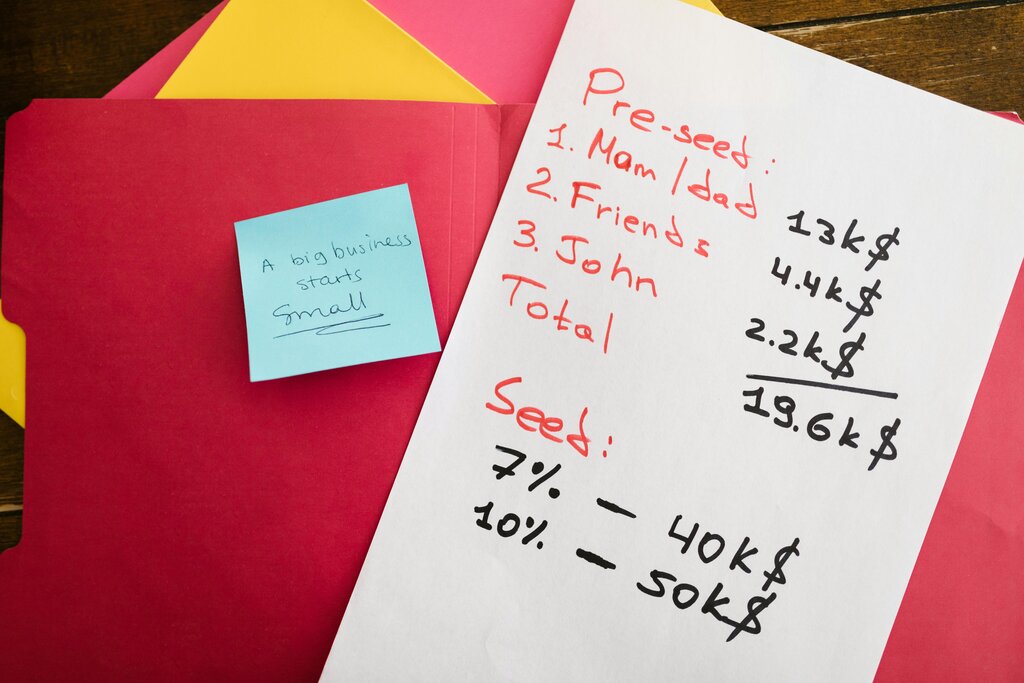
Each funding stage provides the capital a company needs to reach its next set of goals. It’s a structured process that helps manage risk for investors while providing startups with the resources they need to grow.
Now, let's test what you've learned about the basics of venture capital.
What is the primary motivation for a venture capital firm to invest in a startup?
A startup has developed a minimum viable product (MVP), gained some initial traction with users, and now needs capital to find true product-market fit and build out its team. Which funding stage is it most likely entering?
Understanding these core concepts—what VC is, who the players are, and how the funding stages work—is the first step in demystifying the world of startup finance.