Startup Scaling and Venture Capital Mastery
Startup Scaling Strategies
The Foundation: Product-Market Fit
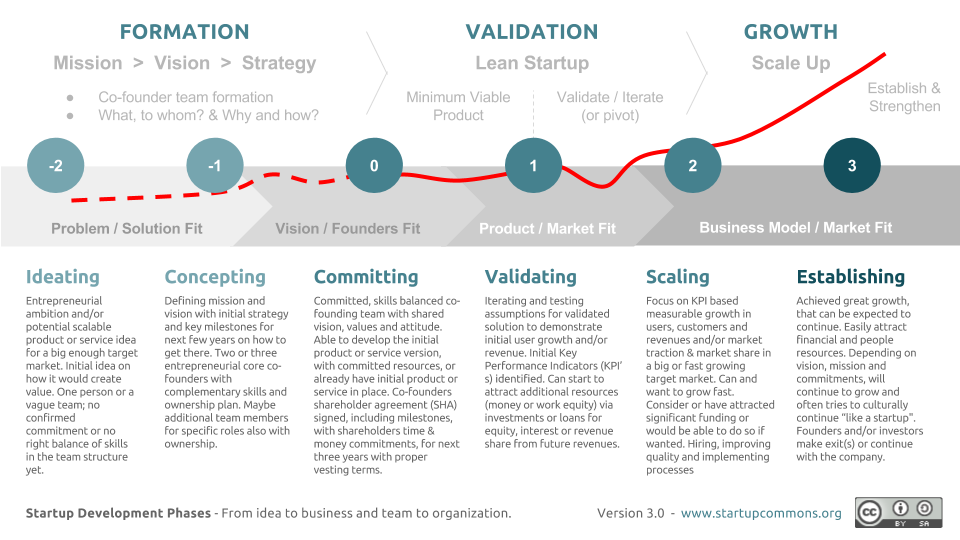
Before a startup can think about massive growth, it needs to answer one critical question: are we building something people truly want and need? This is the essence of product-market fit (PMF). It’s the point where a product perfectly resonates with a target market, solving a real problem so effectively that users can't imagine going without it.
Achieving PMF means you've moved beyond a good idea and created something with genuine demand. You'll know you have it when growth becomes organic. New customers sign up without much marketing push, existing customers stick around, and people start recommending your product to their friends and colleagues. It feels less like pushing a boulder uphill and more like guiding it as it rolls.
Ensure Product-Market Fit Before Scaling
Attempting to scale before achieving PMF is one of the most common and costly mistakes a startup can make. Pouring money into marketing a product that doesn't resonate is like trying to fill a leaky bucket. You might get a temporary surge of users, but they won't stay. The key is to first build a product that the market pulls from you, then step on the gas.
Building the Engine for Growth
Once you have product-market fit, the challenge shifts from finding demand to meeting it. This requires building an organization that can handle growth without breaking. It starts with scalable infrastructure.
Think about the difference between a country road and a six-lane highway. The country road works perfectly for a small town, but it would cause a massive traffic jam if a city grew around it. The same principle applies to a startup's systems. A process that works for ten customers will likely fail with ten thousand. Scalable infrastructure means investing in technology, software, and operational workflows that can support a much larger volume of activity. It’s about building the highway before the city gridlocks.
Scaling isn’t just about getting bigger; it's about getting bigger efficiently. It means increasing revenue without a proportional increase in costs and resources.
Just as important is the leadership team. In the early days, founders do everything. To scale, they must evolve into leaders who hire and empower experts. A strong leadership team brings specialized knowledge in areas like finance, marketing, and engineering. They create the structure and direction that allow the entire company to grow in a coordinated way, rather than chaotically.
Fueling and Guiding the Rocket
Scaling is expensive. It requires capital for hiring new talent, expanding marketing efforts, and upgrading infrastructure. This is why securing adequate funding is a crucial step. Without enough fuel, even the most promising startup will stall. The goal is to raise enough money to reach the next set of key milestones, proving the business can continue its upward trajectory.
As the team expands, maintaining the company culture becomes a challenge. The tight-knit, informal vibe of a five-person team can easily get lost in a company of fifty. Smart founders are intentional about defining their company’s core values and integrating them into hiring, communication, and decision-making. A strong culture acts as a compass, guiding the team as it navigates the complexities of growth.
Growth doesn't have to come solely from internal efforts. Strategic partnerships can be a powerful accelerator, providing access to new customer bases, complementary technologies, or established distribution channels. A partnership with the right company can open doors that would have taken years to unlock alone.
Staying on Course
As a startup scales, it’s easy to become obsessed with acquiring new customers. But retaining existing ones is just as, if not more, important. Happy, long-term customers provide stable revenue and are often your best marketers. A focus on customer retention ensures that the foundation of the business remains solid as it grows.
To manage this growth effectively, leaders need data. Key Performance Indicators (KPIs) are the instruments on the dashboard that show if the company is healthy and on track. These aren't just vanity metrics like website visits; they are concrete numbers that measure what matters, such as Customer Acquisition Cost (CAC), Lifetime Value (LTV), and churn rate.
| KPI | What It Measures | Why It Matters for Scaling |
|---|---|---|
| Customer Acquisition Cost (CAC) | The average cost to acquire a new customer. | If CAC is too high, growth isn't profitable. Scaling requires an efficient acquisition model. |
| Lifetime Value (LTV) | The total revenue a business can expect from a single customer account. | LTV should be significantly higher than CAC (often 3x or more) for a sustainable business model. |
| Monthly Recurring Revenue (MRR) | The predictable revenue a business can expect to receive every month. | A key indicator of growth and financial stability, especially for subscription businesses. |
| Churn Rate | The percentage of customers who stop using your product over a given period. | High churn indicates a problem with the product or customer satisfaction, undermining growth. |
Finally, no market stands still. Competitors emerge, customer needs evolve, and new technologies disrupt the status quo. The ability to adapt to market changes is vital for long-term survival. Scaling startups must stay nimble, listen to their customers, and be willing to pivot their strategy when necessary. Sustainable growth is a continuous process of learning and adjusting.
What is the primary indicator that a startup has achieved Product-Market Fit (PMF)?
The text compares pouring marketing money into a product that lacks PMF to what activity?
Successfully scaling a startup is a multifaceted challenge that goes far beyond simply growing revenue. It requires a solid foundation, a well-built engine for growth, and constant course correction.