Startup Investing Essentials
Introduction to Startup Investing
What Is a Startup?
A startup isn't just a new business. Your local coffee shop was a new business once, but it wasn't a startup. The key difference is growth. A startup is an organization designed to search for a repeatable and scalable business model. It's a temporary state of being, focused on experimentation and rapid expansion.
At Launch Academy, we define startups as a human institution that conducts a series of experiments to search for a repeatable and scalable business model.
Think of it this way: a traditional small business aims to become profitable quickly and provide a steady income. A startup, on the other hand, is willing to burn through cash in the short term to capture a large market and grow exponentially. This ambition is built on innovation, whether it's a new technology, a disruptive service, or a novel way of solving an old problem. This focus on rapid growth is what makes startups both exciting and risky.
The Startup Lifecycle
Startups evolve through distinct phases, each with its own goals and funding needs. This journey from an idea to an established company is often called the startup lifecycle.
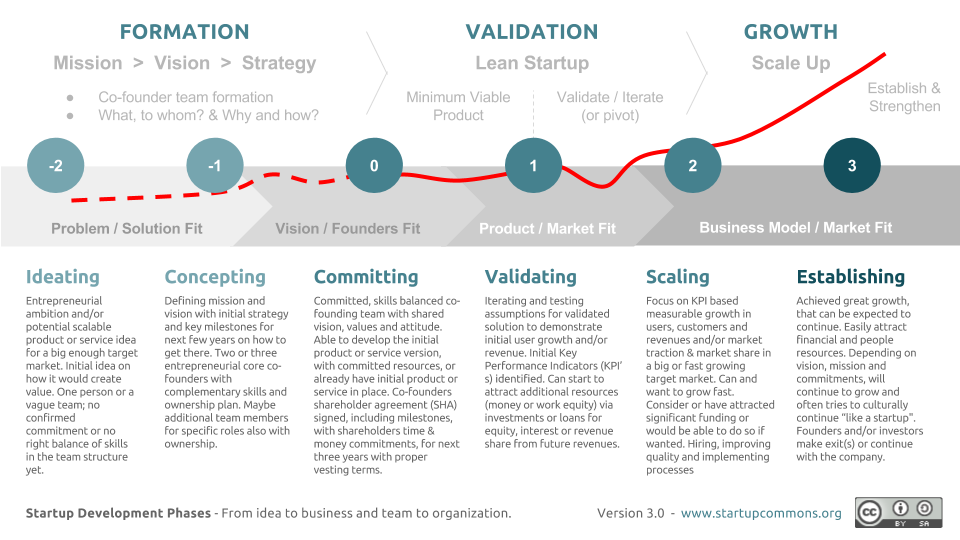
The earliest phase is the Seed Stage. This is where the company is just a sprout. Founders might have an idea, a prototype, and a small team. The goal is to prove the concept is viable. Funding at this stage is like planting a seed, hoping it will grow into something big. It often comes from the founders' own pockets, friends, family, or early-stage investors.
Once a startup has a working product and some initial customer traction, it's ready for its Series A funding round. This is usually the first time the company takes money from institutional venture capital firms. The capital is used to optimize the product, expand the team, and scale its market reach.
If the company continues to grow successfully, it will raise more money in Series B, C, and beyond. Each round provides fuel for further expansion, such as entering new countries, developing new products, or even acquiring smaller companies. The company is becoming more established and less risky with each successful round.
The Investors
Two main types of investors provide the capital that fuels this lifecycle: Angel Investors and Venture Capitalists.
Angel Investor
noun
A high-net-worth individual who provides financial backing for small startups or entrepreneurs, typically in exchange for ownership equity in the company.
Angel investors are often successful entrepreneurs themselves. They invest their own money and usually get involved at the seed stage. Beyond just capital, they often provide valuable mentorship and industry connections.
For the uninitiated, angel investors provide much-needed capital to startups during their early stages, helping them move from concept to execution.
Venture Capitalists, or VCs, are professional investors. They work for venture capital firms that manage a large pool of money from institutions like pension funds and endowments. VCs invest other people's money, and they typically invest larger amounts in later stages, like Series A and B. They take a more formal approach, often taking a seat on the company's board of directors to help steer its growth.
Rewards and Risks
The appeal of startup investing is the potential for massive returns. Investing in the next Google or Amazon at the seed stage could generate life-changing wealth. An investment of a few thousand dollars could become worth millions if the company succeeds and goes public or gets acquired by a larger firm. This is the primary reward that attracts investors to this high-stakes field.
However, the risks are just as significant. The vast majority of startups fail. An investment can easily go to zero. Unlike the stock market, where you can sell your shares anytime, startup investments are illiquid. This means your money is tied up for years with no guarantee of a return.
For every major success story, there are thousands of startups that don't make it. The high potential for failure is the biggest challenge for any investor.
Other challenges include difficulty in valuing a young company with no revenue, the long time horizons required, and the need for a deep understanding of the market and technology. Investing in startups is not for the faint of heart, but for those who can stomach the risk, the potential rewards can be extraordinary.
Time to check your understanding of these core ideas.
What is the primary characteristic that distinguishes a startup from a traditional new business like a local bakery?
A company has a working product and initial customer traction. It raises a significant amount of capital from an institutional investment firm to scale its team and market reach. Which funding round is this company most likely in?
Understanding these fundamentals—what a startup is, its growth stages, the key players, and the balance of risk and reward—is the first step into the world of venture investing.