Startup Fundraising Essentials
Understanding Startup Funding
The Funding Journey Begins
A great idea is the start of any company, but turning that idea into a business usually requires money. This is where funding comes in. For a startup, funding isn't a one-time event; it's a series of stages, each with its own purpose and players. Think of it like leveling up in a game. Each stage unlocks new resources to tackle bigger challenges.
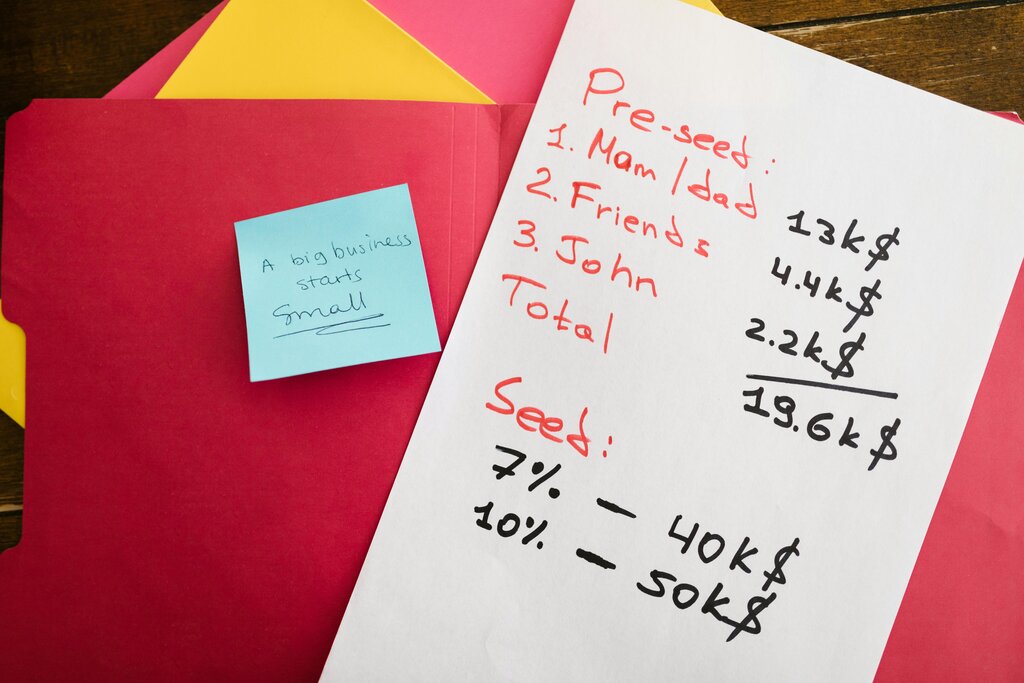
The earliest stage is called pre-seed funding. It's often not even a formal "round." This is the money a founder uses to get the ball rolling, maybe to build a prototype or conduct initial research. The funds typically come from the founders' own savings, a practice known as bootstrapping. Sometimes, they also come from close connections.
Pre-seed funding often comes from the three Fs: Friends, Family, and Founders. It's the initial injection of cash to see if an idea has legs.
Planting the Seed
Once an idea shows promise, it's time for seed funding. This is the first official equity funding stage. The goal here is to get the resources needed to find product-market fit—that sweet spot where you've built something that a specific group of people really wants. Seed money is used for things like developing a minimum viable product (MVP), hiring a core team, and initial marketing.
Two common sources for seed funding are angel investors and crowdfunding platforms.
Angel Investor
noun
A high-net-worth individual who provides financial backing for small startups or entrepreneurs, typically in exchange for ownership equity in the company.
Angel investors use their own money and often invest in industries they know well. Beyond cash, they can be valuable mentors, offering advice and opening doors to their networks. They are taking a big risk on a very young company, so they're betting as much on the founder as they are on the idea.
For the uninitiated, angel investors provide much-needed capital to startups during their early stages, helping them move from concept to execution.
Another route is crowdfunding. Platforms like Kickstarter and Indiegogo allow founders to raise smaller amounts of money from a large number of people online. This approach can be a great way to validate an idea. If hundreds of people are willing to pre-pay for your product, you have strong evidence that there's a market for it.
Scaling Up with Series A
After a successful seed round, a startup will hopefully have a working product, a growing user base, and consistent revenue. Now, it's time to scale. This is where Series A funding comes in. The goal is no longer just to prove the concept, but to grow the business significantly. This money is for hiring more staff, expanding into new markets, and optimizing the business model.
Series A rounds are typically led by venture capital firms.
Venture Capitalist
noun
A professional investor who provides capital to startups and small businesses with high growth potential. They manage a fund of money from various sources, such as pension funds and large corporations.
Unlike angel investors, venture capitalists (VCs) are investing other people's money from a larger fund. Because of this, they are usually more formal and data-driven. They invest much larger sums of money than angels and typically take a seat on the company's board of directors. VCs look for companies with a proven track record and a clear, ambitious plan for massive growth.
While angels invest in a promising idea, VCs invest in a promising business. They need to see data that proves the company is ready to scale.
These initial stages—Pre-seed, Seed, and Series A—form the foundation of a startup's financial journey. Each step provides the fuel needed to move from a simple idea to a thriving business.
What is the primary goal a startup aims to achieve with its Seed funding?
What is it called when founders use their own personal savings to fund the earliest stage of their startup?