Starting with Vectors
Scalars versus Vectors
Just a Number, or More?
In our daily lives, we use numbers to describe almost everything. The temperature is 28 degrees Celsius. A bag of rice weighs 5 kilograms. A movie is 2 hours long. These are simple, single numbers that tell us “how much” or “how many.” In science, we call this kind of quantity a scalar.
A scalar is a quantity that is fully described by a magnitude (a numerical value) alone.
Things like length, area, mass, and time are all scalars. Knowing the value is enough. If you tell someone you'll meet them in 15 minutes, they don't need any more information to understand the duration. But what if you’re giving directions?
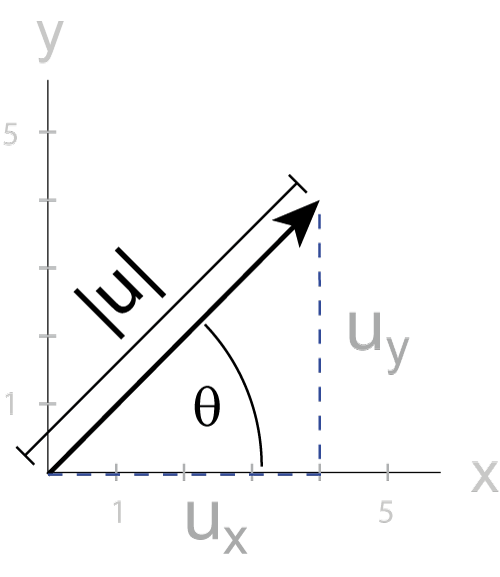
Saying “walk 1 kilometre” isn't very helpful. The person needs to know which way to walk. This is where vectors come in. A vector is a quantity that has both magnitude and direction. So, “walk 1 kilometre north” is a vector. It tells you how far (magnitude) and which way (direction).
Think of the difference between distance and
If you walk from your home to a shop and back, you might have walked a total distance of 2 kilometres. That’s a scalar. But your final displacement is zero, because you ended up right back where you started. Your overall change in position is nothing. Distance is the total path covered, while displacement is the overall change in position from start to finish.
Why Direction Matters
In physics and engineering, the difference between scalars and vectors is crucial. Ignoring direction can lead to completely wrong results. For example, force is a vector. Pushing a box with a certain amount of force is very different from pulling it with the same force. The magnitude is the same, but the direction is opposite, leading to a different outcome.
Another classic example is versus speed. Speed is a scalar. A car travelling at 60 km/h tells you how fast it's going. Velocity is a vector. A car travelling at 60 km/h east tells you how fast it's going and in which direction. Two cars can have the same speed but different velocities if they are travelling in different directions.
Understanding this distinction is the first step in learning how to work with vectors, which are essential for describing the world around us in a complete and accurate way.
Time to check your understanding.
What is the primary characteristic that distinguishes a vector from a scalar?
A car travels at a constant 50 km/h. This value represents the car's speed, which is a scalar quantity.
Now that you can tell the difference between scalars and vectors, you're ready to learn about how we can work with them.