Stages of Mitosis and Meiosis
Cell Division Basics
The Cell: Life's Building Block
Every living thing, from the smallest insect to the largest whale, is made of cells. Think of cells as tiny, individual bricks. Just as you stack bricks to build a house, life uses cells to build organisms. Your body is made of trillions of them, each one a bustling hub of activity, working together to keep you alive.
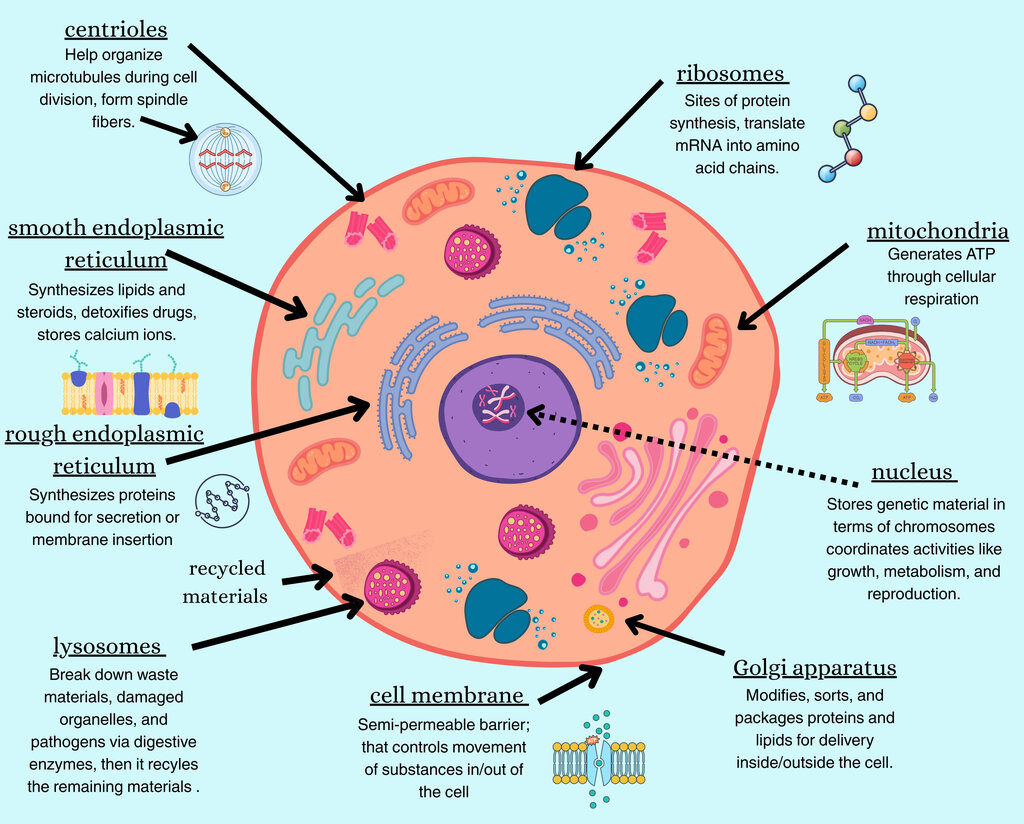
These microscopic units are the fundamental building blocks of life. They form your skin, your heart, your brain—everything. But cells don't last forever, and organisms need to grow. That's where cell division comes in.
Why Cells Divide
Cells divide for two main reasons: growth and repair. When you were a baby, you were much smaller than you are now. You grew because your cells divided, making more and more cells to build a bigger body. It's not that your cells got larger; you just got more of them.
Repair is just as important. Imagine you get a paper cut. Within a few days, the cut is gone. This healing happens because the skin cells around the cut divide to create new cells, which patch up the gap. Cell division is constantly happening in your body to replace old or damaged cells.
For an organism to grow or heal, its cells must make new cells.
But a cell can't just split in half. Each new cell needs to know exactly what to do. It needs a complete set of instructions to function properly. If it doesn't get the right information, it won't work.
DNA: The Instruction Manual
Every cell contains a detailed instruction manual called , which stands for deoxyribonucleic acid. This manual holds all the information the cell needs to perform its job, whether it's being a muscle cell that helps you lift something or a nerve cell that sends signals to your brain. It's the blueprint for life.
Before a cell divides, it must make a perfect copy of its entire DNA manual. This process is called DNA replication. It's like photocopying a book page by page to make sure the new library has a complete, identical copy. Without this step, the new cell would be missing crucial instructions and wouldn't be able to survive.
Organizing the Manual
A cell's DNA is incredibly long. To keep it organized and prevent it from getting tangled, the cell packages it into compact structures called just before it divides. Think of them as the individual volumes or chapters of the instruction manual. Humans have 46 chromosomes in most of their cells.
After the DNA is copied, each chromosome consists of two identical copies. These identical, paired copies are called sister , and they are joined together at a single point. You can visualize a replicated chromosome as an 'X' shape, where one side is the original DNA and the other is the perfect copy.
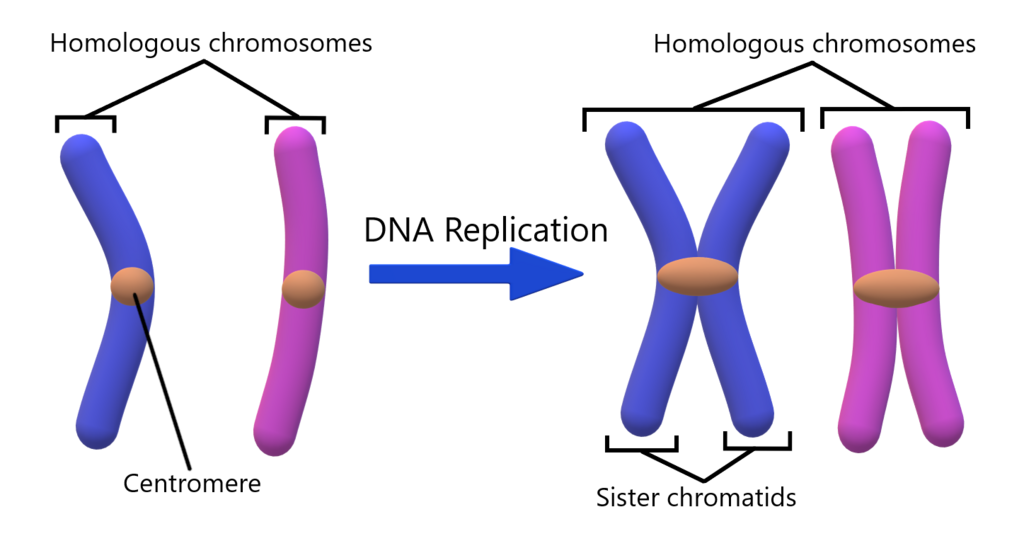
This careful organization and copying ensures that when the cell finally splits, each of the two new
With the instruction manual copied and neatly bundled, the cell is ready to divide. It will carefully separate the sister chromatids, pulling one complete set of 46 chromatids to each side of the cell. Then, it will split down the middle, creating two new daughter cells. Each one has its own identical, complete copy of the DNA manual, ready to carry out its functions.
Now, let's test your understanding of these core concepts.
What are the two main reasons cells divide?
What is the name for the cell's "instruction manual" that contains all the information it needs to function?
Understanding these basics is the first step to seeing how life grows, heals, and continues. It all comes down to this fundamental process of copying and dividing.