Stablecoins vs. Fiat Currency
Introduction to Currency
What Is Money?
Before money, there was barter. If you were a chicken farmer who wanted a new pair of shoes, you had to find a shoemaker who wanted chickens. This system, called direct exchange, works, but it's inefficient. What if the shoemaker didn't want chickens? You'd have to find something the shoemaker did want, trade your chickens for it, and then trade that item for the shoes. It could get complicated fast.
Money solves this problem. It acts as an intermediary, a common language of value that everyone agrees on. Instead of trading chickens for shoes, you sell your chickens for money, then use that money to buy shoes. This simplifies transactions and makes economies vastly more efficient.
Currency
noun
A system of money in general use in a particular country.
To be useful, money needs to perform three key jobs.
Medium of Exchange: It's an intermediary used in trade to avoid the inconveniences of a barter system. Unit of Account: It provides a common measure of value, allowing us to price goods and services. Store of Value: It can be saved and used for future purchases, holding its value over time.
These three functions work together to make our economic lives possible. When you see a $5 price tag, you're using money as a unit of account. When you hand over a five-dollar bill to pay, it's a medium of exchange. And when you put that same bill in a piggy bank, it's acting as a store of value.
From Bartering to Banknotes
The journey from bartering chickens to using credit cards is a long one. The first step away from direct exchange was commodity money. This is money that has value outside of its use as currency. Historically, societies have used all sorts of things: salt, cattle, grain, and even cowrie shells.
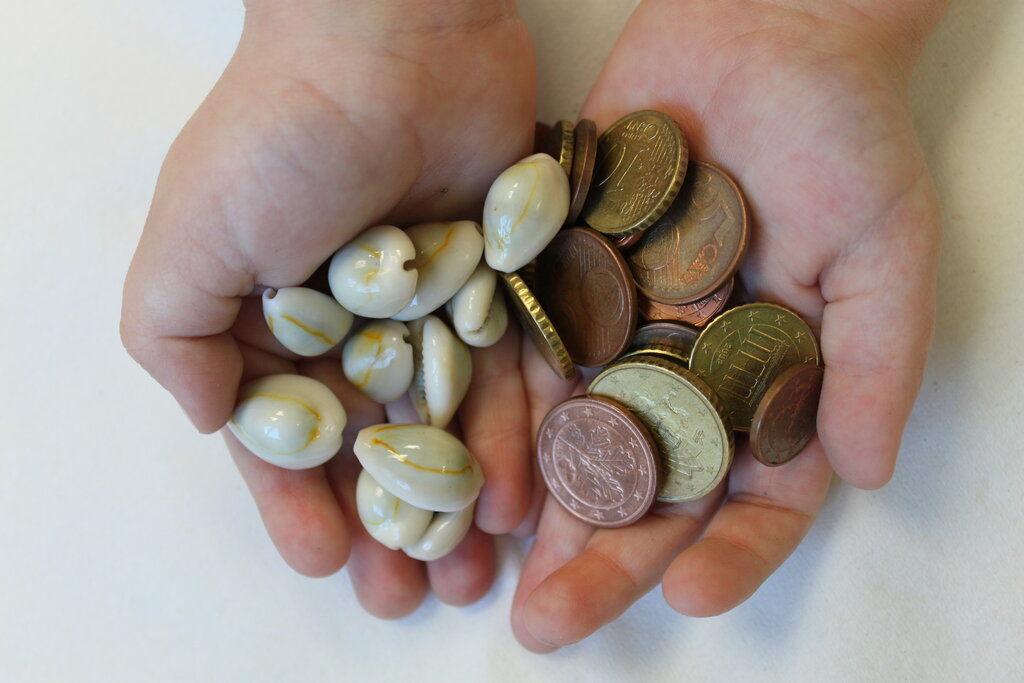
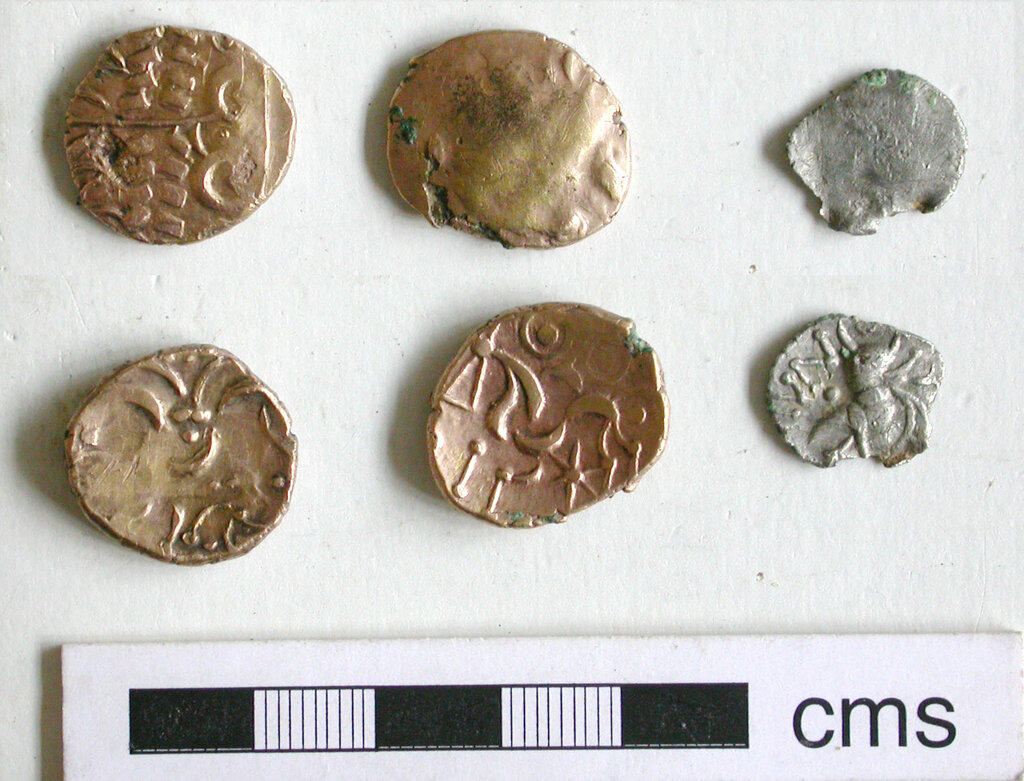
Commodities were better than barter, but they had drawbacks. They could be hard to carry, difficult to divide, and perishable. This led to the adoption of metals like gold and silver. These metals were durable, portable, and easily divisible, making them an excellent form of money. They were eventually shaped into standardized coins to make trade even easier.
Carrying around bags of gold wasn't always safe or convenient. This gave rise to representative money. A person could deposit their gold with a trusted institution, like a bank, and receive a paper certificate in return. This certificate represented a claim to the gold and could be traded as if it were the gold itself.
Today, most of the world uses fiat money. Unlike commodity or representative money, fiat money has no intrinsic value. A dollar bill is just a piece of paper. Its value comes from the trust and confidence we have in the government that issues it. We accept it as payment because we know others will accept it from us.
What Makes Good Money?
Why do we use specially printed paper and metal discs as money, and not, say, leaves or pebbles? For any item to function effectively as currency, it needs to have a few key characteristics.
| Characteristic | Why It's Important |
|---|---|
| Durability | Money must be able to withstand being passed from person to person. |
| Portability | It should be easy to carry around for daily transactions. |
| Divisibility | Money must be easily divided into smaller denominations. |
| Uniformity | Two units of the same value must be interchangeable. A dollar is a dollar. |
| Limited Supply | The supply of money must be controlled to ensure it retains its value. |
| Acceptability | Everyone in an economy must be willing to accept it as payment. |
These traits are why fiat currencies, managed by central banks, have become the standard around the world. They are designed to be durable, portable, and acceptable, providing a stable foundation for a modern economy.
Now that we've covered the basics of what money is and how it evolved, let's review the key concepts.
Time to test your knowledge.
When you put a five-dollar bill in a piggy bank for later, which function of money are you primarily using?
The primary problem with a barter system is that it requires a 'double coincidence of wants'.
Understanding the fundamental roles and characteristics of money is the first step in making sense of everything from personal finance to the global economy.