SSC Class 10 History and Political Science Mastery
Western Historiography
The Science of the Past
History isn't just a collection of stories. It's a scientific discipline with its own methods for finding out what happened and why. Before the 18th century, writing history was often about glorifying kings or retelling myths. But a shift occurred. Historians began to insist on a more systematic and critical approach.
Modern historiography, the study of how history is written, is built on a few key principles. First, it relies on asking relevant questions about the past. Second, these questions must be answered with evidence, not just speculation. Third, any historical document must be scrutinised by an expert to determine its authenticity. This scientific method helps separate fact from fiction.
The Thinkers Who Shaped History
Several key thinkers laid the groundwork for modern history. The French scholar insisted on a crucial rule: never accept anything as true until all grounds for doubt are removed. For historians, this meant critically examining the reliability of historical documents rather than just accepting them at face value.
Building on this, the French philosopher Voltaire is often called the founder of modern historiography. He argued that history should not only focus on the objective truth and chronology of events but also consider the society as a whole. For Voltaire, understanding social traditions, the economy, and agriculture was just as important as knowing which king won which battle.
The German philosopher Georg Wilhelm Friedrich Hegel introduced a new way to understand historical progress. He proposed that any event or idea ('thesis') inevitably creates an opposing force ('antithesis'). The conflict between these two results in a new stage ('synthesis') that combines elements of both. This concept is known as dialectics.
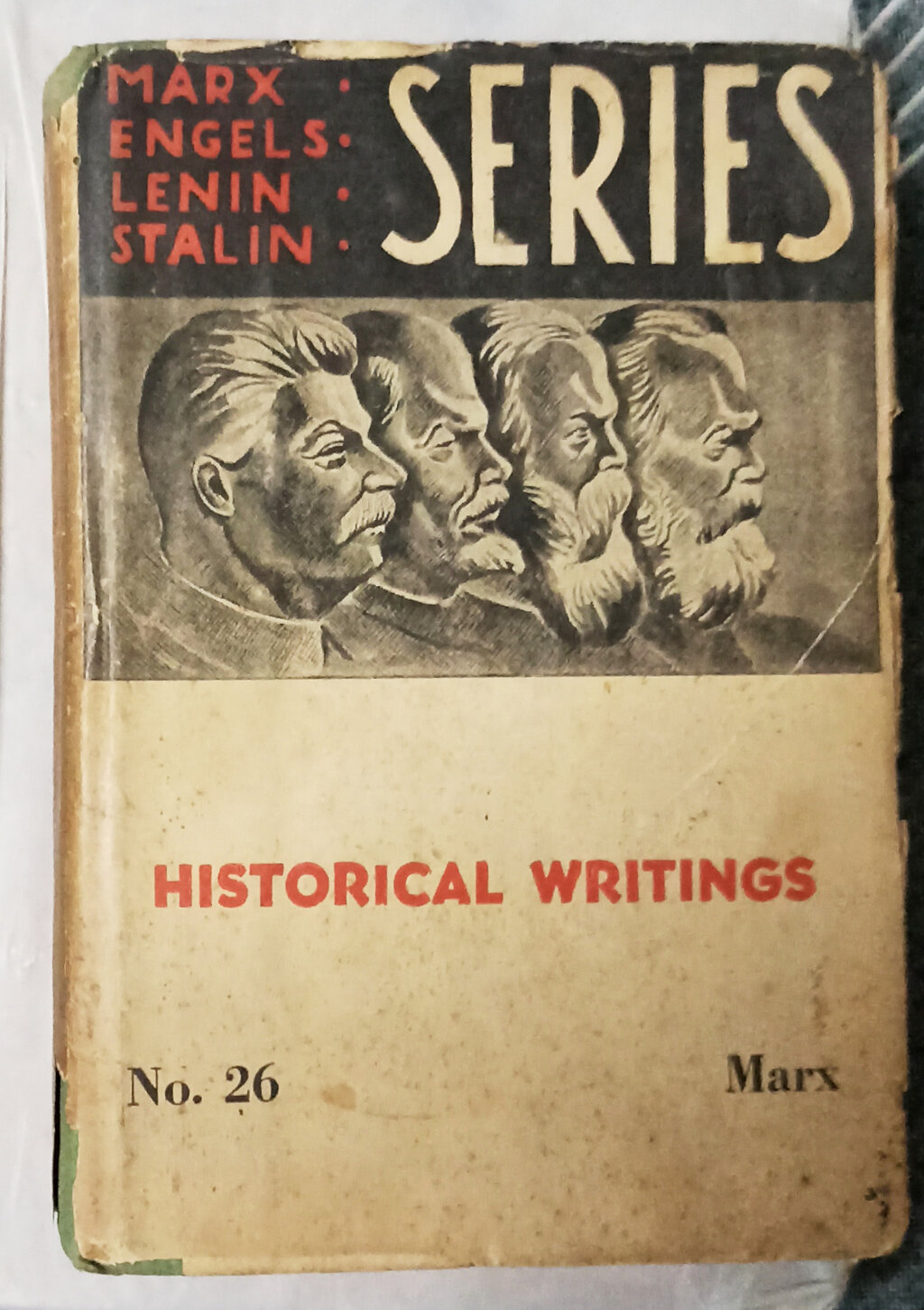
Karl Marx took Hegel's idea of dialectics and applied it to society. He argued that history is not driven by ideas, but by class struggle. According to Marx, human history is the story of conflict between the 'haves' and the 'have-nots'. He believed that the means of production—how things are made and distributed—form the basic structure of society and shape everything else, from laws to culture.
New Ways of Seeing
In the 20th century, a new school of thought emerged in France that changed history forever. The moved away from the study of politics, wars, and great leaders. Instead, its historians focused on the long-term history of climate, agriculture, trade, technology, and the daily lives of ordinary people. They wanted to understand the history of the masses, not just the elite.
This focus on overlooked groups led to another important development: Feminist Historiography . Historians began to realise that most historical accounts were written by men and focused on men's activities. Feminist history seeks to correct this imbalance. It re-examines the past from the perspective of women, studying their roles in family, work, and public life, and challenging the male-centric narrative of history.
Feminist historiography doesn't just add women to the story; it fundamentally changes the story itself.
Finally, the French thinker Michel Foucault offered a radical new perspective. In his book The Archaeology of Knowledge, he argued against the idea of history as a single, linear progression towards truth. Foucault claimed that the prevailing truths of any era are shaped by power structures. His job, as he saw it, was to explain the transitions between different historical understandings of knowledge, rather than creating a single, seamless narrative.
These different approaches show that history is a dynamic field. Understanding how historical narratives are constructed is the first step to thinking critically about the past.
According to the principles of modern historiography, how should a historian approach a historical document?
Which philosopher is credited with introducing the concept of dialectics (thesis, antithesis, synthesis) to understand historical progress?