SQL Database Warehousing Essentials
Introduction to Data Warehousing
What Is a Data Warehouse?
Think of a data warehouse as a company's central library for historical data. It doesn't store the day-to-day transactions happening right now. Instead, it collects and organizes vast amounts of data from many different places over a long period. This includes information from sales systems, marketing campaigns, customer support logs, and more.
The main purpose of a data warehouse is to make all this varied information easy to analyze. By bringing everything together into one structured place, businesses can spot trends, make forecasts, and get a big-picture view of their performance. This consolidated data is the foundation for business intelligence (BI) and data-driven decision-making.
Essentially, a data warehouse turns raw data into valuable historical insight.
Warehouses vs. Databases
It's easy to confuse a data warehouse with a standard operational database, but they serve very different functions. An operational database is built for speed and efficiency in handling real-time transactions. Think of an e-commerce site's database: it needs to quickly process orders, update inventory, and manage customer accounts.
A data warehouse, on the other hand, is built for analysis. It's designed to handle complex queries that might scan millions of records to uncover patterns. This process is often called Online Analytical Processing (OLAP), while the transaction-focused work of operational databases is called Online Transaction Processing (OLTP).
| Feature | Operational Database (OLTP) | Data Warehouse (OLAP) |
|---|---|---|
| Purpose | Run daily business operations | Support business intelligence and analysis |
| Data | Current, real-time | Historical, aggregated |
| Focus | Fast transactions (write-heavy) | Complex queries (read-heavy) |
| Users | Front-line workers, customers | Data analysts, business managers |
| Structure | Optimized for fast updates | Optimized for fast queries |
How Data Gets In
Data doesn't just magically appear in a warehouse. It gets there through a process called Extract, Transform, Load (ETL). This is the plumbing that connects the various data sources to the central repository.
Extract: First, data is pulled from its original sources. This could be anything from a customer relationship management (CRM) system to a simple spreadsheet.
Transform: Next, the raw data is cleaned and standardized. This is a critical step. It might involve converting dates to a single format, removing duplicate entries, or combining data from multiple sources. For example, customer data from the sales system and the support system are merged into one complete customer record.
Load: Finally, the clean, transformed data is loaded into the data warehouse, where it's ready for analysis.
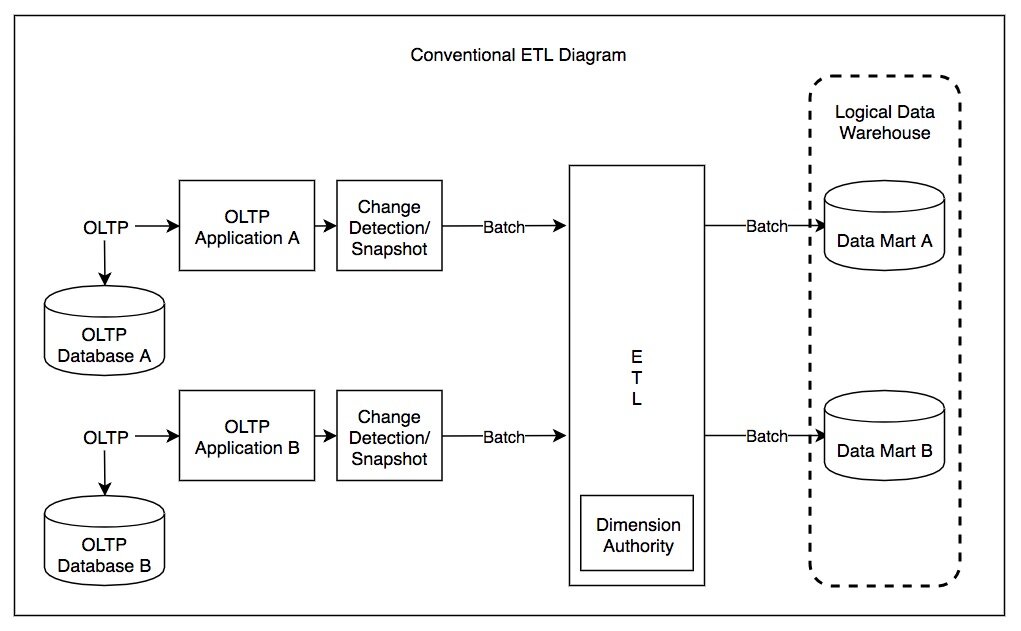
The ETL process ensures that the data in the warehouse is consistent, accurate, and reliable. Without this step, you’d just have a messy collection of unrelated information, often called a data swamp.
Key Components
A complete data warehousing system has several key parts working together.
The flow generally moves from the raw sources through the staging and ETL process into the central warehouse. From there, smaller, more focused data marts can be created for specific departments like sales or marketing. Analysts then use BI tools to connect to the warehouse or data marts to build reports and dashboards.
What is the primary purpose of a data warehouse?
The process of collecting data from various sources, cleaning it, and then loading it into a data warehouse is known as ______.
Understanding these core concepts is the first step in harnessing the power of data for smarter business decisions.