Spring Boot Integration Testing Best Practices
Introduction to Integration Testing
Putting the Pieces Together
Imagine building a car. You can test each part individually—the spark plug sparks, the piston moves, the fuel injector sprays. These are like unit tests, which we've already covered. They confirm that each small piece of your code works correctly in isolation.
But will the engine start when you assemble all those perfect parts? That's where integration testing comes in. It's the process of testing how different parts of your application work together.
Integration tests verify that different components, modules, or services used by your application interact correctly as a group.
In a Spring Boot application, this could mean testing the interaction between a controller, a service, and a repository. Does a request to a controller correctly trigger a method in the service, which then successfully fetches data from the database via the repository? Integration tests answer these kinds of questions, helping you catch bugs that only appear when components start talking to each other.
Unit vs. Integration Tests
The main difference between unit and integration tests is their scope. A unit test focuses on a single, isolated piece of functionality. An integration test, on the other hand, examines the flow between several components. Because of this, integration tests are generally more complex and slower to run than unit tests.
This relationship is often visualized as a "test pyramid."
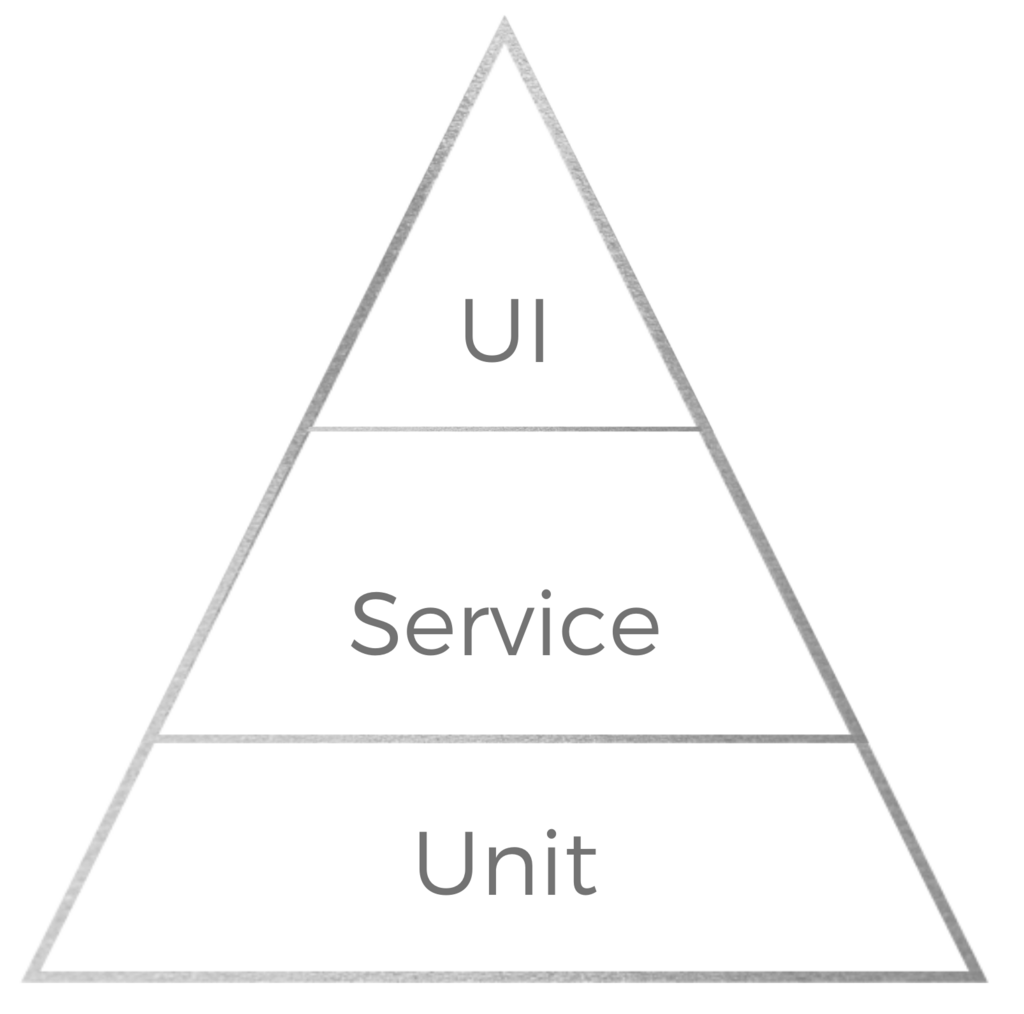
The base of the pyramid is made of many fast, simple unit tests. As you move up, the tests become broader in scope, slower to run, and fewer in number. Integration tests form the middle layer, ensuring that the components validated by your unit tests can collaborate effectively.
| Feature | Unit Test | Integration Test |
|---|---|---|
| Scope | A single class or method | Multiple components interacting |
| Speed | Very fast | Slower |
| Dependencies | External dependencies (like databases) are mocked | May use real external dependencies |
| Goal | Verify a small piece of code works correctly | Verify components work together correctly |
Tools for the Job
In the Spring Boot ecosystem, we rely on a couple of key tools for integration testing.
JUnit 5: This is the standard testing framework for Java. It provides the structure for writing and running our tests, using annotations like @Test to mark test methods and assertions to check if our code behaves as expected.
Mockito: When you want to test how component A interacts with component B, you don't always want to test component C at the same time. Mockito is a mocking framework that lets you create "mock" versions of objects. This helps you isolate the interaction you care about, ensuring your test isn't failing because of an unrelated component.
Using JUnit and Mockito, we can write powerful integration tests that verify complex interactions within our Spring Boot application while keeping the tests focused and manageable.
Now that we understand the what and why, let's move on to setting up our environment to write our first integration test.