Spotting Fallacies and Manipulation
Introduction to Critical Thinking
What Is Critical Thinking?
Critical thinking is the process of carefully analyzing information to form a judgment. It's not about being negative or critical of others. Instead, it's about being an active, curious, and skeptical learner. You pause, you question, you reflect. Instead of accepting ideas at face value, you dig deeper to understand if they're supported by evidence and logic.
Critical thinking is clear, reasonable, reflective thinking focused on deciding what to believe or do.
Think of it as a mental toolkit for navigating a world full of information. Every day, we're flooded with claims from news, social media, advertisements, and conversations. Critical thinking helps you sort through the noise, identify what's credible, and make better decisions, whether you're choosing a product, deciding on a career path, or forming an opinion on an important issue.
The Tools of the Trade
Logic and reasoning are the engines of critical thinking. They provide a structured way to evaluate arguments and build your own. An argument isn't a heated dispute; in this context, it's a conclusion supported by reasons, called premises.
Two common types of reasoning help us connect premises to conclusions:
| Type of Reasoning | How It Works | Example |
|---|---|---|
| Deductive | Starts with a general rule (premise) and applies it to a specific case to reach a certain conclusion. | All dogs bark. Fido is a dog. Therefore, Fido barks. |
| Inductive | Starts with specific observations and uses them to form a general conclusion that is likely but not guaranteed. | My dog barks. My neighbor's dog barks. Every dog I meet barks. Therefore, all dogs probably bark. |
In deductive reasoning, if the premises are true, the conclusion must be true. In inductive reasoning, the conclusion is a strong probability, not a certainty. Both are vital tools. Deductive reasoning helps us apply known principles, while inductive reasoning helps us form new hypotheses based on evidence.
Fact vs. Opinion
A crucial skill in critical thinking is telling the difference between facts and opinions. They often get tangled together, but they are fundamentally different.
Fact
noun
A statement that can be proven true or false through objective evidence.
Facts are independent of what anyone believes. They are verifiable. You can look them up, measure them, or observe them.
Opinion
noun
A statement that expresses a belief, feeling, or judgment. It cannot be proven true or false.
Opinions are based on personal values and preferences. While they can be supported by facts, they are not facts themselves. Look for signal words like "I think," "believe," "best," or "worst." A well-reasoned opinion is valuable, but it's important to recognize it as a viewpoint, not an objective truth.
Barriers to Clear Thinking
Even with the best intentions, our thinking can be clouded by internal roadblocks. These mental shortcuts, or cognitive biases, are patterns of deviation from rational judgment. Being aware of them is the first step to overcoming them.
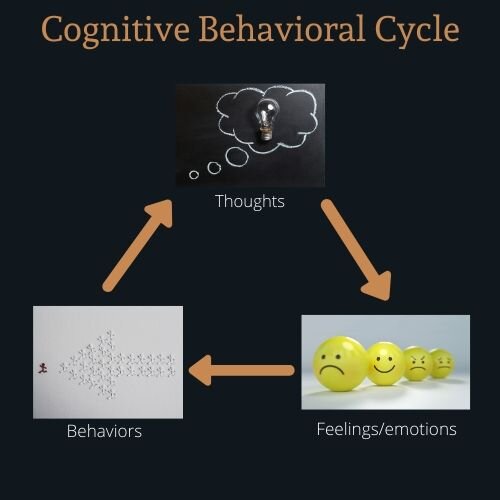
Here are a few common barriers:
-
Confirmation Bias: We tend to favor information that confirms what we already believe and ignore information that contradicts it. If you believe left-handed people are more creative, you'll probably notice every creative left-handed person you meet and overlook the rest.
-
Emotional Reasoning: This is the tendency to believe that what you feel must be true. "I feel anxious about flying, so it must be dangerous." In reality, feelings are not facts, and they can mislead us.
-
Overconfidence: Sometimes we are more confident in our judgments than our accuracy warrants. This can prevent us from seeking out more information or considering alternative viewpoints.
True critical thinking means being willing to challenge your own assumptions, not just those of others.
Acknowledging these barriers helps you approach information with a healthier dose of humility and skepticism. It encourages you to ask, "Is this really true, or do I just want it to be?"
What is the primary goal of critical thinking?
A scientist observes that every swan they have ever seen is white. They conclude that it is highly probable all swans are white. What type of reasoning is this?