Spotting Fallacies and Manipulation
Introduction to Critical Thinking
Thinking About Thinking
Most of our thinking happens on autopilot. We react, we remember, we make snap judgments. That’s normal and often useful. But some situations call for a more deliberate approach. They require us to step back and analyze not just the information we're getting, but also the very process of how we're thinking about it.
This is the essence of critical thinking. It’s not about being negative or finding fault. It’s about being an active, engaged thinker—like a detective for the truth. A detective doesn't just accept the first story they hear. They examine evidence, question assumptions, and piece together clues to form a solid conclusion. Critical thinking is applying that same methodical process to the information you encounter every day.
critical thinking
noun
The objective analysis and evaluation of an issue in order to form a judgment.
Why does this matter? Because we are constantly bombarded with information. Ads tell us what to buy, news articles shape our view of the world, and friends try to persuade us to see things their way. Without critical thinking, we’re more likely to be swayed by a weak argument or a slick presentation. With it, we can cut through the noise and make decisions that are truly our own—whether it's choosing a candidate, deciding on a medical treatment, or simply figuring out if a viral video is real or fake.
The Critical Thinker's Toolkit
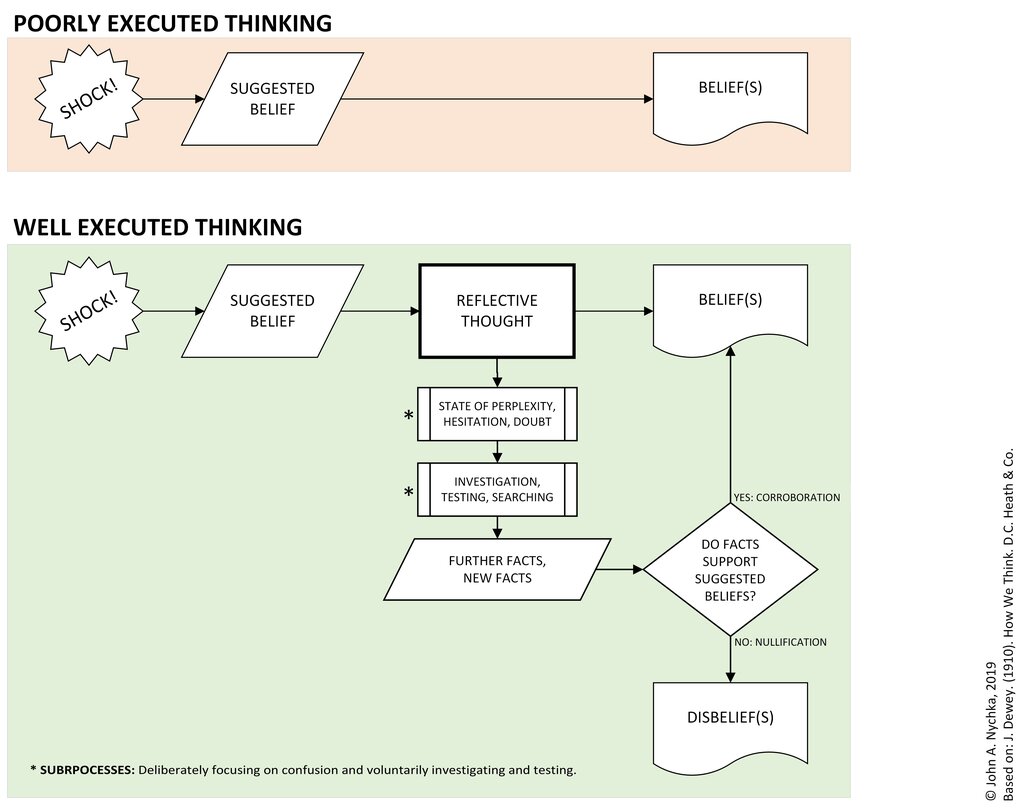
Critical thinking isn’t a single skill but a set of them. At its core, it involves three key activities: recognizing assumptions, evaluating arguments, and drawing conclusions.
First, let's talk about recognizing assumptions. An assumption is an unstated belief that is taken for granted. If a friend says, "We have to go to that new restaurant, it's always packed," they are assuming that a crowd equals good food. That might be true, but it's an assumption. A critical thinker learns to spot these hidden starting points, both in others' arguments and in their own thinking.
Next comes evaluating arguments. An argument isn't a fight; it's a claim supported by reasons or evidence. Your job as a critical thinker is to inspect the relationship between the claim and its support. Is the evidence relevant? Is it reliable? Does it actually lead to the conclusion being presented? Someone might argue you should invest in a company because their stock price went up last year. A critical thinker would ask: Is past performance a guarantee of future success? What other factors are at play?
Finally, after examining the assumptions and weighing the evidence, it’s time for drawing conclusions. This is where you form your judgment. The goal isn't to be right all the time, but to arrive at the conclusion that is best supported by the analysis. Sometimes, that means agreeing with the original argument. Other times, it means rejecting it. And often, it means concluding that you don't have enough information to make a judgment yet.
The aim of critical thinking is to pursue better conclusions, better beliefs, and better decisions.
These skills work together as a system. By questioning assumptions, you can better evaluate the strength of an argument. By evaluating arguments carefully, you can draw more logical and defensible conclusions. It's a process that helps you build a more accurate and reliable understanding of the world around you.
What is the primary goal of critical thinking, as described in the text?
A friend tells you, "We have to see that movie, everyone is talking about how great it is!" This reasoning relies on an unstated assumption. What is that assumption?