Spotting Deepfakes and Misinformation
Understanding Deepfakes
What Are Deepfakes?
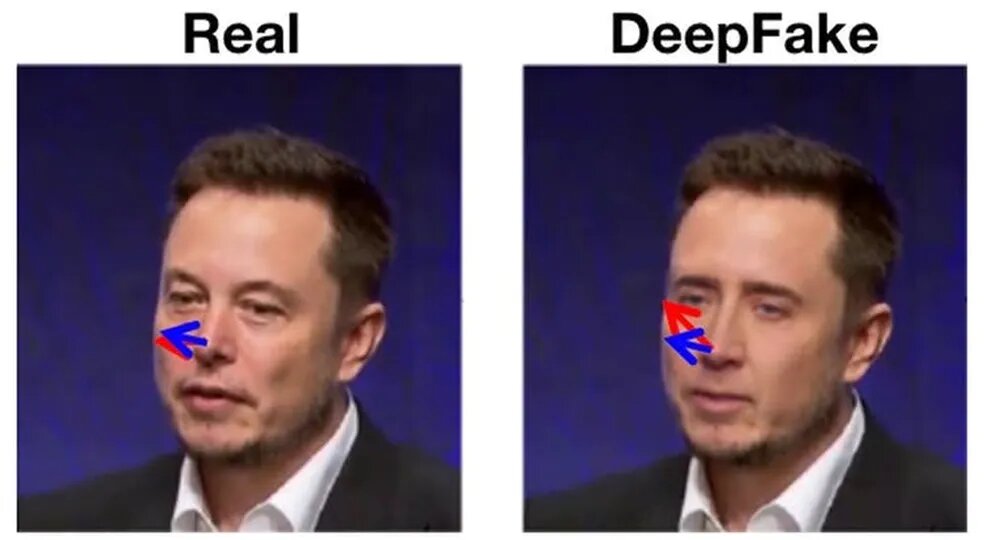
Deepfakes are hyper-realistic, AI-generated videos, images, or audio clips. The name is a blend of "deep learning," a type of AI, and "fake." These aren't just simple photo edits; they're sophisticated creations where a person's likeness can be swapped onto another's body, or words can be put into someone's mouth that they never said.
Deepfakes are photos, videos, or audio clips that have been digitally created to show people saying and doing things that never happened.
The term first popped up around 2017 on the social media site Reddit, where users shared manipulated videos. Early examples were often clumsy and easy to spot. But the technology has improved at an incredible speed. What once required Hollywood-level budgets and expertise can now be done with consumer-grade computers and accessible software.
How They're Made
The core technology behind many deepfakes is a clever AI model called a Generative Adversarial Network, or GAN. A GAN works like a competition between two AIs: a Generator and a Discriminator.
Imagine an art forger (the Generator) trying to create a perfect replica of a famous painting. An art expert (the Discriminator) tries to tell the fake from the real thing. At first, the forger is clumsy, and the expert easily spots the fakes. But every time the expert rejects a fake, the forger learns from their mistakes. Over thousands of rounds, the forger gets so good that the expert can no longer tell the difference. This is how a GAN learns to produce incredibly realistic media.
To create a deepfake of a specific person, the AI needs to be trained on a large dataset of their images or videos. It analyzes their face from every angle, learning their unique expressions, mannerisms, and voice patterns. The more data it has, the more convincing the final product will be.
Uses and Misuses
Deepfake technology isn't inherently bad. It has legitimate uses in entertainment and media. For example, filmmakers can use it to de-age actors, bring historical figures to life in documentaries, or seamlessly dub films into different languages. It can also be used to create virtual assistants or avatars for customer service.
However, the potential for misuse is significant and concerning. Deepfakes can be a powerful tool for spreading misinformation. Imagine a fake video of a politician appearing to make a controversial statement right before an election, or a business leader seeming to announce false financial news. The goal is to manipulate public opinion by making it seem like someone said or did something they never did.
Beyond politics, deepfakes raise serious ethical questions about identity and privacy. They can be used for fraud, such as creating a fake audio clip of a CEO to authorize a fraudulent money transfer. They can also be used for harassment and blackmail, creating compromising content of individuals without their consent. This erosion of trust is a major risk. When we can no longer believe what we see and hear, it becomes difficult to tell fact from fiction.
The core danger of deepfakes is their ability to undermine trust. If any video or audio clip could be a fake, it becomes harder to agree on a shared reality.
Now that you understand what deepfakes are and how they're created, let's test your knowledge.
The term "deepfake" is a combination of which two concepts?
What is the name of the AI model, often described as a "competition" between a Generator and a Discriminator, that is commonly used to create deepfakes?
Deepfake technology is a powerful example of how quickly AI is evolving. While it has creative and useful applications, its potential for harm highlights the growing need for critical thinking and media literacy in the digital age.