Spotting Deepfakes and Misinformation
Understanding Deepfakes
What Are Deepfakes?
The term "deepfake" is a blend of "deep learning" and "fake." It refers to synthetic media—videos, images, or audio—created by artificial intelligence. In a deepfake, a person’s likeness is replaced with someone else's, or their words and actions are altered to create a convincing but entirely fabricated piece of content.
Deepfakes are photos, videos, or audio clips that have been digitally created to show people saying and doing things that never happened.
This technology first gained widespread attention around 2017 on internet forums where users swapped the faces of celebrities into videos. Since then, the tools to create deepfakes have become more sophisticated and accessible. What once required powerful computers and specialized knowledge can now be done with simple apps, leading to an explosion of synthetic content online.
How AI Creates Fakes
At the heart of many deepfake creation tools are Generative Adversarial Networks, or GANs. A GAN is a clever type of AI system that essentially pits two neural networks against each other in a training competition.
One network, the Generator, tries to create fake images that look real. The other network, the Discriminator, acts as a detective, trying to spot the fakes created by the Generator. The Generator's goal is to fool the Discriminator. Every time the Discriminator catches a fake, the Generator learns from its mistake and tries to make a better one. This cycle repeats millions of times, with both networks getting progressively better at their jobs.
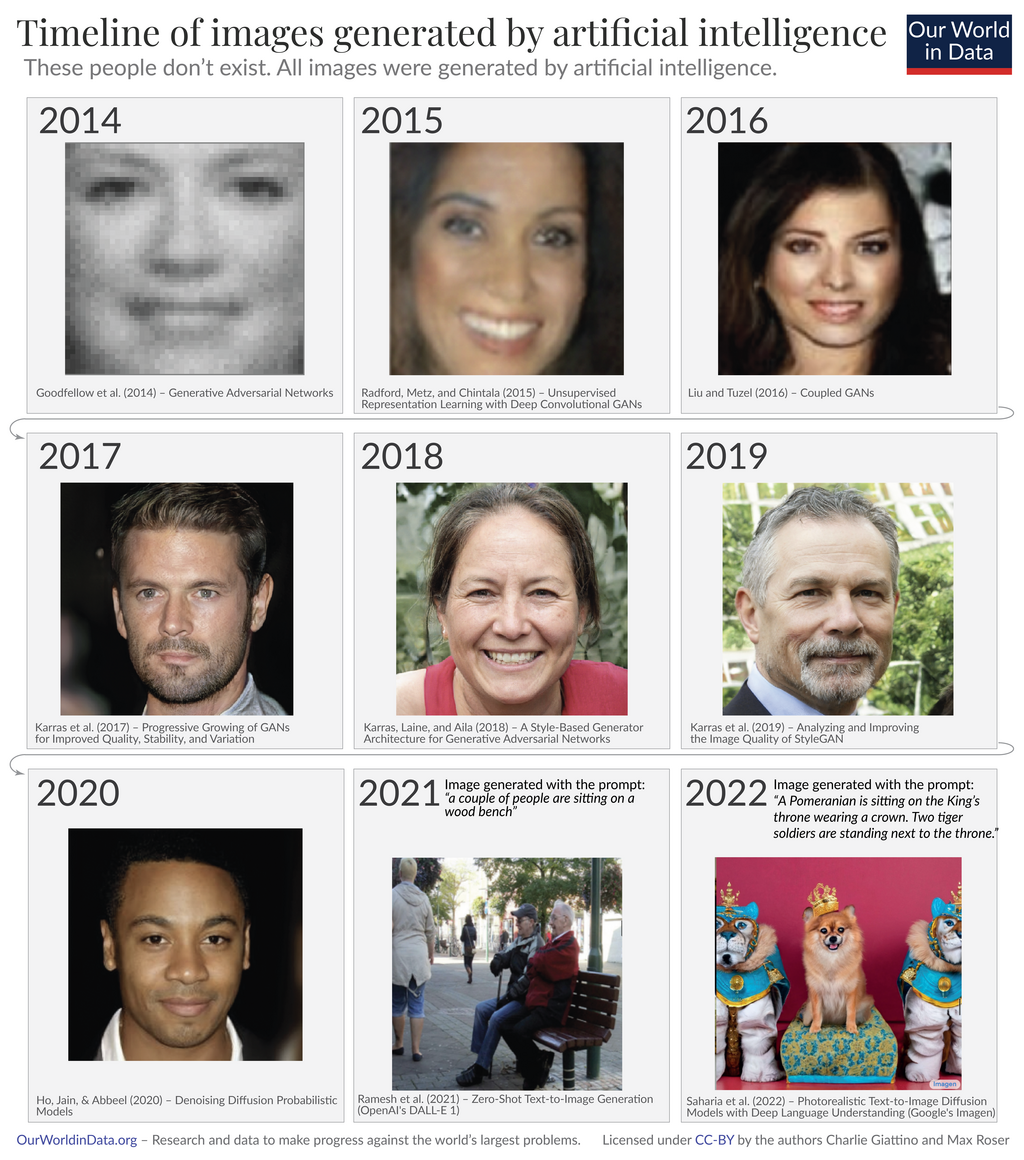
The result is an AI that becomes incredibly skilled at creating synthetic media that is difficult for humans—and other AIs—to distinguish from the real thing. The rapid advancement of this technology is staggering. In just a few years, AI-generated images have evolved from blurry, distorted faces to photorealistic scenes that are nearly indistinguishable from actual photographs.
Risks and Real-World Impact
While deepfakes can be used for harmless entertainment or creative expression, they also pose significant risks. The ability to create convincing fake content has serious implications for trust and security.
Misinformation and Disinformation: Deepfakes can be used to create fake news, manipulate public opinion, and defame individuals. Imagine a fabricated video of a political leader appearing to declare war, or a fake audio clip of a CEO admitting to fraud. Such content could destabilize politics, markets, and social trust.
Fraud and Security: Scammers can use deepfake audio to impersonate a family member in a distress call to solicit money. In the corporate world, they can be used to impersonate executives to authorize fraudulent wire transfers. This type of threat is a growing concern for both individuals and businesses.
Privacy and Harassment: One of the earliest and most disturbing uses of deepfake technology has been to create non-consensual pornography, where a person’s face is superimposed onto sexually explicit material. This is a profound violation of privacy and a potent tool for harassment and abuse.
As the technology improves, it becomes harder to tell what is real and what is not. This leads to a difficult challenge for everyone.
The more insidious impact of deepfakes, along with other synthetic media and fake news, is to create a zero-trust society, where people cannot, or no longer bother to, distinguish truth from falsehood.
The Detection Challenge
Detecting deepfakes is a constant cat-and-mouse game. As soon as researchers develop a new method for spotting fakes, creators find ways to overcome it. Early deepfakes often had tell-tale signs, like unnatural blinking, strange lighting, or blurry edges where the fake face met the real body. But modern deepfakes are much more polished.
The same AI systems used to create deepfakes can also be trained to anticipate and evade detection methods. This creates an ongoing technological arms race. Because the technology is evolving so quickly, what works to detect a fake today might be useless tomorrow.
Let's check your understanding of these concepts.
The term "deepfake" is a portmanteau, or blend, of which two concepts?
In a Generative Adversarial Network (GAN), what is the primary role of the "Discriminator" network?